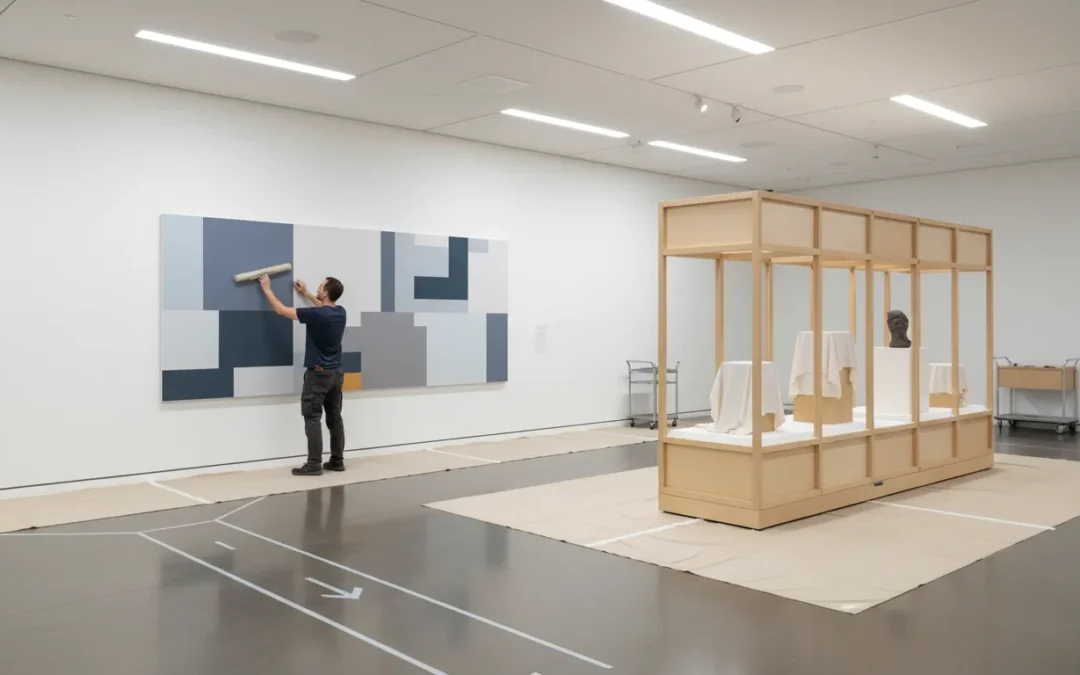
An exhibit graphic can fail at opening day with one lifted edge. For cultural venues, clean installation protects the story, the schedule, and every finished surface.
Museum exhibit graphics installation is the precise application of interpretive text, murals, labels, branded features, and wayfinding graphics within an exhibit setting for public viewing. It serves temporary displays that must remove cleanly and permanent displays that require lasting adhesion, tight alignment, and a finished appearance under visitor traffic. Installation specialists coordinate access, surfaces, materials, sequencing, and opening deadlines with designers, fabricators, venue teams, and experiential producers before onsite work starts. The Smithsonian Institution Exhibits guide notes that exhibit development depends on collaboration across many professional skills, from concept through completion. AP Installations brings the last-mile focus needed to apply approved graphics carefully, protect completed surroundings, and leave the display ready for visitors on opening day.
So what separates clean exhibit execution from a graphic that distracts from the objects, messaging, or visitor path? Museum exhibit graphics installation begins with the surface and story because both define the material choice, handling plan, and standard of finish. The path begins with:
Museum exhibit graphics installation begins with the surface and story
Museum exhibit graphics installation is the on-site work that brings approved exhibit artwork into the built space. The installer applies the planned graphics, not a new design direction. That boundary helps curators, designers, fabricators, and venue staff keep the visual story intact when installation begins.
Exhibit work depends on aligned roles. The Smithsonian’s Guide to Exhibit Development states that collaboration is key to a successful exhibit. An installation partner checks the site and handles approved materials. The crew then applies each element to its assigned location.
The installer’s defined role
For exhibit designers, a defined scope protects design intent. Installers receive approved graphics, elevations, placement notes, material details, and site rules. They confirm what is installed, where it lands, and how the work area will be managed. They do not rewrite interpretive content or make design decisions at the wall.
That scope may cover wall murals, interpretive panels, donor recognition, directional graphics, and short-term display elements. Teams preparing mounted or adhesive artwork can review AP Installations’ exhibit graphics installation overview for related wall applications. A clear handoff keeps each installed piece connected to the approved exhibit narrative.
Surfaces before application
The substrate shapes the installation plan. A painted gallery wall, a textured panel, glass, or a temporary partition may each need a different application approach. Installers review surfaces, access limits, placement marks, and nearby objects before graphics go up. If conditions do not match the plan, they flag the issue before applying material.
Surface review matters for temporary displays and permanent installations. Removal goals, finished edges, seams, and the intended service period must match the approved materials. Protective work practices also matter near cases, artifacts, and finished millwork. The result should be a clean application without asking the graphics to solve a site problem.
Story and visitor movement
Graphics also shape movement through the exhibit. Labels establish context, while large visuals can signal a shift between themes. When a venue uses signs to lead guests through galleries, placement must be clear before install day. Related cultural venue signage planning can help teams prepare that information.
Precision is practical, not ornamental. The installation partner places approved graphics with respect for the exhibit sequence, visitor routes, and surrounding surfaces. For cultural venues, that focused role keeps the installer accountable for execution. The exhibit team remains responsible for content and design choices.
Which exhibit graphic types need installation planning?
Museum exhibit graphics installation starts with the surface, traffic level, viewing distance, and planned removal date. Those details shape vinyl choice, access needs, seam placement, and the order of work.
Wall and glass applications
Wall murals often set the tone for a gallery or entry sequence. Plans should confirm wall condition, paint cure, panel breaks, trim, and access around cases or displays. For large wall applications, review the steps for exhibit graphics installation before production is released.
Glass graphics call for a different setup because light and sightlines expose small errors. The plan should address which side receives vinyl and how privacy or transparency works. It should also identify seams near doors or frames. Clean handling matters on glass seen from both sides.
Floor cues and interpretive panels
Floor wayfinding cues guide visitors while taking direct foot traffic. Plans should map the route, check the approved floor surface, and reserve time for safe access during application. Wayfinding must fit the wider plan, since exhibit development relies on collaboration.
Interpretive panels need crisp edges and stable alignment because visitors read them close up. A plan can note panel material, edge reveals, and label groupings. It can also set the install sequence near artifacts or cases. This reduces adjustments in a finished gallery.
Short-run campaign graphics
Temporary campaign graphics may support a traveling exhibit, seasonal message, member event, or opening-week promotion. The key planning question is removal. Crews need a defined display window and a suitable removable vinyl system. A documented museum and temporary display graphics timeline helps the venue schedule install and changeout work.
| Graphic type. | Application area. | Main install concern. | Display duration. |
|---|---|---|---|
| Wall mural. | Gallery wall or entry. | Surface condition and alignment. | Long-term or exhibit run. |
| Glass graphic. | Door, divider, or case glass. | Sightlines and clean edges. | Exhibit run. |
| Floor cue. | Visitor route. | Foot traffic and safe access. | Event or exhibit run. |
| Interpretive panel graphic. | Reading-height panel. | Close-view alignment. | Long-term or exhibit run. |
| Campaign graphic. | Lobby or promotion zone. | Clean removal at changeout. | Short-term. |
Not every graphic needs the same install method. Defining surface, service life, access window, and removal goal helps installers prepare the right sequence for each exhibit area.
Temporary exhibits and permanent displays need different plans
Temporary exhibits and permanent displays may use similar graphic elements, but they need different installation plans. For museum exhibit graphics installation, define the display term, changeover date, and responsible contacts before work begins. The Smithsonian exhibit development guide describes exhibition work as a team effort that depends on collaboration.
Changeover schedules
A temporary exhibit plan begins with the removal or changeover window, not only opening day. Note when galleries close and when other trades leave. Installers then know when they can work without affecting object handling or visitor routes.
For a short-run program, confirm graphic locations, approved surfaces, access paths, storage needs, and removal duties. A schedule for museum and temporary display graphics helps the venue coordinate each handoff with the print partner and installation crew. It also helps staff plan the gallery’s next use.
“Removable” signals a planned change, not an automatic fit for every surface. The installation team should review the graphic specification with the venue contact before placement. This keeps approved surfaces and removal duties clear at turnover.
Surface care and records
Surface care starts before any graphic is placed. Identify the wall, case, panel, or floor surface at each location. Then confirm site rules for contact, cleaning, and removal.
Keep a location log with dimensions, graphic IDs, approved installation notes, and photographs taken before and after work. For temporary graphics, add the removal date and the party assigned to each removal. For a longer-term display, add inspection points and a process for reporting needed repair or replacement.
Longer-term display coordination
A permanent display calls for planning around its intended run, viewing distance, traffic, lighting, cleaning routines, and future content updates. The chosen graphic system and surface should be reviewed for that site and term. A longer expected run does not remove the need for inspection or a documented change path.
Coordination should match the display term. For a temporary exhibit, confirm removal access before the gallery is turned over to the next program. For a permanent display, define who can approve repairs or content changes after opening. Clear records let the museum, fabricator, and installer make updates without relying on memory.
How does a substrate review protect an exhibit graphic?
A clear record before installation
A substrate review gives designers and venue staff a shared record before museum exhibit graphics installation begins. It checks whether a surface can accept the specified film without placing a finish or fixture at risk.
This review fits the wider exhibit process. The Smithsonian Exhibits guide notes that exhibit development depends on team collaboration. For graphics, that means the installer, designer, and venue representative confirm the application areas, approved materials, and any restrictions before work starts.
Surfaces that need close review
Painted walls can show fresh paint, repairs, texture, dust, or weak coatings. An installer records these details and asks who may approve a test patch. A small test can show whether the planned material sits cleanly or whether the team needs another plan.
Glass brings different questions. The review notes seams, films already on the glazing, nearby hardware, and sightlines that affect alignment. Floors require attention to finish, cleaning products, traffic, and removal needs. Existing wall panels and display faces are checked for joints, loose edges, surface damage, and prior adhesive.
This step is useful for projects that connect vinyl graphics with dimensional space. AP Installations’ overview of exhibit graphics installation provides related context for wall-based applications and site expectations.
Approvals, tests, and existing conditions
Before an application date, the site team should name the person who can approve surfaces and sample placements. Designers can mark no-cover areas, fragile finishes, and exact graphic edges on drawings. Venue staff can confirm access times, protection rules, and cleaning limits.
The installer then documents existing conditions with notes and photos before applying a test piece, when one is needed. A test area should match the planned surface and finish as closely as possible. The team records approval before full installation, so changes are addressed before finished graphics are on site.
Documentation also separates new installation issues from marks or defects that were already present. This protects the exhibit design, the venue’s finishes, and the install schedule. For temporary programs, planning can align with guidance on museum and temporary display graphics.
Build installation timing into the exhibit schedule
Approved materials and install dates
Museum exhibit graphics installation belongs on the master schedule before the gallery starts its final push. Set the install date after artwork, copy, dimensions, and material choices have final approval. This keeps the installer focused on site checks and accurate application, not late revisions.
Exhibit work brings many roles into one space. The Smithsonian Institution Exhibits guide says exhibit development is collaborative. It also states that a project manager guides work through its phases. Name one schedule owner before install begins, using its exhibit development guide as a planning reference.
- Confirm that approved graphic files, final dimensions, wall locations, and placement plans are released for installation.
- Reserve access windows around gallery work, object moves, casework, lighting checks, security needs, and visitor closures.
- List site needs in advance, including lifts, staging areas, loading access, floor protection, ladders, and secure material storage.
- Coordinate shared gallery crews so installers can reach each surface without waiting for another trade to clear the area.
- Hold time for inspection, punch-list fixes, removal of protection, and a final walk before the opening deadline.
Access windows and site logistics
A narrow installation window can work when access is clear and the site is ready. Confirm who opens the gallery, escorts contractors, moves barriers, and approves work at each location. If a lift is needed, check routes and operating hours before the crew arrives.
Sequence graphics after nearby work that could scratch, soil, or block the finished surface. Include interpretive panels and wayfinding signs in this review. AP Installations applies graphics in the field; its exhibit graphics installation information helps teams plan site access and surface readiness.
Punch lists before opening
Leave a buffer between installation and the public opening. During that time, review edges, seams, alignment, labels, and any areas blocked during the first pass. Record each fix with a gallery location, an owner, and a due time.
A final walk should include the venue lead, exhibit lead, and installation contact. Check that protection is removed and affected paths are ready for use. This controlled review keeps small approved touch-ups away from opening-day visitor operations.
What does a precise installation day protect?
Installation day protects more than a finished graphic. In a museum, it protects prepared surfaces, nearby exhibit parts, visitor paths, and the opening schedule. For museum exhibit graphics installation, a controlled on-site process helps each panel meet its intended place without creating avoidable rework.
Exhibit work depends on clear roles and steady communication. The Smithsonian Institution Exhibits guide describes exhibition development as a team-based effort built on collaboration. On installation day, that means confirming access, approved locations, nearby work, and the person who can answer placement questions.
A clean and coordinated work zone
A careful crew starts by preparing the work area. Tools, liners, and packing materials need a set place, away from objects and finished casework. When exhibit teams are still active nearby, installers can stage one zone at a time and keep walk paths clear.
Coordination matters when graphics sit near cases, labels, media, or delicate finishes. An installer should verify the application surface and planned position before material is applied. This simple pause protects the surrounding exhibit and reduces the risk of removing a graphic after it is placed.
Alignment, seams, and edges
Large exhibit graphics may need several panels to read as one image. The crew checks reference points first, then keeps seams even and edges secure as panels are applied. Corners, reveals, doors, and changes in surface shape need close attention because small errors remain visible in a gallery setting.
AP Installations serves as an installation specialist for exhibit teams and cultural venues. Its approach to exhibit graphics installation is relevant when mural-scale visuals must align cleanly on site. The installer focuses on the applied finish, while design and print partners retain their roles.
- Confirm panel sequence, orientation, and reference marks before application.
- Check seams, trimmed edges, corners, and surface transitions under normal lighting.
- Remove installation debris and leave nearby exhibit areas ready for review.
Checks and handoff
A useful handoff is visual and specific. The crew and project lead can review alignment, seam joins, edge adhesion, trimmed openings, and any areas that need follow-up. A short record of installed sections and noted conditions gives the exhibit team a clear next step.
That final check protects the presentation visitors will see and the schedule the venue must keep. It also separates complete work from work that only appears complete at a distance. Precise installation day practice makes issues easier to catch while the crew, tools, and decision-makers are still on site.
Plan the opening-day finish and eventual removal
Opening day is not the end of the installation plan. For a temporary exhibit, the finish must look clean at launch and come down with equal care. Build closeout and removal into the museum exhibit graphics installation schedule before materials reach the site.
Opening-day inspection
Reserve time after application for a joint walk-through with the installer and venue lead. View each graphic from common sightlines, then check seams, edges, alignment, labels, and nearby surfaces. Record corrections as a short punch list with an owner and completion time.
Finish the list before doors open whenever the schedule allows. Exhibition work depends on coordinated roles. The Smithsonian’s guide to exhibit development describes collaboration as key to a successful exhibit. A shared signoff keeps small fixes from becoming opening-day surprises.
Photos and project records
Take clear photos after punch-list fixes are complete. Photograph each finished wall or panel, detail areas, and any existing mark on an adjacent surface. Save photos with the approved layout, material notes, installer signoff, and any approved field change.
For a rotating exhibit, these records make the next changeover easier to scope. They show what was installed, where graphics met casework or paint, and which surfaces need special care. Teams planning another short-run display can review the museum and temporary display graphics timeline.
Removal and surface protection
Create the removal schedule beside the opening schedule, not weeks after launch. Include access hours, security or collections limits, lift routes, waste handling, and the person who accepts the cleared surfaces. A plan written early reduces guesswork when exhibits change on a fixed date.
Decide before installation who approves removal, when galleries become available, and where removed media will go. Confirm the removal method after the final material and mounting surface are known. This matters most when graphics meet painted walls, historic finishes, display cases, or reused panels.
Before take-down starts, protect floors, cases, objects, and public routes as required by the venue. Use a removal punch list: photograph the finished exhibit, note surface condition, remove graphics, inspect again, and log any follow-up.
Early installer coordination supports both a clean opening and a controlled changeover. AP Installations provides graphic installation for exhibits and events, including temporary-display planning that can be discussed before production is final.
Frequently Asked Questions
What does a museum exhibit graphics installation process involve?
A museum exhibit graphics installation begins after designs, substrates, site conditions, and the install sequence are confirmed. Installers coordinate with exhibit designers, fabricators, and venue staff, then prepare surfaces, position graphics, apply materials, inspect alignment, and address closeout details. The Smithsonian Exhibits guide describes exhibit development as a collaborative process, making early schedule and access coordination essential before opening day.
How long does a museum exhibit installation take?
Museum exhibit installation time depends on scope, access, surface readiness, material type, and the opening date. A single graphic package may be installed within a short on-site window, while a complete exhibition develops over months or longer. The High Museum of Art reports that full exhibition design and installation can take up to two years. Teams should confirm artwork approval, production deadlines, delivery, and installation access before setting a final schedule.
How much does exhibition design and installation cost?
The cost of exhibition design and installation varies because the installation portion depends on graphic sizes, quantities, materials, surface conditions, lift needs, travel, security procedures, and after-hours access. A useful quote should separate approved graphic scope, site requirements, schedule constraints, removal needs for temporary exhibits, and final inspection. Designers and venues can reduce changes by providing elevations, material specifications, site photos, and opening dates early.
What is included in exhibit graphics installation services?
Installation services typically cover pre-install coordination, site access planning, surface checks, material staging, precise placement, application, alignment review, and a post-install walkthrough. The scope may also include removal planning for temporary displays or durability considerations for permanent displays. AP Installations specializes in professional installation rather than presenting itself as an in-house design or printing agency, so production responsibilities should be confirmed with each project partner.
Ready to schedule your exhibit graphics installation?
Delaying installation planning can compress approvals, access coordination, and final walkthrough time before an exhibit opens. For temporary displays, late decisions can leave less room to resolve placement details and protect a carefully planned visitor experience. For permanent displays, starting now gives your team time to align installation steps, venue requirements, and opening priorities before schedules tighten.
Ready to schedule? Contact AP Installations to schedule an exhibit graphics installation consultation for your museum, cultural venue, or experiential display project. Begin now so your designer, producer, and venue teams can coordinate the installation window, site access, and finished presentation before deadlines narrow your choices. Early coordination also helps each partner confirm responsibilities while exhibit details are still flexible.