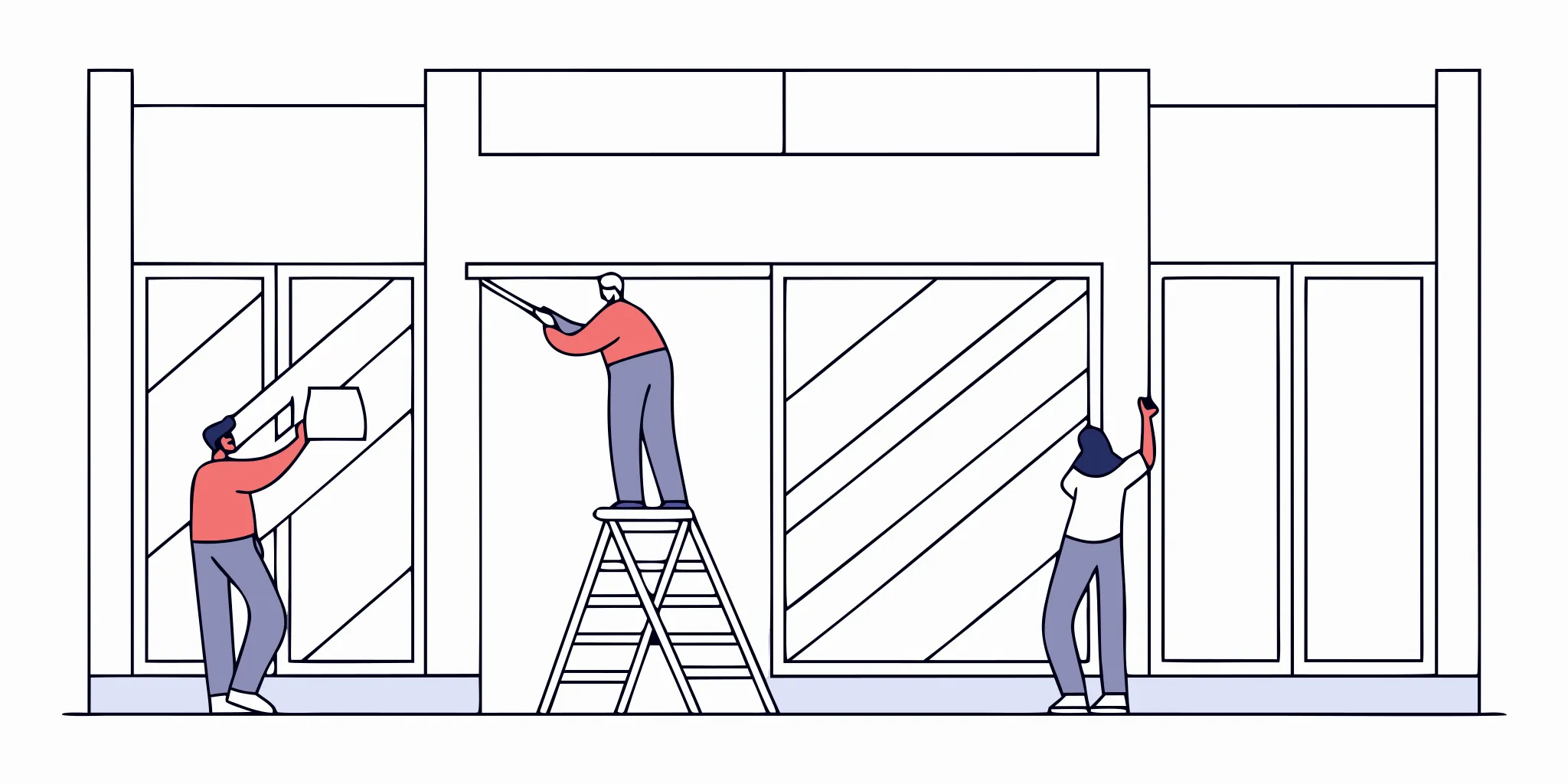
A nationwide retail graphics rollout is a high-stakes test of timing, access, and install skill. Your brand depends on every mural, window graphic, floor decal, and interior display looking right at each store.
Contact AP Installations to plan a nationwide retail graphics rollout that keeps every location on schedule and on brand.
A nationwide retail graphics rollout is a coordinated plan to update the same retail graphics across many locations. It needs site surveys, clear install standards, approved materials, store-level schedules, photo records, and a closeout process that proves each site is complete. According to 40 Visuals, a rollout can cover a small set of flagship stores or scale to hundreds of storefronts. For brand teams, the goal is simple: keep the campaign consistent while reducing store disruption and install errors.
Brand directors and operations teams face real risk when they update many stores at once. Site sizes vary, access rules change by location, and store hours can limit when crews work. Knowing what a nationwide retail graphics rollout needs to solve is the first step toward a smoother campaign.
What a nationwide retail graphics rollout needs to solve
Quick answer: A strong rollout plan solves brand consistency, site differences, store disruption, and closeout proof before installers arrive.
Brand heads and retail ops teams face big hurdles when they start a nationwide retail graphics rollout. These projects often involve many sites across many areas. You must handle short-term work or full rebrands on tight timelines. The work covers many spots like storefront windows, interior walls, and retail floors. It also includes banners and small signs. A good plan must solve tough issues with site prep and material fit. This keeps the brand look safe and helps avoid costly redo work.
Managing a project of this size needs a deep look at every shop. A rollout might cover a small batch of 10 main stores in one state or push to 1,000 shops across the country. Planning is the key to success. You need to know which signs are out of date and create reports for each site. This helps your team plan the right print and set up steps for every store in the chain. AP Installations’ solutions cover Pop & Retail, fleet, and experiential graphics, so brand teams can align each store package with the right installation scope.
Ensuring visual brand sameness
A main goal of any nationwide retail graphics program is perfect brand copying. Whether you update ten shops or many more, the visual look must stay the same at every spot. Using 3M trained methods helps prevent issues like bubbles or edge lift. This ensures that murals and window signs look expert for years. It also protects your large sales spend. Trained pros use precise steps to make sure the vinyl sticks well to every surface.
Brand sameness also depends on how well the signs handle the local weather. For outside signs, things like rain and sun can cause the film to break down over time. According to a study on PET film stress, direct water contact can hurt the material more than just high moisture. Expert teams check the heat and moisture during the work to ensure the best bond possible.
Managing site differences and prep
Every retail space has its own quirks that can delay a project. Some sites might have rough walls while others have glass that needs extra cleaning. Expert site surveys are vital to find these hurdles before the team arrives. These surveys look at the frame and safety of the wall or window. This prep work prevents surprises that could stall the rollout or cause safety risks for staff and shoppers.
Setting rules for how you check each store is a smart move for large teams. The CDC notes that using standard tools to check store programs helps teams make better links across many areas. When you use the same check list for every site, you get data you can trust. This step ensures that every shop is ready for a smooth set up on day one. It also helps you set a clear budget and choose the best path for each area.
Planning and records for closeout
Retail work must keep running even during a major update. Pros often work during off-hours to avoid bothering shoppers. This helps minimize business stop time while the work gets done. Teams must track every step with clear planning and records, including photos of the finished work. This final data proves that each site meets the brand rules and meets the project goals.
These records are also vital for long-term support. They help with 3M MCS Warranty needs, which can cover your finished signs for up to nine years. A single point of contact for the whole project makes the process much easier. They can manage the design, print, and set up for the whole retail chain. This path gives you one person to talk to. It ensures that no detail gets lost during the busy rollout plan.
Start with site surveys and rollout standards
Quick answer: Site surveys turn each store into usable production data, including measurements, surfaces, access limits, safety notes, and environmental risks.
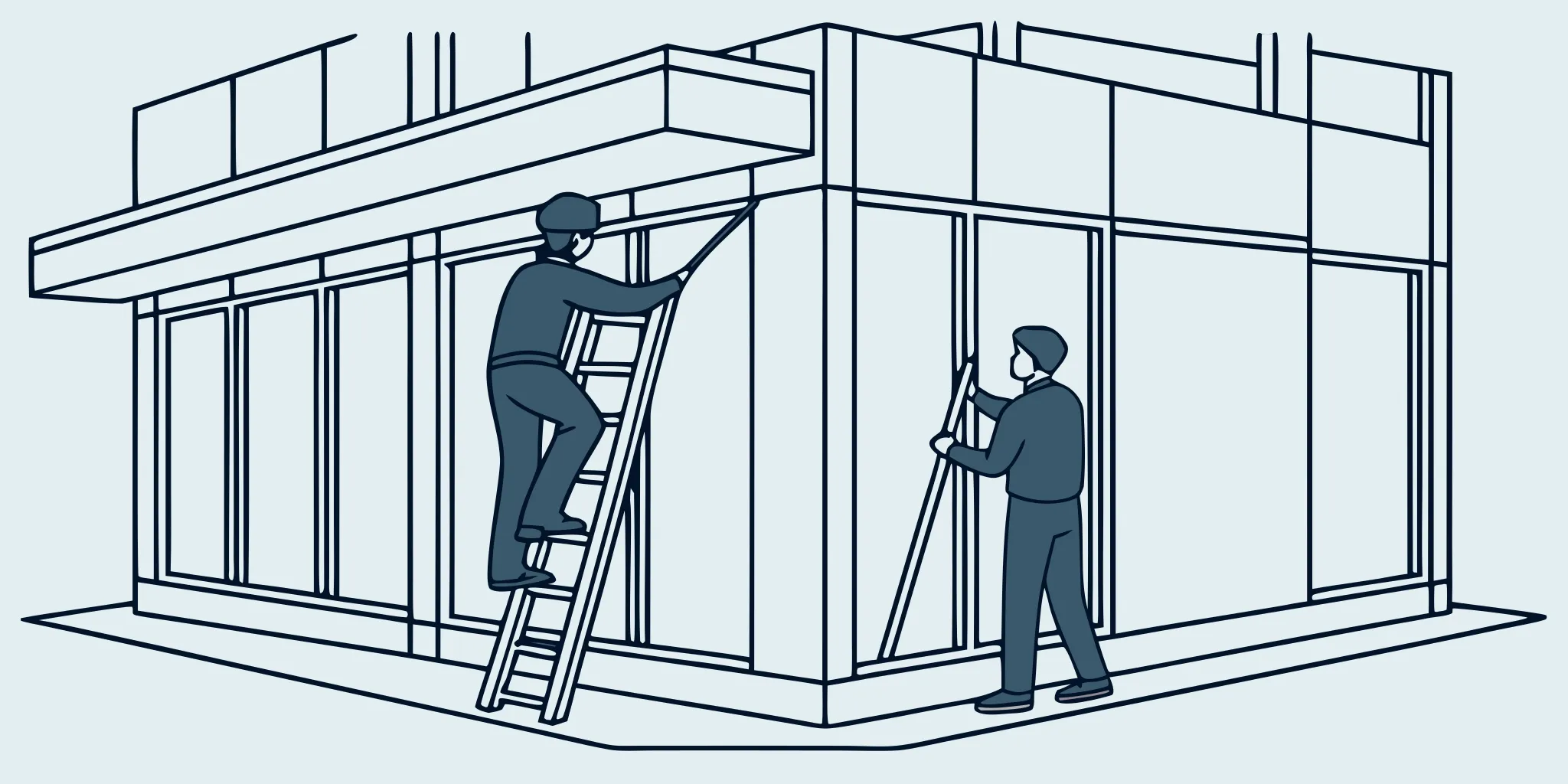
A good nationwide retail graphics rollout starts with solid retail graphics rollout planning. You must know the exact details of every shop in your network before you ship any vinyl. Doing site surveys for rollouts helps you find issues like rough walls or old paint that could ruin a new decal. Installers check for power outlets, height limits, and wall types. They also take photos to help the print shop size the art correctly.
The role of site surveys
Advanced site surveys are vital for large projects. They look at structural safety and local weather risks. This is key for murals or big signs. If you skip this step, you might send the wrong size graphics to a store. That leads to lost time and higher costs. Teams should use a set checklist to keep data clear. For case notes, installers must note if a surface is glass, metal, or wood. As the CDC notes, using standard tools is the best way to check results across many sites.
Detailed surveys also help find access blocks. Some stores might have stairs or narrow halls that make it hard to move large prints. Installers look for these hurdles early so they can bring the right tools. They also check for light fixtures or signs that might block a new graphic. By getting these facts, you can create a better plan for your print partners. This ensures that every piece fits the first time it arrives on site.
Setting clear rollout standards
Keeping things the same is the goal for any nationwide retail graphics rollout. Whether you have 10 stores or 1,000, each one should look the same. You need a set of rules for how to print and install every piece. These standards help your team work fast without making errors. They also make sure your brand stays strong in every city. Using a clear system of visual rules helps orient visitors and staff, as noted by the University of Minnesota.
Quality control is a big part of these standards. Installers should use multi-point checks during the job. They also need to track their work with photos for your records. This gives you proof that every store meets your high bars. Using a 3M MCS Warranty plan adds even more safety. This warranty covers the parts used to make and install your signs. It can protect your brand assets for up to eight or nine years.
Managing field conditions
Managing a large rollout means tracking many moving parts at once. You have to handle different store hours and local rules. Some shops might need work done at night to avoid customers. Others might have tight paths that need small lifts or tools. A single point of contact can help manage these field tasks. This ensures your brand is copied the right way across all sites. It also helps you stay on track with your project goals.
Installers must monitor the air in the shop too. They check the heat and moisture to make sure the vinyl sticks well. If it is too cold or damp, the glue might fail. Following 3M rules ensures your graphics last for years in any retail setting. By setting these standards early, you prevent bubbles or peeling. This keeps your stores looking fresh and sharp for a long time. Clear standards also help you handle any changes or repairs that might be needed later.
Build a graphics rollout checklist before production
Quick answer: A rollout checklist keeps creative approval, substrate checks, packing, shipping, store access, installation, and photo documentation in one repeatable system.
A successful retail graphics rollout planning phase starts long before any vinyl hits the walls. When you manage a nationwide retail graphics rollout, small gaps in your plan can lead to big costs at the store level. You must bridge the gap between your design team and the people on the ground. A clear list of steps helps your brand stay consistent across every site.
Manage site data and version control
Every store is different. Even if you have “standard” store layouts, real-world walls and windows often vary by an inch or two. You should conduct site surveys for rollouts to get exact measurements. This prevents artwork from being too small or too large when the crew arrives. You must also track which version of your brand art goes to which location to avoid old logos being put up by mistake.
Good data helps you make better choices for your brand. Research shows that using standard tools for store programs helps you compare results across all regions. When you have a clear plan for your data, you can spot risks before they turn into failed installs or wasted print costs. This step is vital for a smooth flow in a large project.
You should also think about the health of your brand materials. Facts show that things like moisture can stress films and cause them to break down faster. By picking the right vinyl for your specific sites, you ensure the graphics last for the full length of your campaign. This saves you from having to do costly reprints later on.
Coordinate store access and logistics
Getting into the store is often the hardest part of a rollout. You must know the specific hours for each site. Many retail teams prefer graphics installation rollouts to happen at night. This keeps customers safe and avoids blocking aisles during busy sales times. You also need a direct contact at each shop who knows the crew is coming and has the keys ready.
Logistics also include how you ship the items. You need to make sure the right box gets to the right door. A nationwide retail graphics rollout can fail if store A gets the art for store B. Keeping a master sheet of tracking numbers and box contents is the best way to stay on top of these moving parts. It gives you peace of mind as the ship dates get close.
Your graphics rollout checklist
Use this list to verify your project is ready for the production floor. Each check reduces the risk of field errors during a nationwide push.
- Finalize a full list of all store locations with exact addresses and local store manager phone numbers.
- Confirm all site surveys are done and that art files match the unique size of each wall or window.
- Set the specific dates and times for each install, noting which sites need off-hours work to avoid shoppers.
- List the approved materials for each surface, like high-tack vinyl for brick or clear film for glass.
- Define what counts as a damage exception and how the crew should report pre-existing wall marks.
- Share the photo rules so that every crew sends high-quality pictures of the finished work for your final sign-off.
A strong plan keeps your project on track. By following these steps, you protect your brand and your budget. AP Installations works as your strategic partner to handle these details so your vision comes to life without the stress of site-level failures.
How should brand teams schedule multi-location installs?
Quick answer: Brand teams should schedule multi-location installs by launch date, store priority, geography, store hours, travel time, and local access limits.
Managing a nationwide retail graphics rollout needs a clear map of dates and tasks. Brand teams must balance launch dates with store hours and local needs. A good plan keeps crews on track across many stores at once.
Map out the launch timeline
Start with your hard launch date and work back to find your start time. Some projects cover only ten flagship stores in one state, while others reach over 1,000 storefronts. You need to leave time for site visits and permit checks before the first roll of vinyl arrives at a store. Most graphics installation rollouts fail when they do not account for travel times or weather delays.
Weather is a big stress for outdoor graphics. Moisture and light can wear down films like PET backsheets if they are not set right. The National Institutes of Health (NIH) notes that direct moisture contact causes more material stress than just humid air. Build a buffer into your plan to handle rainy days or cold snaps that might stop an exterior install.
Set store hours and access rules
Each store location may have its own rules for when work can happen. Some malls only allow work at night or before the doors open to shoppers. You must confirm these hours for every site during retail graphics rollout planning to avoid extra costs. Clear rules on store access help crews move fast without getting in the way of customers.
Crews also need a path to solve problems as they come up. Use a shared log to track progress and handle any site issues in real time. This coordination and documentation ensures that every shop looks the same on opening day. When crews know the plan and who to call, the whole project runs more smoothly.
Group sites by market and crew capacity
It is best to group installs by city or region to save on travel costs. This lets one team handle three or four stores in a row without a long drive in between. Check your crew’s capacity to make sure they are not stretched too thin. Standard tools and reports from the Centers for Disease Control and Prevention (CDC) show that using the same forms across regions helps teams make better comparisons. Use a single report style so you can see at a glance how the work is going in every market.
Compare local, regional, and national installation support
Quick answer: Local crews fit small refreshes, regional support fits clustered markets, and national installation support fits high-value programs that need one accountable standard.
When you plan a nationwide retail graphics rollout, you must pick the right level of help. Your needs change based on how many shops you have, where they are, and how fast the campaign must launch.
AP Installations works from Beaverton, Oregon and supports projects in the Pacific Northwest. For major opportunities, the team can travel for larger retail graphics work. You can review completed projects to see examples of retail graphics, fleet wraps, venue graphics, and other large-format installations.
Support levels
| Level | Best fit |
|---|---|
| Local | One store |
| Regional | Several sites |
| National | Major rollout |
Why a single partner matters
Using one partner for your nationwide retail graphics helps each site meet the same standard. It reduces quality shifts that can happen when many local crews read the same brief in different ways.
One partner can also keep your site checks, photo rules, and closeout reports in one format. That makes it easier for brand, print, and retail operations teams to see what is done.
Plan for travel and timing
Rollouts often happen at many sites at the same time. Group work by market, store priority, or launch date so the crew can move with less waste. This also helps your team protect sales hours.
AP Installations can help shape graphics installation rollouts that fit the scope, timing, and quality bar. The goal is not just to finish the job. The goal is to make every store look ready for customers on launch day.
What documentation keeps a rollout accountable?
Quick answer: The best rollout documentation includes site survey files, production notes, store schedules, install photos, issue logs, and final closeout reports.
Running a nationwide retail graphics rollout needs more than just skilled installers. It needs a clear set of records to follow every step. For a brand director, these logs are the only way to know that work is done right at every site. Without them, you cannot be sure if the brand looks the same in every city. Good files also help you find and fix small issues before they become big, costly problems.
A clear plan for data helps teams check results across different areas. Studies from the CDC show that using normal tools to check programs is key for making fair checks across regions. This same logic applies to retail branding. When every store uses the same report forms, you get a clear view of the whole project. You can see which regions are moving fast and which ones need more help.
Visual proof of results
Once the work is done, completion photos should show the whole display and close-up shots of the edges. This proof confirms that the team met the project rules. It also serves as a base for future checks. If a graphic gets damaged later, you can look back at these photos to see its first state. This makes it easier to order the right parts for a repair.
Many brands use these photos to share success with their own teams. High-quality images prove that the nationwide retail graphics rollout was a success. When you have lots of photos, it helps to have them sorted by store ID or city. This keeps the project neat and makes it easy for you to find what you need in seconds. It also builds trust with your team and your partners.
Project logs and site data
Good records go beyond just pictures. You also need written logs for each site visit. These logs should track when the team arrived and left. They should also note any issues that came up during the job. For example, if a wall was too cold for the vinyl to stick, the log should say so. This allows you to plan a fix without guessing what went wrong on the ground.
Store-level notes are also vital for large projects. Each shop has its own quirks that can change how a team works. Having these details in a clean record helps you plan for future refreshes. Key items to track in these logs include:
You will know which stores need extra time or special tools. Clear coordination and documentation from your partner keeps everyone on the same page. It stops small delays from stalling the whole rollout.
Maintenance and warranty tracking
Once a store is done, a manager should walk through the site with the installer. They should sign a form to show they are happy with the work. This sign-off protects both you and the installation team. It marks the official end of the job and starts any warranty periods. This step is a normal part of expert graphics installation rollouts.
Where AP Installations fits into retail graphics rollouts
Quick answer: AP Installations supports retail graphics rollouts with certified vinyl installation, site planning, scheduling coordination, photo documentation, and national travel for larger projects.
A retail graphics rollout planning project can range from a few flagship shops to a large scale effort with many sites. For a nationwide retail graphics rollout, the success of your brand depends on the skill of the person who puts the vinyl on the wall. AP Installations serves as a expert partner for brands that need high quality results across many locations. We focus on the final step of the process to make sure your vision looks right in the real world.
The role of a certified partner
AP Installations is a 3M Preferred Installer. We are one of only two companies in Oregon with this status. This status shows our team has the technical skill to handle complex jobs. We follow the best practices for the 3M MCS Warranty. This warranty protects your brand for a long time. It covers signs in both regulated and non-regulated areas. Using a 3M warranty system ensures your graphics stay in good shape for years. We stay up to date on new tools and methods to give you the best service.
Consistency is key when you have many stores. You want your brand to look the same in every city. We make sure that each mural and floor graphic meets the same high standard. This helps prevent errors that can happen with local crews. Our focus on quality means your visual identity is safe. We work to replicate your vision perfectly at each site in your program. Whether you update ten stores or one thousand, the quality will not change. We take pride in our work and how it represents your brand.
Pacific Northwest roots with national reach
Our home base is in Beaverton, Oregon. We know the local climate and how it affects vinyl. But we also travel across the country for large projects. For a nationwide retail graphics project, we move our core team to your sites. This keeps the work quality high. It also gives you a single point of contact for the whole job. You do not have to manage many small shops in different states. This reduces the risk of bad work and saves you time and money.
We work with your retail operations team to find the best time for work. We often work during off-hours to avoid a business disruption for your customers. This flexibility helps keep your stores running while we update your look. We handle the site surveys and project planning to save you time. Our goal is to make the process easy and smooth for you. We provide a full report after each site is done so you can track our progress.
Expert support for retail and pop up space
Our expertise includes many types of graphics. We install window murals, wall wraps, and floor decals. We also help with experiential installs and pop up retail space. These projects often have tight deadlines. We offer emergency help for these time sensitive jobs. We are a “one-stop shop” for the install phase of your project. We can even help you coordinate with your printing partner to make sure everything is ready. This support makes sure the graphics are fit for the site before we arrive.
We do not print or design the graphics. This lets us focus fully on the best installation methods. We act as a strategic partner for design firms and brand directors. We help you protect your investment in high end graphics. When the job is done, we do a final walk through with you. This ensures you are happy with the work. We want to build a long term relationship with your brand. Our team is ready to help you grow your brand presence in any market.
Frequently Asked Questions
How do you manage a multi-site retail graphics rollout?
To manage a multi-site retail graphics rollout, you should start early and set a clear budget. It helps to group store updates by region or how fast they need work. This keeps your plan on track and makes sure each store is ready. Choosing one expert team for the job makes the work easier. a good rollout needs store-specific reports and careful timing across all your sites.
What types of graphics are included in a retail rollout?
A nationwide retail rollout often includes many items to update a brand. Common graphics used in these projects are window displays, wall murals, and banners. You might also see floor decals, signs for checkout areas, and building wraps. Each of these parts must work together to create a single look. Expert teams can put these on many surfaces like glass or wood. This makes sure the new brand style is seen everywhere in the store.
Why is brand consistency important in a nationwide retail rollout?
Brand consistency is vital because it makes sure your brand looks the same in every store. Whether you update ten shops or a thousand, your style must not change. This builds trust with your customers and keeps your image strong. the main goal of a large rollout is to perfectly copy a brand at every site. Using certified tools helps prevent errors when you put the graphics up.
What are the costs for a nationwide retail graphics rollout?
The cost for a nationwide retail graphics rollout depends on the size and location of the project. Large jobs often have higher prices to cover travel and complex plans. For projects that cover the whole country, minimum project values range from $10,000 to $25,000. These costs help manage the air travel and plans needed to send expert teams to many stores. Small regional jobs may have lower entry costs.
Ready to plan a cleaner retail graphics rollout?
A strong rollout does not start on install day. It starts with clear site data, a practical schedule, clean standards, and an install partner that knows how to protect the brand at each location. If your team is planning a seasonal campaign, rebrand, or multi-site retail update, contact AP Installations.