Blog
Trade Show Graphics Installation Planning Guide
Plan trade show graphics installation from 8 weeks out to teardown, including booth wraps, banners, floor graphics, venue rules, and labor.
Blog
Plan trade show graphics installation from 8 weeks out to teardown, including booth wraps, banners, floor graphics, venue rules, and labor.
A successful event booth is not built on show day. It is planned weeks earlier, when the graphics, materials, venue rules, labor requirements, shipping windows, and teardown plan are all aligned. Trade show graphics installation touches almost every visible part of your booth, from wall wraps and banners to floor graphics, temporary displays, and branded backdrops. When those pieces arrive late, miss a venue requirement, or are installed by the wrong labor team, the result can be expensive reprints, rushed decisions, and a booth that does not reflect the brand you worked so hard to present.
Planning a temporary brand activation, conference booth, or event graphics package? Contact AP Installations to discuss your installation plan with a 3M Preferred Installer.
Use this guide as a practical timeline for planning event graphics from eight weeks out through teardown. It is written for brand managers, production teams, agencies, and exhibitors who need the installation to look polished, stay compliant, and come down cleanly when the event is over.
Trade show graphics installation is the professional application, mounting, positioning, and removal of branded graphics inside an event booth, conference space, retail pop-up, or temporary activation. It can include vinyl wall graphics, booth wraps, hanging banners, freestanding panels, window graphics, floor decals, directional signage, sponsorship displays, and temporary murals.
The work is different from permanent commercial graphics because the environment is temporary, the schedule is compressed, and the installation often happens under venue rules. Installers may be working around other trades, crates, electricians, general service contractors, union labor teams, and exhibitor move-in deadlines. That is why event graphics need a plan that covers both the finished look and the logistics behind it.
AP Installations supports experiential vinyl graphics installation for events, building wraps, large-format murals, temporary brand activations, and sponsorship signage. The same attention to surface preparation and material handling used for long-term graphics also matters for temporary installations, especially when the graphics need to look flawless for a short, high-visibility window.
The safest planning timeline starts eight weeks before the event. Some small booths can move faster, but complex graphics packages, island booths, multi-city activations, or venues with strict labor requirements need more lead time.
| Timing | What to Complete | Why It Matters |
|---|---|---|
| 8 weeks out | Confirm goals, booth layout, graphics list, venue rules, and installation partner. | Prevents design and production choices that do not fit the booth, surface, or labor rules. |
| 6 weeks out | Finalize dimensions, materials, fire rating needs, and artwork requirements. | Gives production time to print, finish, inspect, and pack graphics correctly. |
| 4 weeks out | Submit labor forms, EAC paperwork, insurance documents, and shipping plans. | Many venues require paperwork before an outside installer can work onsite. |
| 2 weeks out | Confirm delivery dates, installation schedule, booth access, and onsite contacts. | Reduces delays during move-in when docks, freight, and labor crews are crowded. |
| Show week | Inspect surfaces, stage graphics, install in sequence, photograph the finished booth, and document teardown. | Keeps the booth on schedule and creates a record for future events. |
Start by deciding what the graphics need to accomplish. Are they meant to draw traffic from an aisle, create a photo moment, explain a product, guide attendees, support sponsors, or make a rented booth feel custom? The answer affects scale, placement, materials, and installation method.
At this stage, gather the booth drawings, show manual, venue address, move-in dates, target install time, and any early rules about labor or rigging. If your booth includes wall wraps, banners, and floor graphics, identify each surface and who controls it. A rented hard wall, fabric booth panel, temporary barricade, glass surface, sealed concrete floor, and painted venue wall may all require different graphic products.
Six weeks out is the time to remove uncertainty from the graphics package. Confirm final dimensions, bleed, panel breaks, finishing, grommets, pole pockets, laminate, anti-slip floor protection, and removal requirements. If the graphics are being installed on a rented booth system, make sure the design accounts for seams, corners, doorways, counters, monitor mounts, and lighting.
This is also the point to choose materials for the real environment, not just the rendering. A dramatic booth wrap may need a removable adhesive. A floor graphic needs a slip-resistant laminate and a surface that is clean, dry, and approved for temporary graphics. A high banner may need reinforced finishing and approved hanging points. For more detail on banner-specific considerations, see AP Installations’ banner installation service guide.
Most trade shows have an Exhibitor Services Manual that explains move-in windows, approved vendors, union jurisdictions, fire safety requirements, material handling rules, and insurance requirements. Read it before final production. Do not assume the rules from one city or convention center will apply to the next event.
If you plan to use an outside installation partner, the venue may classify that partner as an Exhibitor Appointed Contractor, often called an EAC. EACs may need to submit a Certificate of Insurance, contractor forms, work authorization, and onsite contact information by a specific deadline. Missing that deadline can limit access or force you to use show labor at the last minute.
Two weeks before the show, the focus shifts from production to execution. Confirm whether graphics are shipping to the advance warehouse, direct to show site, or with your installation team. Check that every crate or tube is labeled by booth number, show name, contact, and install sequence. Ask for tracking numbers and confirm who will receive, inspect, and stage the graphics.
Build a clear installation sequence. For example, overhead banners and rigging may need to happen before the main booth work. Wall wraps are usually easier before furniture and monitors arrive. Floor graphics should not be installed until the surface is ready and traffic can be controlled. Temporary wall displays may need to wait until booth construction is complete but before final merchandising.
Every graphic in a booth has its own risks. Treating all graphics the same is one of the fastest ways to create rework onsite.
Booth wraps create the largest visual impact, but they demand precise measurements and careful panel planning. Corners, seams, counters, storage doors, monitor mounts, and uneven rented panels can all affect the final result. Large wall graphics should be printed with installation in mind, including manageable panel widths, clear labeling, and enough bleed for alignment.
If your design includes a mural-style environment, review AP Installations’ guidance on vinyl wall graphics for businesses to understand how surface condition, scale, and installation quality shape the final appearance.
Banners are common at trade shows because they are portable, flexible, and visible from a distance. They still need planning. Confirm whether the banner will hang from a booth frame, truss, ceiling rigging, pipe and drape, or a freestanding structure. Each option affects finishing, hardware, labor, and safety requirements.
Ceiling-hung signs and elevated banners often require approved riggers or show labor. Even if the banner itself is simple, the installation may be controlled by venue rules. Ask early so the artwork, finishing, and labor order match the actual install method.
Floor graphics can guide traffic, mark product zones, create photo opportunities, and extend the booth design beyond vertical surfaces. They also carry more safety responsibility than wall graphics. The material should be designed for foot traffic, paired with the right laminate, and approved for the floor surface.
Temporary floor graphics should be installed on a clean, dry surface and placed where they will not create trip hazards or interfere with venue pathways. AP Installations covers related material and placement considerations in its guide to removable floor decals.
Temporary wall displays are often used for launches, sponsorship spaces, conference lounges, and experiential environments. They may be installed on rented walls, scenic flats, windows, barricades, or temporary structures. The key is to match the adhesive and removal plan to the surface owner. A graphic that performs well on a painted office wall may not be approved for a venue wall or rented exhibit panel.
For brand activations, think beyond one hero wall. A stronger environment may combine window graphics, floor graphics, banners, and dimensional displays into one cohesive path. AP Installations’ experiential graphics installer guide explains how graphics can shape the full visitor experience, not just decorate a space.
Venue restrictions can affect what you print, when you install, who can do the work, and how the booth is removed. The most common restrictions involve fire ratings, approved adhesives, floor protection, rigging, freight handling, and work hours.
Before production, review the show manual for requirements such as:
When rules are unclear, ask the show organizer or general service contractor in writing. A quick confirmation before printing is much easier than a dispute during move-in.
Union labor rules vary by venue, city, show, booth size, and type of work. Some exhibitors may be allowed to set up small displays with hand tools. Other tasks, such as hanging signs, moving freight, installing flooring, operating lifts, assembling structures, or making electrical connections, may require union labor or approved show labor.
Do not wait until show day to find out. If your trade show graphics installation includes overhead banners, large booth wraps, flooring, hard-wall graphics, or complex scenic elements, ask these questions early:
A professional installer can help you translate these rules into a realistic schedule. That schedule should allow time for booth construction, graphics staging, surface cleaning, application, inspection, and any final punch-list work before the show opens.
A pre-show checklist keeps the project from depending on memory during a busy move-in. At minimum, include the following:
Need a second set of eyes on your event graphics plan? Contact AP Installations before production so the installation details are built into the schedule, not solved onsite.
Onsite work should start with inspection. The installer checks whether the graphics arrived undamaged, confirms quantities, reviews the booth condition, and verifies that the surfaces match the plan. If the booth walls are unfinished, the floor is dusty, or another trade still needs access, the install sequence may need to adjust.
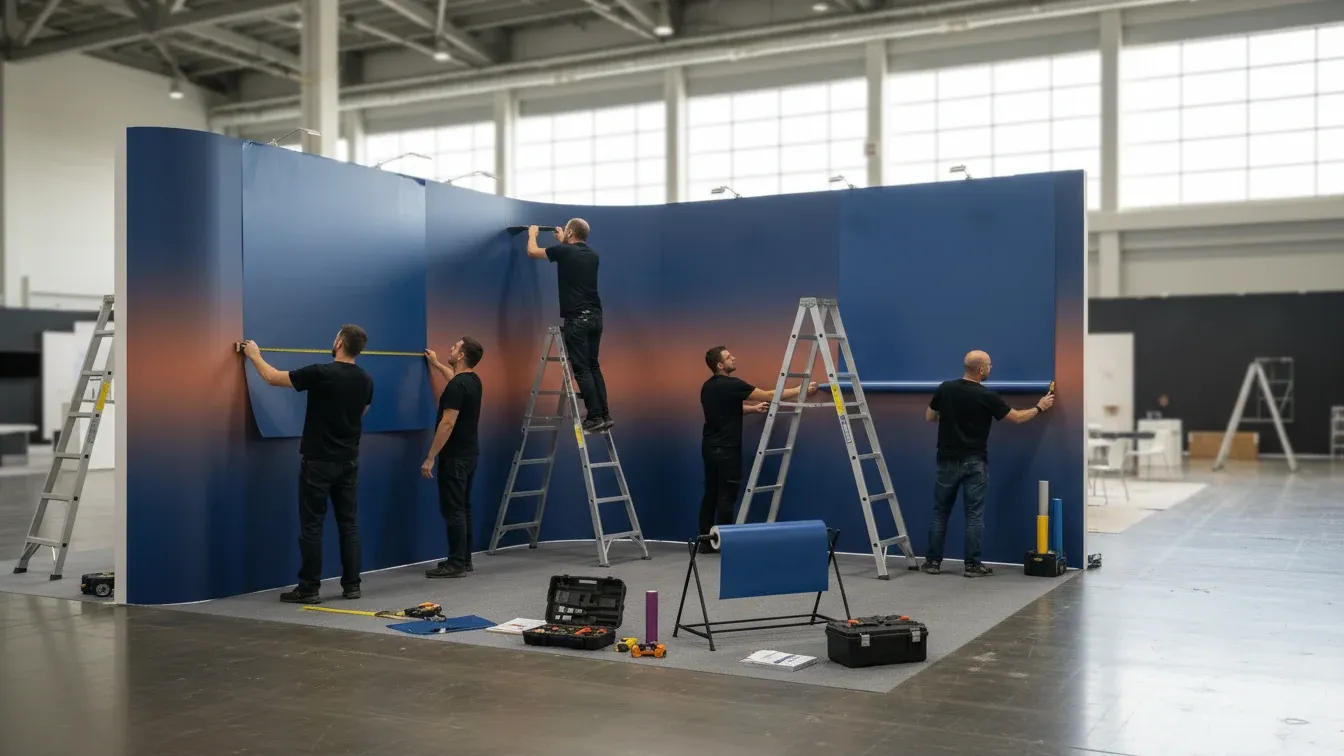
From there, the team stages graphics in the order they will be applied. Large wall panels are aligned, tacked, and applied with attention to seams and sightlines. Banners are mounted or coordinated with approved labor. Floor graphics are positioned only after the floor is ready. Temporary displays are installed with the removal plan in mind.
When the installation is complete, photograph the booth from multiple angles. Capture wide shots, close-ups of seams, and any areas that may matter during teardown. These photos are useful for the event team, future booth planning, and any damage or freight questions after the show.
Teardown is often more rushed than installation. Exhibitors want to leave, freight crews are moving quickly, and venue deadlines are strict. A good teardown plan protects the booth, the venue, and the brand assets you want to reuse.
Decide before the show which graphics are disposable, which should be saved, and which require careful removal from rented surfaces. Label reusable graphics and pack them with protective materials. If a graphic was designed for single-use removal, do not force it into storage unless the material and adhesive support reuse.
Also confirm who removes floor graphics, adhesive residue, temporary wall graphics, and banner hardware. Some venues charge fees for abandoned materials or surface damage. A clear teardown scope helps avoid surprises after the event.
AP Installations is a specialized commercial vinyl graphics installation company based in Beaverton, Oregon, serving the Pacific Northwest with nationwide project capabilities. Since 2008, the team has focused on professional vinyl graphics installation across retail, fleet, window, wall, floor, and experiential applications.
For trade shows and events, that specialization matters. AP Installations can support temporary brand activations, event graphics, building wraps, large-format banners, wall murals, floor graphics, sponsorship displays, and other high-visibility installations where timing and finish quality are critical. As a 3M Preferred Installer, the company brings certified installation standards to projects where the brand cannot afford a messy application or last-minute guesswork. See AP Installations’ Hillsboro Hops Stadium venue graphics and sponsorship signage work.
If your event graphics are part of a larger campaign, AP Installations can also connect the booth experience to other brand environments, including business window graphics, fleet vehicle graphics, and permanent or temporary workplace graphics.
Trade show graphics installation is where strategy, design, production, venue compliance, labor coordination, and field execution meet. The best results come from planning early, choosing materials for the actual environment, confirming venue rules before production, and giving the installation team enough information to work efficiently onsite.
A polished booth does more than look good in photos. It helps attendees understand your brand, find their way through the space, and remember the experience after the show ends.
Ready to plan trade show graphics installation for your next event? Contact AP Installations or call (503) 924-6168 to talk through your booth wraps, banners, floor graphics, temporary displays, and teardown needs.