Blog
Perforated Retail Window Graphics Checklist
Perforated retail window graphics need a glass, visibility, and finish checklist before install day. See what retail teams should confirm first.
Perforated retail window graphics can cover a storefront and still leave a view from the sales floor. That only works when the glass, the film, and the store schedule are ready before the crew arrives. A clean panel on the wrong glass, or a graphic that blocks the register view, becomes a redo while customers are in the store.
This checklist is for retail buyers, store managers, and print partners planning a perforated window campaign. It covers the glass check, the view from inside, the install window, and the finish that keeps the graphic looking right after opening day.
Plan retail window installation with a certified crew
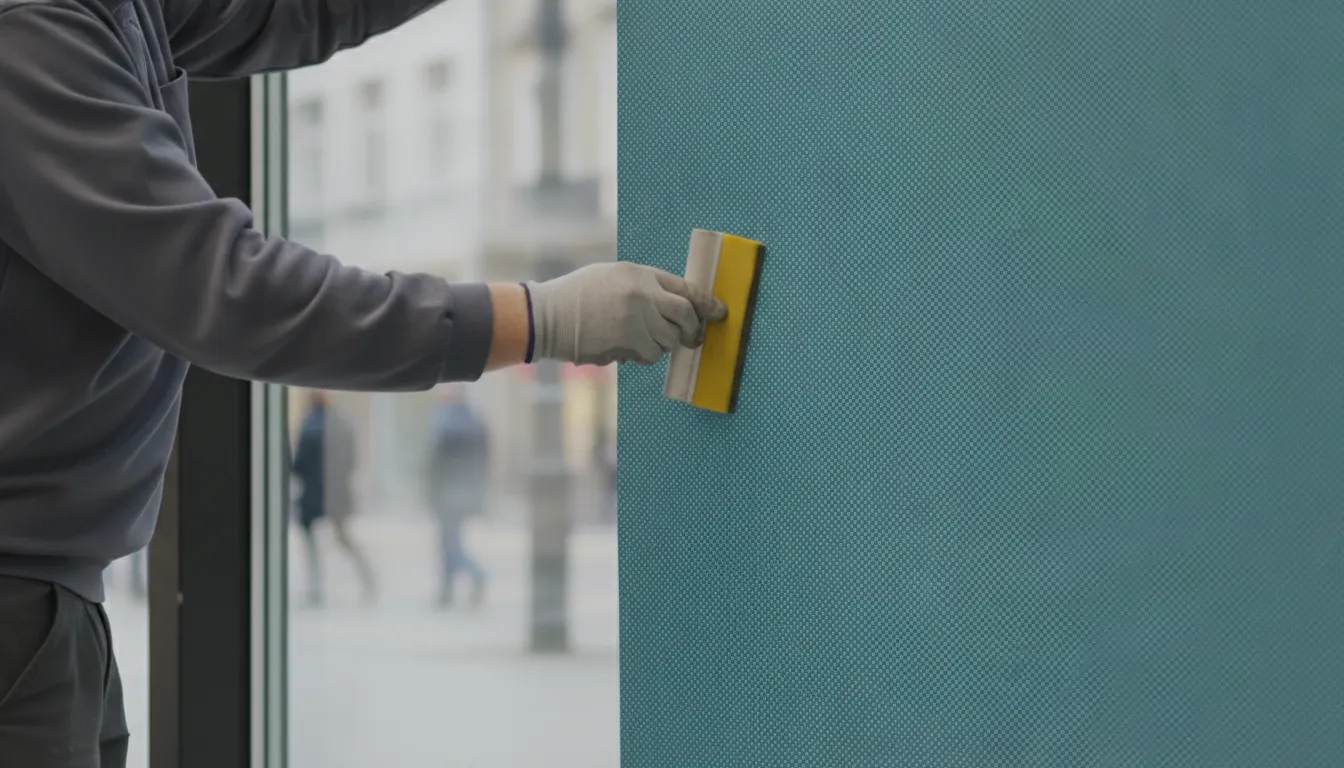
A perforated window graphic is printed vinyl with a pattern of small holes. The outside shows the campaign. People inside can still see through the open area during the day. Retail teams use it when they want coverage without turning the storefront into a solid wall.
The job is narrower than a general window campaign. Solid vinyl, frost film, and cut lettering solve different problems. Perforated film is the choice when the sales floor still needs daylight and a view of the sidewalk. If the goal is full privacy at night, or a door that must stay clear for traffic, this is the wrong film.
Commercial window perforated film explains how one-way vision and open-area ratios work. This checklist starts after that choice is made. The question is whether this store, this glass, and this week can support the graphic.
AP Installations installs perforated vinyl, frost film, and full-color window graphics for retail storefronts and branded spaces. Crews are based in Beaverton and cover the Pacific Northwest, with travel for multi-location work. The company is a 3M Preferred Installer, so matched film and documented install steps matter when a warranty is in scope.
Perforated film wants flat, sound glass. A pretty proof does not fix a pane that is filmed, cracked, or still curing from a recent replacement. Walk the elevation before art is locked.
Confirm every pane that will carry film. Note mullions, door lites, and any glass the campaign should leave clear. Measure the visible glass, not the frame opening. A panel that runs into a gasket or a door sweep will lift at the edge.
Look for existing film, paint overspray, silicone haze, and hard-water scale. Low-energy coatings and some factory films will not hold a new adhesive. If a pane was replaced recently, ask the glazier whether the surface has a protective coating that still needs to come off.
Dark ink on glass absorbs more sun than clear glass. 3M's building-window application bulletin warns that high-opacity or dark graphics in strong sun can add enough heat to crack glass. The same bulletin says perforated film on glass must be edge sealed. Retail glass with a southern exposure, a dark brand color, or an interior shade hard against the pane needs a review before print.
Do not promise a warranty on every pane. Eligibility depends on the film system, the surface, the exposure, and a documented install. If a pane is already chipped or has a failed seal, leave it out of the graphic or replace it first.
Most retail perforated graphics mount on the outside of the glass so the print faces the street. Interior mounts change the view, the adhesive, and how rain hits the holes. Confirm the mount with the printer before files are ripped. A graphic built for exterior use should not be flipped onto the inside at the last minute.
| Check. | Pass. | Stop and fix. |
|---|---|---|
| Glass surface. | Bare, flat, cured glass. | Old film, silicone, or a fresh coating. |
| Damage. | No chips, cracks, or failed seals. | A cracked lite or a soft edge. |
| Sun and ink. | Light or mid-tone art. | Heavy dark ink on sun-loaded glass. |
| Mount. | Exterior or interior is confirmed. | Art is reversed or the mount is open. |
| Edges. | Inset from frames and gaskets. | Art runs into hardware or a door. |
The graphic can win the sidewalk and still fail the store. Perforated retail window graphics have to leave a usable view for staff and for anyone who needs to see through an entry.
Before art is final, stand at the register, the fitting-room entry, and the main door. Note what staff must see: the sidewalk, a queue, a pickup zone, or a security mirror line. A 60/40 film, about 40 percent open, reads stronger outside and darker inside than a 50/50 film. Avery Dennison's perforated-film bulletin treats those open areas as a viewing choice, not a decoration.
Small type suffers once holes remove part of every letter. Keep prices, hours, and legal lines off the perforated field, or set them in a solid band where the type stays whole. Promotional art can be bold. Wayfinding should stay readable from inside the store.
Door lites, push bars, and accessible entries are not billboards. Keep perforated coverage off the swing of the door unless the landlord and the life-safety plan allow it. Existing address numbers, exit marks, and hours should stay visible or be reset in a clear zone.
Glass doors have their own rules for lettering, contrast, and hardware. If the campaign includes the entry door, use the signs on glass doors guide for that pane and keep perforated film on the fixed storefront glass.
Posters, suction-cup signs, and merchandising taped to the inside will show through the holes and muddy the print. Agree on a clear zone behind the graphic for the life of the campaign. Night privacy is limited. When interior lights are on and the street is dark, the holes read through. Tell the store that daytime privacy is the realistic expectation.
A perforated window job fails in operations more often than it fails in adhesive. The crew needs the glass, the sidewalk, and a stretch of time when the film can be applied dry and left alone.
Perforated window film is a dry application. 3M's IJ1229 perforated film, for example, specifies dry application only, with a minimum air and glass temperature around 54°F (12°C) on flat surfaces. Wet install methods used for some solid films drive moisture into the holes and cloud the graphic.
Rain, sprinklers, and a wet sidewalk are stop conditions. So is glass that is colder than the film spec, which is common on a Pacific Northwest morning. If the store only has a pre-open slot, confirm the glass can be warmed and dried first. Temperature and humidity change how vinyl grabs, and perforated film is less forgiving than a small decal.
Block the exterior pane, not the whole store. Move sidewalk displays, bike racks, and sandwich boards before the crew arrives. Tell the manager which door stays open. Interior staff can keep selling if the film is exterior-mounted, as long as nobody presses on the glass from inside while the panel is going down.
For a multi-store rollout, do not schedule every location for the same morning. AP coordinates retail work so the store can stay open, but each site still needs its own access, glass check, and weather call.
The print should arrive dry, laminated, and rolled with the liner intact. Perforated film must be overlaminated after printing so water and dirt do not pack into the holes. Avery Dennison's application bulletin makes that laminate step mandatory, not optional. If the roll shows wet ink, a missing laminate, or a crushed edge, do not install it to "save the opening."
Application is a sequence. Skipping the wash, the hinge method, or the edge seal is what makes a retail window look tired in the first month.
Wash with a film-safe cleaner and a new blade only where the glass actually needs scraping. 3M's building-window instructions say to use stainless blades on glass so a carbon blade does not scratch the pane. After the wash, the glass should be dry before any liner comes off.
A second wipe with isopropyl alcohol on a lint-free cloth removes the haze that soap leaves behind. Skip household glass sprays with silicone or wax. Those products are a common reason a corner lifts a week later. The surface preparation checklist is the right pass for any commercial vinyl job, including glass.
3M requires an edge seal on perforated film installed on glass. The seal keeps rain, window washers, and daily cleaning out of the holes. A raw edge on a storefront will wick water and show a dirty halo, even when the face of the print still looks fine.
Trim with a light touch and a sharp blade. Leave a small, even inset from frames and door hardware so the seal has a continuous line. Do not bridge a mullion unless the spec for that film allows it. Overlaps and butt joints should be planned in the file, not invented on a ladder.
Walk the graphic from the sidewalk and from the sales floor in daylight. Look for bubbles that are actually trapped liner dust, lifted corners, and type that disappeared into the hole pattern. Fix those before the lane is released.
Leave the store with simple care rules. No pressure washing across the graphic. No ammonia on the face. No tape or suction cups on the print. Ask the landlord's window washer to keep chemicals and blades off the film. Removal later should be planned, not improvised. Most removable perforated adhesives release cleanly from sound glass when the temperature is right, but a rushed pull can leave adhesive on a cold pane.
Installation is done when the store can run the graphic without guessing. Retail teams need a short record, not a binder they will not open.
Write down the film name, the laminate, the mount side, and the date. Note which panes were skipped and why. If a 3M matched system was used and the install was documented, say what that supports and what it does not. It is not a blanket promise that every graphic lasts a set number of years. Sun, wash methods, and film choice all change the result.
For a seasonal campaign, set the removal date before the graphic goes up. Holiday art left through summer is how perforated holes fill with grime and how a clean removal turns into a restoration. Pair the removal plan with the next campaign so the glass is not bare for a week between prints.
Print shops and agencies that sold the graphic but do not run install crews can hand this scope to a white-label partner. AP does that work for retail programs: glass check, install, edge finish, and photos the store can file. The shop keeps the client relationship. The crew keeps the install standard.
Request a quote for perforated retail window graphics
They are printed window films with a field of small holes. Shoppers see the graphic from the sidewalk. Staff can still see out through the open area in daylight. They are used when a store wants coverage without a solid vinyl block-out.
Usually yes, when the film goes on the outside and one public door stays clear. The crew still needs a dry pane, a safe sidewalk, and time to wash, apply, and edge-seal before the glass is touched again. A full interior mount is harder to do during open hours.
Life depends on the film, the sun, the laminate, and how the window is washed. Short promotional runs and longer exterior films are specified differently, and a lab durability number is not a promise for every storefront. Ask for the film bulletin for that SKU and treat any warranty as conditional on the right system and a documented install.
Yes for perforated film on building glass. 3M's window-application guidance says perforated film installations on glass must be edge sealed. The seal keeps water and dirt out of the holes. A graphic with open edges will discolor at the perimeter even if the face still looks new.
Not in the way a solid film does. When interior lights are brighter than the street, people outside can see through the holes. Plan perforated retail window graphics for daytime view and branding. Use a different film if the store needs night privacy.