Blog
How Do Temperature and Humidity Affect Vinyl Graphics Installation?
Learn how temperature and humidity affect vinyl graphic adhesion, surface readiness, and installation planning for commercial projects.
Blog
Learn how temperature and humidity affect vinyl graphic adhesion, surface readiness, and installation planning for commercial projects.
Temperature and humidity influence how vinyl graphics handle, make contact with a surface, and settle after application. For a successful vinyl graphics installation, plan for the temperature of both the room and the actual installation surface, manage moisture and condensation, and follow the film and adhesive maker's instructions. There is no single temperature or humidity number that fits every film, substrate, and site.
Discuss your installation conditions with AP Installations
Installers assess more than the thermostat reading. The air, substrate, film, and work area can all be at different temperatures. A wall beside an exterior door may be colder than the center of a heated room. A vehicle panel parked outdoors can remain cold after the air warms. A sunlit window may become much hotter than the surrounding room.
These differences matter because pressure-sensitive vinyl depends on adhesive contact with a clean, compatible surface. Temperature can change how flexible the film feels and how readily the adhesive wets out against the substrate. Moisture, condensation, dust, and other contamination can interfere with contact. The result can be harder handling during application or an increased risk of edges lifting later.
Use material-specific instructions as the primary reference. The same limits should not be assumed for every brand, adhesive, finish, application method, or surface. Start planning with the relevant commercial vinyl graphics installation services and confirm conditions for the actual project before installation day.
Film makers may specify a minimum application temperature, a recommended range, or separate conditions for the air and the substrate. Those values are not interchangeable. A room can feel comfortable while a concrete wall, metal panel, glass pane, or vehicle body is still outside the range allowed for the product.
As one reference point, a vinyl cutter standard operating procedure published by the Nebraska Library Commission says vinyl should generally not be applied below 50°F and notes that ambient and surface temperatures matter for best results. That guidance is not a universal specification for commercial wraps or every adhesive. Check the instructions for the selected material and application before relying on any general threshold: Nebraska Library Commission vinyl cutter SOP.
Cold conditions can make some films less pliable and may reduce the adhesive's ability to form contact during application. A stiff film can be harder to position around curves or other details. If the surface is colder than the material, the adhesive may not behave as expected even though the room air is warm enough. In some applications, a graphic may appear attached at first but fail to bond well at edges or recesses.
Excessive heat can create a different set of handling problems. Film may become more pliable, stretch more readily, or be difficult to reposition. A hot surface can also alter working time. When applying graphics to vehicles, storefront glass, or exterior walls, direct sunlight can create a much hotter surface than the shade or room temperature suggests. Plan for the exposure at the precise time and place of installation.
Never try to compensate for an unknown material limit by simply using more heat or pressure. Follow the product instructions and ask the installation team to assess unusual site conditions. The right approach depends on the film, surface, graphic size, and installation method.
Relative humidity describes the amount of moisture in the air compared with the maximum the air can hold at that temperature. It is not the same as water on the surface. High humidity alone does not tell you whether a particular installation can proceed, but it can signal a need to check for moisture, condensation, and changing site conditions.
Condensation is a practical concern when a surface is cooler than the surrounding air. Moisture can form on glass, metal, or other cool materials even when the surface looks nearly dry. Vinyl should not be applied over condensation or a damp surface. Moisture can disrupt adhesive contact and may be trapped under the graphic. Allow the surface and work area to reach appropriate conditions, then verify that the surface is dry before application.
Recent cleaning, rain, washing, steam, or work elsewhere in the building can also affect readiness. A wall that has been wiped down may need time to dry fully. A newly painted surface has its own curing requirements. Follow the paint manufacturer's cure guidance and have the installation team check adhesion compatibility before applying graphics. AP's guide to wall mural installation can help buyers understand the broader project considerations, but the actual substrate and coating still need to be reviewed on site.
Do not treat a humidity reading as a substitute for a hands-on surface check. Record the room conditions if the film instructions call for them, and also inspect the actual application area for condensation, dampness, residue, or temperature differences.
A short environmental review helps the project team spot avoidable delays. The goal is not to make every site identical. It is to give the installer enough information to judge whether the material and application plan fit the real conditions.
For multi-site work, use the same site-information checklist at each location. A consistent handoff can make it easier to identify which sites are ready and which need a change in timing or preparation. For projects involving multiple surfaces or locations, review AP Installations' project examples and share relevant site details when discussing scope.
The table below is a planning aid, not a substitute for the film manufacturer's instructions or the installer's assessment. No row sets a universal acceptable limit.
| Site condition | What it can affect | Practical response |
|---|---|---|
| Cold air or a cold substrate | Film flexibility and adhesive contact may be affected; a surface may remain cold after the room warms. | Measure near the work area and on the surface. Compare results with product instructions and allow suitable acclimation if specified. |
| Hot surface or direct sun | Film handling and working time can change, and the surface may be hotter than the ambient air. | Check the surface at the planned installation time. Consider shade or a different work window if the instructions or installer call for it. |
| High humidity without visible moisture | A reading alone may not reveal whether the surface is ready. | Use humidity information together with surface temperature, product limits, and a direct surface inspection. |
| Condensation or a damp substrate | Moisture can interfere with contact between the adhesive and surface. | Pause. Let the area dry and stabilize, then have the installer recheck before application. |
| Changing indoor conditions | Open doors, HVAC changes, other work, and temperature swings can alter the installation zone. | Coordinate access and building controls for the work period. Keep the environment as consistent as practical. |
| New paint, coating, or unusual surface | The surface may not be cured, clean, or compatible with the selected adhesive. | Follow the coating maker's cure guidance and arrange compatibility or adhesion checks before installation. |
Environmental preparation is part of project coordination. A suitable indoor work zone should be clean, accessible, and stable enough for the specified material and installation method. Keep the immediate area clear of activities that can introduce dust, splashes, or sudden temperature changes. If the graphic is being installed while a facility remains open, coordinate with operations so that doors, equipment, and nearby work do not undermine the planned conditions.
Give the installer the opportunity to inspect the actual site before making assumptions based on a building plan or a remote temperature reading. Share photos when helpful, but note that photos cannot confirm surface temperature, moisture, or adhesion. For a commercial graphics installation quote, provide the surface type, approximate graphic dimensions, site address, access constraints, and the expected installation window.
Acclimation may be relevant when film or substrate has been stored or transported in conditions that differ from the work area. Follow the product documentation and the installer's plan for storage and handling. Do not move rolls from a cold vehicle into a warm room and assume that the film has immediately reached room conditions. The time required depends on the material, packaging, and temperature difference, so use the manufacturer's instructions rather than an invented fixed waiting period.
Outdoor work requires attention to more than air temperature. Sun, shade, wind, rain, overnight cooling, and the temperature of the receiving surface can change throughout the day. A schedule that works for one facade or vehicle may not suit another. For building wrap installations or large exterior graphics, discuss exposure, access, and workable installation windows as part of the scope. For vehicle projects, see the guidance on truck wrap installation planning.
The surface and installation setting change which environmental details deserve the most attention. For a fleet vehicle, the body panels may have been parked outdoors, moved into a service bay, and warmed unevenly by sunlight. Check each work area rather than assuming all panels are at one temperature. Ask the site contact about wash timing, indoor access, and whether the vehicle can remain in a stable location during the work.
\nStorefront and interior glass can be affected by sun exposure, heating, and the temperature difference between inside and outside. A pane may feel different near its edges or in a shaded section than it does in direct sun. Plan the work window and confirm the exact application area with the installer. For additional context on the choices involved in business glazing graphics, see AP Installations' business window graphics guide.
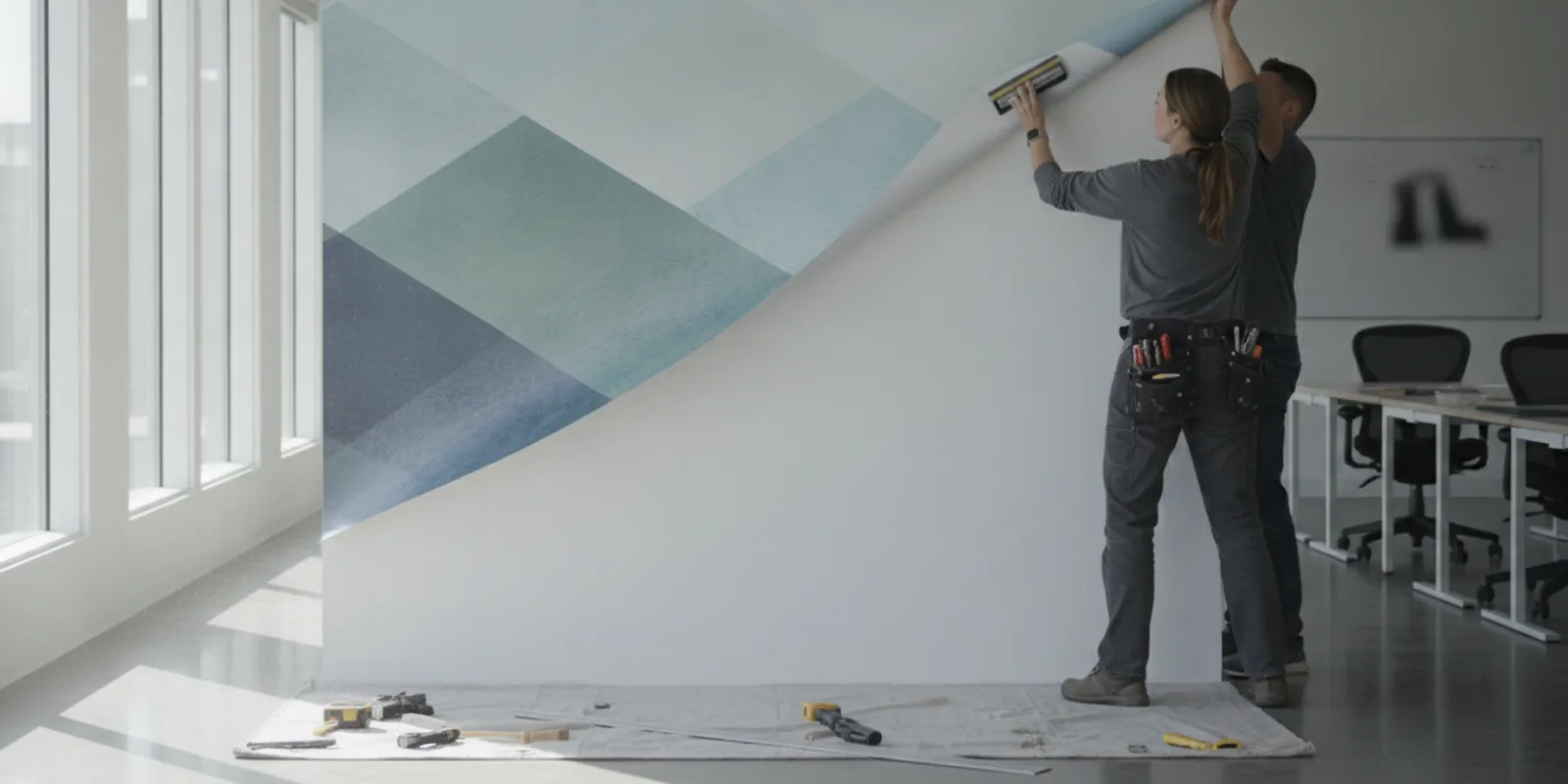
\nWalls and large interior murals bring other factors into the conversation. Paint condition, wall texture, recent repairs, and airflow near the surface can affect readiness alongside temperature and moisture. A wall that is partly exposed to an exterior environment may not match the conditions deeper inside the building. Provide details about the finish and any recent maintenance so the installation team can assess the receiving surface before work begins.
\nOutdoor building graphics face changing conditions across the surface and across the day. Shade can move, wind can affect handling, and weather may alter the installation window. A project plan should account for access and exposure, rather than basing the full installation decision on one reading collected at a different time or location.
\nWork should pause for review when conditions are outside the applicable product guidance, when moisture is present, or when the installation zone is changing too quickly to control. A pause is also sensible if the actual surface differs from the information provided during planning, such as unexpected texture, a coating, or a cold area behind a graphic location.
Adjustment may be possible when the issue is local and can be addressed without compromising the material or surface. Examples include moving work out of direct sun, stabilizing indoor conditions, allowing a damp surface to dry, or changing the sequence so a suitable area is completed first. The installer should judge whether those changes are adequate for the material and application.
Rescheduling can be the responsible choice when an acceptable installation environment cannot be achieved. Build flexibility into the plan for weather-sensitive exterior work, site access, and facilities that cannot maintain steady conditions. Clarify who will approve a change and how materials will be stored while the team waits. This is especially important for multi-location rollouts where site readiness varies.
Keep a simple record of the decision: site condition, material guidance reviewed, action taken, and any agreed next step. That record supports a clear handoff between the buyer, print provider, site contact, and installer. For organizations seeking a qualified partner, AP Installations' information about certified graphic installation explains the role of installation expertise without replacing a project-specific material review.
Commercial programs often involve several surfaces, buildings, or regions. Conditions can vary by elevation, orientation, building operation, and season. Do not assume that approval at one site proves every later site is ready. Use a repeatable pre-installation check and let each local site contact report current conditions close to the installation date.
For a retail or office rollout, make environmental readiness one line in the site checklist. Include indoor or outdoor location, surface material and finish, recent cleaning or painting, expected air conditioning or heating, sunlight exposure, and any known moisture issues. Collect photos and measurements using the same method where practical. Flag exceptions for review instead of asking local staff to make technical decisions about film compatibility.
Set a communication path for changes. If a site has an open loading door, a heating system outage, fresh paint, or an unexpected cleaning schedule, the installer needs to know before mobilization. A clear contact and decision deadline help avoid wasted site visits and rushed application. AP Installations supports projects in the Pacific Northwest and nationwide; discuss the project footprint and logistics through its installation support for brands, agencies, and print shops.
No. Application limits vary by film, adhesive, substrate, and method. Check the product instructions for the specific material, and consider the temperature of the surface as well as the air. A general reference can help identify a question to ask, but it does not override product-specific guidance.
Possibly, but a humidity percentage by itself is not enough to decide. The surface must be dry and free of condensation, and the conditions must fit the selected product's requirements. Have the installer review the air and surface conditions together.
Do not rely on the room thermostat alone. Measure or assess the receiving surface and compare it with the material instructions. If the surface is outside the suitable range, the installer may recommend acclimation, a change in work timing, or a pause.
Post-installation handling and care guidance depends on the product and application. Ask the installer what to avoid, when the surface can be cleaned or exposed to routine use, and whether any special care applies. Follow the material maker's directions rather than assuming one universal waiting period.
Share the graphic dimensions, substrate and finish, indoor or outdoor location, material details if known, site conditions, access limitations, and desired timing. Note recent painting or cleaning, direct sun, possible moisture, and any expected changes to heating or ventilation. These details help the installation team assess readiness and identify questions early.
Request a quote for your graphics installation
When temperature and humidity are considered alongside surface condition, material instructions, and site scheduling, buyers can make better readiness decisions and reduce avoidable installation disruptions. Confirm the actual conditions with the installation team before work begins.