Blog
3M Vinyl Wrap Installers: A Buyer Checklist
Compare 3M vinyl wrap installers on credentials, process, prep, and documentation before you request a commercial vehicle consultation.
Blog
Compare 3M vinyl wrap installers on credentials, process, prep, and documentation before you request a commercial vehicle consultation.
3M vinyl wrap installers are not interchangeable, even when two quotes use the same film name. A commercial wrap has to survive curves, door gaps, wash bays, and years in the sun. The difference shows up in the credential you can verify, the process on the quote, the surface prep before film goes down, and the paperwork that comes back when the vehicle leaves.
This checklist is for fleet managers, brand teams, and print shops comparing installers before a truck, van, or trailer is wrapped. It is a buying comparison, not a how-to for applying film yourself. Confirm any warranty path against 3M's current bulletins. A credential is a condition you can check. It is not a guarantee that every graphic qualifies.
See AP Installations' certified vehicle installation for fleet and transit graphics, from handoff through closeout.
Start with the job, not the badge. A single box truck and a 40-unit rollout fail for different reasons. One needs a clean finish on compound curves. The other needs the same finish on every unit, including the vehicles you buy next year. Ask each shop to answer the same four questions in writing.
Price belongs on the sheet, but it is the last column, not the first. A low number that skips prep or closeout photos usually returns as edge lift, a mismatched reprint, or a truck out of service twice. AP Installations is a Beaverton, Oregon installation company. See AP Installations' certified vehicle installation for fleet and transit graphics, including multi-unit programs. The same comparison should work whether you hire AP or someone else.
Keep the comparison to vehicle wraps. A shop that is excellent on storefront film can still be the wrong crew for a trailer with rivets and recessed door handles. If you want the broader definition of a Preferred listing, read what a 3M Preferred graphics installer is. This page stays on the vehicle decision.
3M does not use one badge for every surface. On its installer programs page, 3M says a Preferred Installer has passed advanced testing for a listed specialty. Those specialties include Fleet Graphics, Windows, Walls and Floors, Architectural Finishes, and Vehicle Color Change. A color-change listing is not the same thing as a fleet listing. Ask which one the person on your truck actually holds.
There is a second status buyers sometimes hear next to Preferred. A company certification is a business claim, not a personal specialty. Do not treat a personal Preferred badge and a company certification as the same line on a proposal. Ask which one is being claimed, whose name is on it, and which specialty applies to a vehicle. If the shop cannot point you to a current listing, score that row as unanswered.
Verify the listing yourself. 3M's find an installer directory is the public place to confirm a name, a company, and a specialty. A logo on a website does not show whether the credential is current or whether it belongs to the crew assigned to your bay. Ask for the installer's name, the program, and the specialty, then look them up.
If you are evaluating AP Installations or another provider, ask for the current credential, the relevant vehicle or fleet specialty, and the name of the crew assigned to the work. AP is a 3M Preferred Installer in Beaverton, and the company facts list Oregon CCB# 253414. Those details are more useful than a logo alone, and they do not mean every project automatically qualifies for a 3M warranty.
Warranty eligibility depends on using the correct 3M Matched Component System, approved materials, documented production, proper installation, surface conditions, and exposure environment. The 3M MCS warranty guide is the page for coverage terms. Use it after you have chosen an installer, not instead of comparing them.
A credible process is visible before the vehicle arrives. You should be able to read the steps and see who owns each one. Design, print, lamination, and installation are often different companies. That split is fine. An unnamed split is not. Colors shift and panels come up short when nobody owns the handoff.
Ask each installer to walk the same sequence:
Fleet work adds a staging question that a one-off wrap does not. How many units at a time? What happens if a truck arrives dirty or still in revenue service? AP's fleet work is built around repeatability: surface prep, layout, alignment, and communication so each unit looks like part of the same program. That standard is spelled out on the fleet and transit graphics section of the capabilities page.
Also ask what the shop does not do. AP is an installation specialist. Print partners keep the press work. The installer should still be willing to reject a film stack that will not live on that vehicle. If a quote says "premium vinyl" and nothing else, you cannot compare it. You need the face film, the overlaminate, and the printer and ink combination in writing.
Some 3M wrap systems may qualify for long-term outdoor durability depending on the film, surface, exposure, maintenance, and documented installation conditions. Treat that as a range to confirm, not a promise on the proposal. If your vehicles live in coastal weather, constant highway wash, or full sun, say so before the film is chosen. The installer should change the spec, not hope the same film covers every exposure.
Film copies the surface under it. Chips, wax, silicone, and a failing clear coat become visible the day the liner comes off, and they get worse after the first heat cycle. Surface preparation is the step most likely to be rushed when a quote is competing on speed. Put it on the comparison sheet anyway.
A vehicle-wrap prep plan should say, in plain language:
Ask who decides that a panel is not wrappable. A careful installer will stop for cracked paint or a recent repaint rather than cover it and argue later. Fresh paint and some repairs can outgas and lift film days after a job that looked perfect at pickup. If a body shop just painted a door, tell every bidder. The right answer is a test or a delay, not a same-day wrap.
AP assesses the vehicle and builds the schedule so the truck is clean, dry, and available for the hours the film needs. Climate-controlled conditions are used when the job requires them. That is ordinary professional practice, and it should be on every quote you compare. The vinyl graphics surface preparation checklist goes surface by surface. Use it to see what "clean" should mean. Use this page to see whether the installer priced that work.
Edges deserve their own question. Door handles, mirrors, rivets, and recessed lights are where wraps fail first. Ask how those areas are finished and post-heated, and ask to see a recent vehicle with the same trouble spots, not only a beauty shot of a flat trailer side.
The wrap is not finished when the squeegee stops. It is finished when you can prove what was installed, on which vehicle, with which film, and what the driver is allowed to do next. That file is what a fleet manager, an insurer, or a warranty conversation will ask for months later. If it is not in the quote, assume you will not get it.
Ask for these items before you award the work:
AP closes fleet jobs with documentation and maintenance guidance because the record has to outlast the crew. Closeout photos, site notes, and a named field lead are how the company runs national work as well as local work. The warranty documentation guide lists what a graphics file should hold. Pair it with the installer comparison here so the documents are part of the bid, not an afterthought.
For a multi-unit program, ask for one wrap spec per vehicle type. Same files, same print profile, same laminate, same install notes. The next van should not depend on whoever remembers last quarter's job. If a panel is short or the color is off, the quote should already say who reprints it and who pays for the extra downtime.
Keep the buyer's own prep package separate from this comparison. What you send the crew, art, access, and film stack, is covered in what to prepare before a 3M application. This article is about what you should require back from the installer.
Put every bidder on the same rows. A blank cell is a finding. It means that shop did not answer, not that the answer is fine. Score process, prep, and documents before you sort by price.
| Comparison point | What a complete answer includes | Weak answer to flag |
|---|---|---|
| Vehicle credential | Named person, program, and specialty you can find in 3M's directory. | A logo only, or a window credential offered for a truck wrap. |
| Company status | A clear yes or no on any company-level claim, plus the contractor license and insurance. | "We are 3M certified" with no level and no name. |
| Film spec | Face film, overlaminate, and ink system written on the quote. | "Premium vinyl" or "3M or equivalent." |
| Install process | Measure, print owner, downtime window, post-heat, and same-day walkthrough. | A start date and a price, with the steps left verbal. |
| Surface prep | Wash, inspection, defect callouts, and a rule for fresh paint. | Prep described as "we clean it" with no stop rule. |
| Documentation | Photos, film names, defect notes, care sheet, and a named lead. | Photos only if you ask later, or no care notes at all. |
| Fleet repeatability | A spec per vehicle type and a plan for units that arrive unready. | Each truck treated as a new one-off with no shared file. |
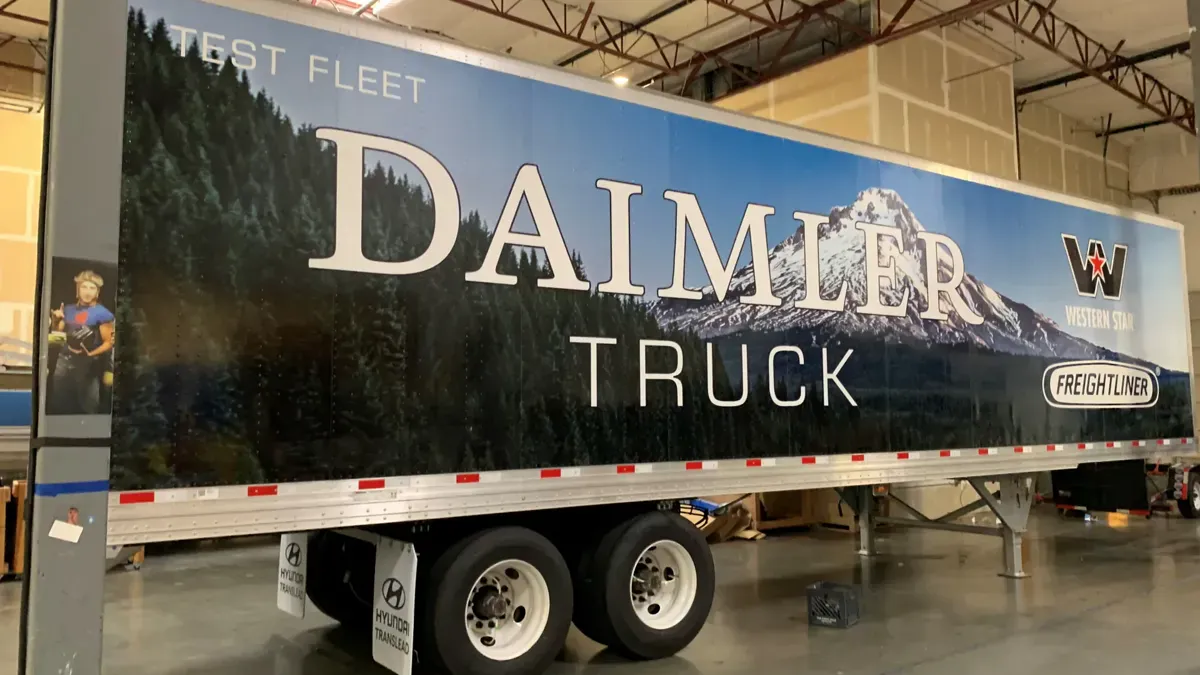
Two shops can both be capable and still score differently. One may be the right fit for a single color change on a sales car. Another may be the right fit for trailers that have to match a program already on the road. AP's commercial fleet work, including programs for clients such as Daimler Truck and transit graphics for TriMet, is the second kind of job: repeatable units, public view, and a record after the install.
If you are pricing the project as well as the installer, the commercial vehicle wrap cost breakdown is the place for budget ranges. Do not let a cost article choose the crew. A cheap install on a bad surface is the expensive one.
Use these once the written quotes are in. You are listening for specifics, not confidence.
A useful answer names a person, a product, or a document. "We have been doing this for years" is not an answer you can score. AP's crews are built around two standards at once: craft on materials and surfaces, and conduct on communication, issue resolution, and care for the vehicle while it is in the bay. The AP Way is the public description of that field standard. Ask any installer you compare for their version of the same thing.
Print shops comparing a white-label partner have one extra question. Who talks to your client if a panel is short? AP's model is installation only, so the print partner keeps the account and the installer owns the field. That split should be in the agreement either way. The who we serve page describes how AP works with brands, agencies, and print partners.
Portfolio photos are the last check, not the first. Ask for vehicles that resemble yours: the same body style, similar curves, and graphics that have been on the road, not only photos from install day. A flat box side is an easy photograph. Handles, bumpers, and rivets tell you more.
Look for three things in the examples:
AP publishes project work, including fleet graphics, on its projects page. Use a portfolio to confirm the kind of vehicle. Use the checklist above to confirm the process. A beautiful photo with no film spec and no closeout file is still an incomplete bid.
Geography is a practical filter, not a quality filter. AP is based at 10140 SW Allen Blvd, Suite A, Beaverton, OR 97005, with crews that serve the Pacific Northwest and travel for projects across the United States. A local bay matters when you need same-week downtime. A traveled crew matters when the same graphic has to land in more than one market. Either way, the credential, the prep, and the file should look the same.
Request a vehicle wrap consultation and send the vehicle type, the film spec, and the date the unit has to return to service.
Verify the person's name, the 3M program, and the specialty in 3M's installer directory. Then compare the written process, the surface-prep plan, and the documents you will receive. A badge without those three is not enough to award a commercial vehicle.
No. Preferred status is a personal specialty listing, such as Fleet Graphics or Vehicle Color Change. A company certification is a separate business claim. Ask which one is being claimed, whose name is on it, and which application it covers.
No. Warranty eligibility depends on using the correct 3M Matched Component System, approved materials, documented production, proper installation, surface conditions, and exposure environment. Confirm the film stack in writing and read the MCS warranty guide before you treat coverage as part of the sale.
Ask what would stop the job. A clear answer names paint failure, fresh repaints, and contamination, and it says those are checked before film is applied. "We always clean it" is not a prep plan. The quote should also say the vehicle stays indoors until edges are post-heated.
Ask for the film and laminate names, install photos, notes on surface defects, wash-wait instructions, and the name of the lead installer. On a fleet, ask for one written spec per vehicle type so the next unit matches the first.