Blog
3M Application: What to Prepare First
A 3M application starts before the film goes on. See what commercial buyers should confirm so a certified crew can install it right.
Blog
A 3M application starts before the film goes on. See what commercial buyers should confirm so a certified crew can install it right.
A 3M application is the job of getting a finished 3M graphic onto a real surface so it looks right and stays put. The film, the laminate, the wall or vehicle, and the day of the install all have to agree. Buyers who treat that as "just stick it on" usually find out too late that the surface, the schedule, or the artwork was not ready.
This guide is for brand teams, facilities managers, and print partners planning a commercial project. It covers what to confirm before a crew arrives. It does not replace a product bulletin, and it does not walk you through applying film yourself.
Talk with a 3M certified installer before the film is printed, so the application plan matches the surface.
People search "3M application" and land on job listings. In graphics work, the phrase means something else. It is the planned install of a 3M film system onto a commercial surface: a wall, window, floor, vehicle, or architectural finish.
3M's own installation guidance says a successful job is a collaboration. Designers, specifiers, the shop that builds the graphic, and the installer all have to know the details before anyone starts. A film choice that looks fine on a proof can fail on brick, fresh paint, or a curved truck panel.
AP Installations treats that handoff as the job, not a side note. Crews based in Beaverton, Oregon install walls, windows, fleets, murals, and floors for brands, agencies, and print shops, including projects outside the Pacific Northwest. The application plan is written before the crew is on site.
Four questions decide whether the project is ready:
The most expensive mistake in a 3M application is printing a graphic for a surface it cannot live on. Texture, shape, and expected life all change the film.
3M's general installation bulletin splits surfaces into smooth and unsmooth. Smooth has little or no variation. Unsmooth runs from fine texture, like light sandpaper, to heavy texture, like brick. A single wall can change from one to the other around a column or a patched area. Film that needs a smooth face will telegraph every high spot, or it will not bond in the low spots.
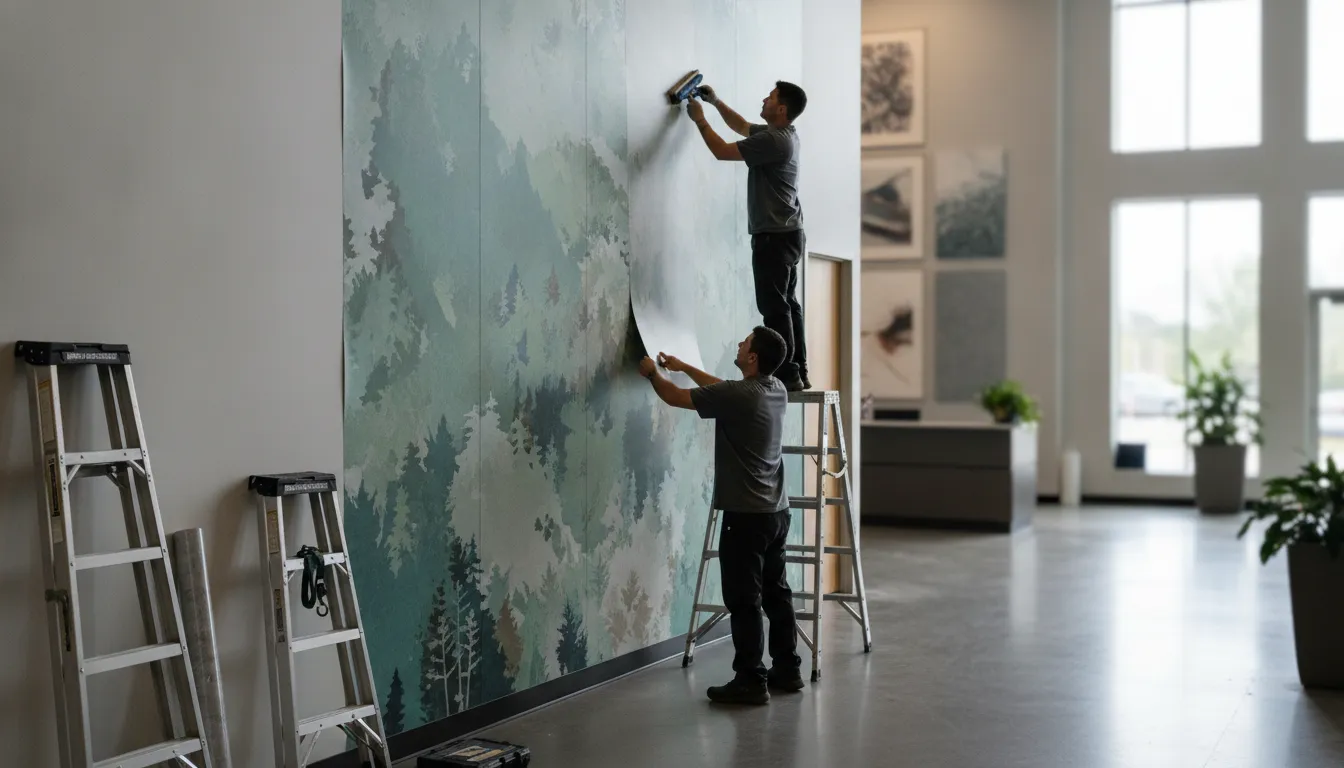
Shape matters just as much. Flat walls and glass are a different job from fleet panels, door handles, and compound curves. A wall mural that is one large panel on a drawing may need seams once the crew measures outlets, reveals, and control joints. Those seams should be in the art, not invented on a ladder.
Ask these questions before the print is released:
AP crews measure those conditions in the field. A site survey is the right place to catch them. The commercial vinyl installation site survey checklist shows what a survey should record before art is locked.
A 3M application is only as sound as the stack of materials in it. Film, ink, and overlaminate are meant to be chosen as a set. Mixing a 3M face film with an unrelated laminate, or printing with an ink the bulletin does not list, can void the performance you thought you bought.
3M describes this matched stack as the basis of a finished graphic. Warranty eligibility depends on using the correct 3M Matched Component System, approved materials, documented production, proper installation, surface conditions, and exposure environment. That is a condition, not a promise that every project qualifies. The 3M MCS warranty guide covers what the warranty is and is not. This article stays on the prep that makes a qualifying application possible.
For the buyer, the practical ask is simple. Get the construction in writing before print:
Print partners already know their presses. What they often need from the installer is a check that the chosen stack fits the surface and the exposure. AP does not compete for the print. The crew's job is to say, before the run, whether that stack can be applied on the surface in front of them.
Two public 3M pages are worth keeping with the spec. The 3M installer directory is where buyers confirm a Preferred Installer listing. A company-level credential is a separate 3M status, and this guide does not claim it for AP. The general installation techniques bulletin is the reference for flat, rigid applications. Read the product bulletin for the exact film on your job. It overrides any general note.
Film will not hide a bad surface. It will show it. Paint that is soft, glass that is oily, or a panel still covered in road film will fail no matter how careful the squeegee work is.
3M's substrate bulletin, Instruction Bulletin 5.1, is the reference for cleaning and for surface-specific limits. It separates general cleaning, solvent cleaning, isopropyl alcohol cleaning, and dust removal, and it calls out extra care for painted surfaces, glass, metals, plastics, and wood. A buyer does not need to run those methods. A buyer does need to know the surface is legal for film before the crew is booked.
Painted drywall should be fully cured per the paint maker, and the crew should adhesion-test before a large application. Fresh paint, powder coat, and some plastics can outgas. Outgassing lifts film into bubbles days after a job that looked perfect at walkthrough. If a wall was painted for this project, say so. Do not guess that "a week" is enough.
Access is part of readiness too. AP manages access, timing, and site conditions so the install is not guesswork on the day. Tell the project lead:
Surface-by-surface cleaning steps live in the vinyl graphics surface preparation checklist. Use that when you need the prep detail. Use this page to decide whether the project is ready to schedule.
Bring this list to the kickoff. A clear answer on each one keeps the application from turning into a change order.
If any answer is "we will figure it out on site," the project is not ready to print. AP's project managers, including the Northwest team that lines up crews and site expectations before work begins, would rather pause a day than install against an open question.
A date on a calendar is not an application window. Films have a range where the adhesive can wet out and the installer can still handle the liner. Too cold and the bond stays weak. Too hot and the film stretches, sticks early, or is miserable to finish cleanly.
Product bulletins set the range for each film. Many 3M graphic films want the air and the surface in a moderate band, often near 60°F to 100°F (16°C to 38°C), but that is not universal. Confirm the number on the bulletin for the film you specified. A food-plant cooler, a sunlit south wall, and a box truck in a Portland winter are three different jobs.
Also plan the hours after the install. Fresh graphics should not be washed, driven through a tunnel wash, or hit with a pressure washer the same day. Edges need time. If the vehicle has to be in service that afternoon, say so before the film is booked, not when the driver arrives.
The temperature and humidity guide goes deeper on how climate changes adhesion. For planning, you only need the window: a space the crew can hold in range, for long enough to finish and to let the bond start.
The prep questions stay the same. The risk does not. Use this as a planning table, then confirm details against the film bulletin and a site visit.
| Surface | What to confirm first | Typical risk if you skip it |
|---|---|---|
| Interior walls. | Paint cure, texture, outlets, and furniture move-out. | Telegraphed texture, soft paint, or art that misses the wall. |
| Glass and storefronts. | Inside versus outside, oil, silicone, and shop hours. | Poor bond, trapped debris, or a fight with door hardware. |
| Fleet and vehicles. | Panel shape, old graphics, wash access, and downtime. | Stretched film, edge lift, or a truck stuck out of service. |
| Floors. | Slip-rated overlaminate, traffic plan, and cure time. | A graphic that is slippery, scuffed, or walked on too soon. |
| Brick and textured walls. | Texture class, and whether heat plus laminate are required. | Edges that never seat, or a film never rated for that texture. |
Floor graphics need the right adhesive and a slip-rated protective overlaminate built for foot traffic. Do not spec a wall film for a floor because the art is the same. Brick and other heavy texture often need a film rated for that face, plus heat during install. If the bulletin does not allow it, a different surface or a different film is the honest answer.
Fleet work adds time the wall job does not. The vehicle has to be clean, dry, and out of service. Complex curves are a certified-installer job, not a handoff to whoever is free that morning. AP's fleet and wall crews plan that downtime with the owner so the graphic is finished before the asset is needed again.
Certified craft still fails when the package is thin. AP closes projects with photos, notes, and punch items because the record matters after the crew leaves. The same habit should start the job.
Send this before the install date:
One accountable contact beats a group thread. Scope questions, access changes, and material issues should land with a named person on your side and a named lead on the install side. That is how AP runs the job: one contact, a managed crew, and a closeout you can file.
If you are the print shop, this package is also how you protect your client. You keep the account. The installer handles the field. The who we serve page spells out that split for brands, agencies, and print partners.
You are ready to schedule a 3M application when every line below is true. If one is open, fix it before the film ships.
That is the difference between a graphic that represents the brand and one that has to be redone. AP Installations is a 3M Preferred Installer based in Beaverton, Oregon, and the public site also lists DI-NOC Architectural Finishes and PDAA Certified Installer credentials. The credential matters. The preparation in front of it is what lets the crew use it.
Request a quote once the surface, the film stack, and the install window are clear enough to price.
It means installing a 3M graphic film system on a commercial surface. That includes the film choice, the surface prep, the install conditions, and the finish. It is not a job application, and it is not a do-it-yourself tutorial.
You need one when the surface is complex, the brand risk is high, or you want a path to MCS warranty eligibility. Certification does not grant a warranty by itself. The film, the production record, the surface, and the install still have to qualify. A simple interior graphic can still benefit from a crew that documents the job.
Start at the survey, before print. Paint has to cure on the paint maker's schedule. Damage, texture, and hardware should be known while the art can still change. Cleaning itself happens on install day, once the crew can hold the space.
Sometimes, and sometimes it should not. Old graphics and fresh coatings need a test, not a guess. Outgassing and poor adhesion show up after the crew has left. Tell the installer the age of the paint or the existing film so they can test before a full application.
Send final art, the film stack, site photos, access rules, and a person who can approve changes. Include the date the vehicle or the store has to reopen. A complete package lets a certified crew install to the standard you were quoted.