Nonprofits, museums, hospitals, and universities rely on donor recognition walls to honor the people whose contributions sustain their mission. But a donor wall is only as effective as its installation. Bubbled vinyl, misaligned lettering, or a wall that cannot accommodate new names undercuts the very gratitude the display is meant to convey. A professional donor wall installation ensures your recognition display looks flawless from day one, stays updateable as your donor base grows, and maintains the 3M warranty that protects your investment.
A donor wall installation is the process of mounting vinyl graphics, dimensional lettering, or modular name plates onto a lobby, hallway, or entrance wall to recognize charitable contributors. Professional installation typically uses 3M-certified techniques , surface preparation, precision alignment with laser levels. And edge sealing , to deliver a finish that stays flat and bubble-free in high-traffic public spaces. Updateable systems let institutions add new names without replacing the entire display.
Schedule your donor wall installation today , work directly with a 3M Preferred Installer who understands the precision that high-visibility recognition displays demand.
Why Choose Vinyl for Donor Walls?
Vinyl is the most practical material for donor recognition walls because it combines a premium appearance with easy updatability. Unlike etched metal or stone, which require costly fabrication for every new name, vinyl graphics can be swapped in hours. Leading institutions like the Children’s Hospital of Philadelphia use vinyl-based donor displays in their main lobbies for exactly this reason.
While many institutions historically used etched metal or stone, vinyl has become the modern standard for donor recognition. It provides the visual weight of a permanent installation at a fraction of the cost. And more importantly, it accommodates the one thing every fundraising program needs: the ability to add names.
Flexible Applications Across Surfaces
Premium vinyl films bond reliably to nearly any architectural surface , glass curtain walls, aluminum composite panels, painted drywall, acrylic sheets, and stainless steel. This makes them a strong fit for large-format donor wall murals that span entire lobby elevations. Installers can also use UV-cured dimensional inks printed onto polymer bases to create raised lettering with measurable depth, adding tactile sophistication to the display.
Placement strategy matters. Hospitals and universities typically position donor walls near main entrances or along primary circulation corridors where foot traffic is highest. This visibility serves both recognition and wayfinding , visitors see the names of supporters as they navigate the building.
Updateability: The Practical Advantage
The single biggest operational advantage vinyl offers over traditional materials is ease of revision. Adding a new donor name to an etched stone wall requires removing the panel, re-etching, and reinstalling , a process that takes weeks and costs thousands. A vinyl-based system accomplishes the same update in hours by printing a new name strip and applying it to the prepared surface.
For institutions running multi-year capital campaigns, this is not a convenience , it is a requirement. As Children’s Hospital of Philadelphia demonstrates in its donor recognition program, giving levels shift, new donors join, and naming opportunities evolve. Vinyl adapts.
| Material | Relative Cost | Update Ease | Aesthetic |
|---|---|---|---|
| Vinyl Graphics | Low to Medium | Very Easy (hours) | Clean, modern, versatile |
| Acrylic Panels | Medium | Moderate (days) | Sleek, translucent |
| Etched Metal | High | Difficult (weeks) | Classic, heavy |
| Stone or Marble | Very High | Very Difficult | Traditional, permanent |
Aesthetic Versatility
Modern vinyl films can emulate brushed metal, frosted glass, brushed brass, or painted wood grain. This lets designers match donor walls to existing architectural finishes without paying a premium for the actual material. A 3M Preferred Installer applies these films without bubbles, wrinkles, or misalignment. So the finished wall appears integral to the space , not like a sign that was attached afterward.
High-traffic lobby light and UV exposure are non-issues with quality vinyl. 3M films are formulated with UV stabilizers that resist yellowing and fading for 7 to 10 years in indoor environments. Meaning the wall you install today will retain its color well into the next campaign cycle.
Surface Preparation for Donor Wall Installations
Surface preparation determines whether a donor wall installation lasts or fails. 3M specifications require the substrate to be clean, dry, and free of contaminants before any graphic application. Painted drywall needs at least three weeks of cure time before vinyl application to prevent solvent outgassing. Glass and acrylic require solvent-free cleaning to remove oils and residue.
Skipping surface prep is the most common cause of donor wall failure. When vinyl is applied to an unprepared surface, edges lift within weeks, bubbles form under the film, and the display requires costly rework. A proper site assessment catches these risks before installation begins.
What a Site Assessment Includes
- Substrate porosity testing , Check whether paint or wall texture will trap air beneath the vinyl. Brick, concrete, and textured drywall each require different application strategies.
- Environmental measurement , 3M standards require the ambient temperature to stay between 60°F and 80°F during application and for at least 24 hours after. Humidity must remain below 70 percent.
- Traffic and access planning , Lobbies near entry doors experience thermal cycling that affects adhesive cure. Installers schedule applications outside peak hours to reduce vibration and air movement.
- Surface contaminant check , Oils, silicone residue from cleaning products, and dust must be removed with isopropyl alcohol or a 3M-specified surface cleaner before any adhesive contact.
When AP Installations manages surface preparation for museum displays, we use a bond-testing kit that measures the surface energy of the substrate. This test tells us whether the adhesive will form a proper molecular bond or will release over time. It is a step most general contractors skip; 3M-certified installers do not.
Substrate-Specific Protocols
Each wall material demands a distinct preparation method:
- Glass and acrylic , Clean with isopropyl alcohol using lint-free wipes. No ammonia-based cleaners allowed, as they leave a residue that inhibits adhesion.
- Painted drywall , Minimum 21-day cure after the final coat. Fresh paint continues to release solvents that create bubbles under vinyl. Primer-sealed surfaces perform best.
- Brick and concrete , Heat-assisted application using a heat gun or torch to press vinyl into surface irregularity. A sealer coat may be applied first to create a smooth working surface.
- Metal panels , Degrease thoroughly. Aluminum composite panels from manufacturers like Alucobond typically arrive with a mill finish that requires abrasion or a promoter before vinyl application.
This level of preparation is standard for hospital donor wall graphics projects, where sterility, durability, and patient-facing appearance are equally critical. Rushing the prep stage compromises all three.
Dimensional Lettering and Vinyl Donor Name Displays
Dimensional lettering adds visual depth to donor walls by layering acrylic, metal, or vinyl elements above the wall surface. Stand-off posts create shadow lines that make names legible from across a lobby. Most modern installations combine dimensional header text (the institution or program name) with flat vinyl name lists that can be updated individually.
The most effective donor walls use multiple visual layers to communicate recognition hierarchy. Header text in 3D acrylic or metal commands attention from the entrance. Donor names in high-quality cut vinyl provide readability up close. The combination delivers a professional finish that signals institutional quality.
Component Options for Donor Displays
- Layered acrylic , Laser-cut acrylic shapes mounted on stand-offs create depth for institution names and giving tiers. Multiple layers can be stacked for a dimensional look.
- Cut vinyl lettering , Precision-cut from 3M films, ideal for donor name lists that change frequently. Available in matte, gloss, metallic, and translucent finishes.
- UV-printed polymer bases , Digital printing onto rigid polymer creates raised text with fine detail for logos and tier descriptors. Durable enough for direct contact areas.
- Etched and filled metal , For permanent legacy-level names. Stainless steel or brass plates with etched text, backfilled with color. Not interchangeable but provides a permanent record.
For dimensional wall graphics in lobbies, combination systems work best. A museum might use a dimensional acrylic header reading “Founders Circle” with a vinyl name list beneath it that can be updated each fiscal year. Donor recognition wall installation on campus projects often follows the same pattern across multiple buildings, ensuring visual consistency.
Mounting Systems and Hardware
Stand-off post systems from manufacturers like Cleartek provide a clean, secure method for mounting acrylic panels. The metal posts create a shadow gap between the panel and the wall, adding depth while keeping the display surface flat and easy to clean. For heavier assemblies, threaded inserts through the substrate distribute weight evenly.
Alignment precision is non-negotiable. A discrepancy of even 1/16 inch across a 20-foot donor wall is visible at reading distance. Professional installers use laser projection systems to map letter placement before any adhesive touches the wall. Each letter is plotted against a digital template, adjusted for visual weight (some characters appear heavier than others at the same stroke width), and locked into position.
The final step is edge sealing every vinyl letter that sits in a touch zone. Lobby walls endure incidental contact from visitors, cleaning crews, and rolling equipment. Sealed edges prevent lifting that would otherwise begin within months.
Donor Walls for Museums and Cultural Institutions
Museums face a unique challenge: donor walls must acknowledge contributors without competing with the exhibits. The solution is integrated design that blends recognition into the building’s architecture. The Canadian Museum for Human Rights combined donor recognition with a wayfinding program, proving that subtle, integrated displays can honor donors while serving visitor navigation.
Cultural institutions have the highest design standards of any donor wall client. The display must not detract from the art, artifacts, or architecture. This requires close collaboration between the installer, the museum’s design team, and the curatorial staff.
Integration With Museum Spaces
The Canadian Museum for Human Rights provides a compelling case study. Its donor recognition program doubled as a wayfinding system, with contributor names integrated into directional signage throughout the facility. This approach eliminated the need for a standalone donor wall while still acknowledging every giving tier.
The same principle applies to smaller institutions. A museum with limited wall space can integrate donor names into lobby directories, gallery labels, or digital displays rather than dedicating a full wall to recognition. This requires careful planning during the museum exhibit graphic installation phase, but the result is a cleaner visitor experience.
Precision Demands in Museum Settings
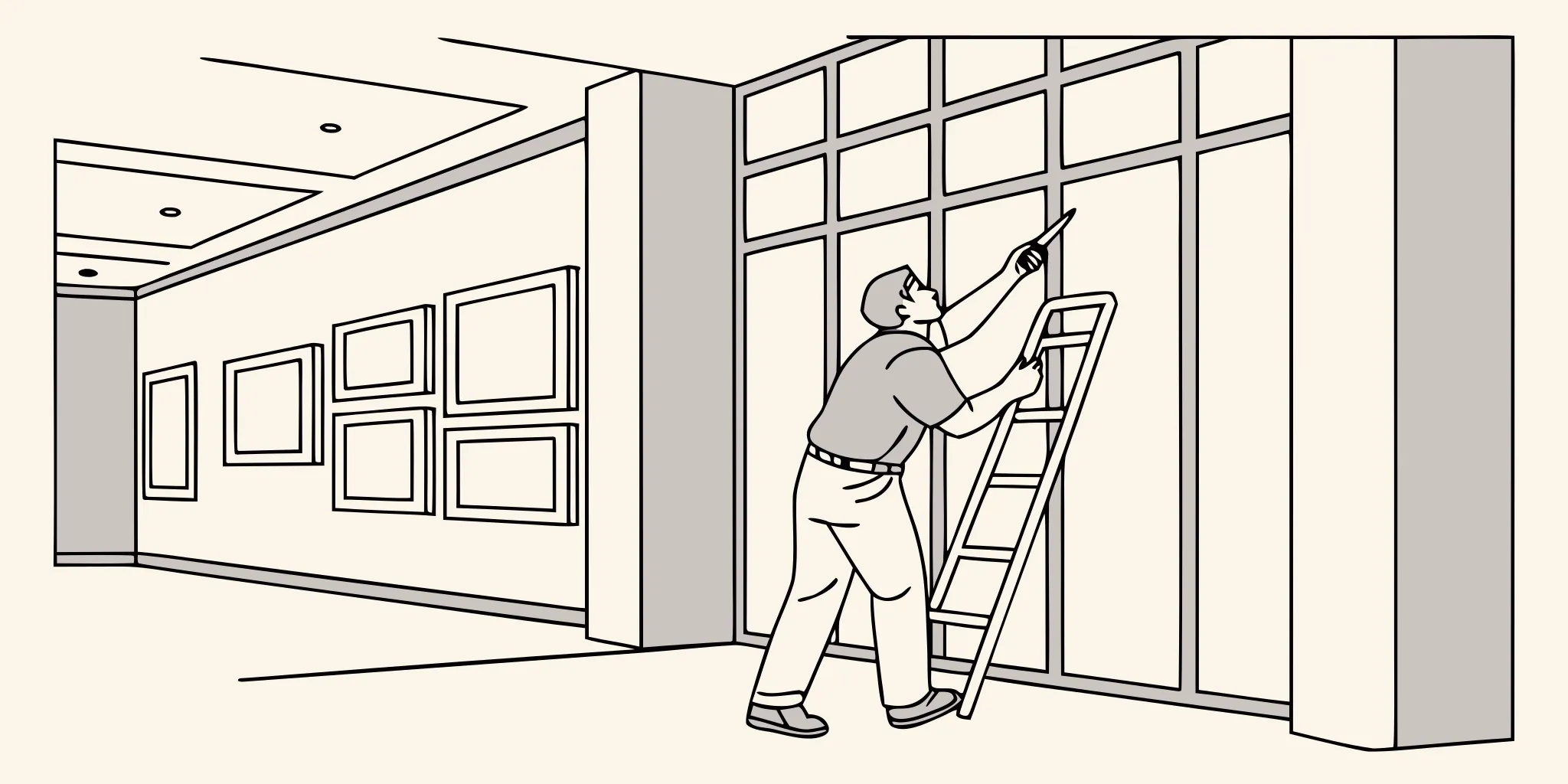
Museum walls are often constructed from unconventional materials , stone cladding, fabric-wrapped panels, curved drywall, or structural glass. Each presents adhesion challenges that a standard commercial vinyl applicator may not have encountered. A 3M Preferred Installer has the training to adapt to these substrates without damaging the wall surface.
Since 2008, AP Installations has executed donor wall installations across the United States in settings where precision tolerances are measured in millimeters. Museum-grade work requires pre-installation mockups, digital layout approval, and on-site adjustments that generalist sign installers do not typically offer.
Donor Recognition for Hospitals and Universities
Hospitals and universities operate under stricter access and safety protocols than commercial buildings. Installers must coordinate with facilities management, badge through secure zones, and schedule work around patient care or class schedules. Multi-building campaigns further complicate the process by requiring consistent visual standards across distinct construction types.
Healthcare and higher education institutions are the most common donor wall clients, and they present the most operational complexity. Neither environment tolerates disruption, and both require installers to follow site-specific protocols that go beyond standard construction practices.
Healthcare Site Access and Safety
Hospital installation projects require background checks, vaccination verification, and adherence to infection control protocols. Donor walls in patient-facing areas , main lobbies, family waiting rooms, and administrative wings , must be installed during off-hours to avoid interfering with patient flow.
The Perelman School of Medicine at the University of Pennsylvania manages donor recognition across multiple buildings on a single campus. Each building has its own access requirements, security desk, and facilities contact. Coordinating hospital donor wall graphics in this environment demands a project manager who can track crews, materials, and credentials across separate work orders running concurrently.
Campus Rollouts and Multi-Building Systems
University campaigns present a different challenge: visual consistency across buildings constructed decades apart with different architectural styles. A donor wall in a 1920s limestone building must coordinate with one in a 2010s glass-and-steel building. Vinyl and dimensional lettering systems make this feasible by offering a consistent finish that can be adapted to each substrate.
Donor recognition on college campuses typically follows a phased rollout. Phase one installs the central donor wall in the main administration building or student union. Subsequent phases add walls in academic buildings as campaign milestones are reached. Each phase uses the same system , same lettering style, same mounting hardware. Same tier structure , so the recognition program reads as a cohesive program rather than a collection of unrelated signs.
How Updateable Donor Wall Systems Work
Updateable donor wall systems use modular components , magnetic panels, clear acrylic inserts. Or sliding track mounts , that allow individual names to be swapped without disturbing the rest of the display. Magnetek, Acetek, Free Form, and Cleartek are the primary system types, each suited to different display sizes and update frequencies.
For institutions running ongoing campaigns, a static donor wall is a liability. Every time a new donor joins or an existing donor increases their pledge, the wall must reflect the change. Updateable systems turn this workflow into a routine maintenance task rather than a capital project.
Types of Modular Systems
- Magnetek , Magnetic-backed name plates that snap into a steel grid. Names can be repositioned or replaced in seconds. Best for frequently updated walls in high-traffic areas.
- Acetek , Clear acrylic plate holders with printed name inserts slipped behind them. The face plate stays in place; only the printed insert needs replacement. Ideal for annual update cycles.
- Free Form , individual plates mounted directly to the wall without a visible frame. Each plate can be removed and replaced independently. Works well for small donor walls with fewer than 50 names.
- Cleartek , Clear acrylic or glass panels mounted on stand-off posts. Names are applied to the back surface of the panel, creating a depth effect. Suitable for high-end installations where appearance is the primary concern.
For all of these systems, professional donor wall installation services are essential. The grid or track system must be dead-level and securely fastened to the substrate before any name plates are installed. A 1/8-inch error at the mounting stage compounds across every row of names.
Benefits of Modular Design
Beyond updatability, modular systems offer two operational advantages. First, they allow phased funding , an institution can install the base grid system during the quiet phase of a campaign and add name plates as gifts arrive. Avoiding the appearance of a partially empty wall. Second, they eliminate the cascading cost of corrections. A single misspelled name on a stone wall requires re-etching the entire panel. On a modular vinyl wall, the correction is a one-letter replacement.
Five-Step Installation Process
- Establish giving tiers , Determine the space allocation for each donor level. Major donors ($100K+) get larger or more prominent placement. Annual fund donors may be grouped alphabetically on a shared panel.
- Select the base material and grid system , Choose the wall substrate (glass, wood, painted drywall, or metal) and the compatible mounting system. Material selection determines weight capacity, update method, and overall cost.
- Install the main frame or grid , A 3M-certified team mounts the track system. Laser levels and digital protractors verify every horizontal and vertical reference. This stage is the most critical , errors at this point affect every name plate installed afterward.
- Apply donor names , For vinyl walls, names are precision-cut on a plotter and weeded (excess material removed) before transfer tape carries them to the wall. For modular systems, plates are inserted into their tracks or magnetic receivers.
- Establish an update protocol , Document the system type, manufacturer part numbers, and approved installers so future updates can be ordered and applied without repeating the design phase.
Frequently Asked Questions
How long does a donor wall installation usually take?
Most donor wall installations require one to three days on site once materials are delivered. The timeline varies with size , a single 4 x 8-foot panel with 50 names can be installed in a day. While a multi-wall campus rollout may take a week. Surface preparation and adhesive cure time add to the schedule. A 3M Preferred Installer will provide a project timeline during the site assessment.
Can donor recognition walls be installed outdoors?
Yes, but outdoor installations require different materials and adhesives than interior walls. UV-resistant vinyl laminates and weather-sealed edges are mandatory for exterior donor displays. According to Priority Graphics, high-strength overlaminate films extend the life of outdoor donor recognition by protecting the printed surface from UV degradation and moisture intrusion.
How do we clean and maintain a vinyl donor wall?
Vinyl donor walls require minimal maintenance. Clean with a soft, lint-free cloth and a mild soap solution (one teaspoon of dish soap per quart of water). Avoid ammonia-based cleaners, abrasive pads, and high-pressure sprays. According to AP Installations, regular light dusting is sufficient for most installations. Deep cleaning once per quarter removes fingerprint oils and airborne residue from lobby environments.
Why should we use a 3M Preferred Installer for our donor wall?
A 3M Preferred Installer has passed the manufacturer’s certification process, which tests proficiency in substrate preparation, adhesive selection, application technique, and warranty compliance. Using a certified installer keeps the 3M material warranty valid. If an uncertified applicator damages the film or applies it incorrectly, the warranty is void , leaving the institution responsible for the cost of replacement.
Do you have experience with high-security or hospital settings?
Yes. AP Installations has completed donor wall projects in hospitals, university campuses, and secure government facilities across the Pacific Northwest. Our installers hold the credentials required for badge-access environments and follow each facility’s infection control, quiet zone, and after-hours access protocols. For more about our service area and capabilities, visit apinstallations.com.
Ready to Schedule Your Donor Wall Installation?
A poorly installed donor wall erodes the very gratitude it is meant to express. Bubbled letters, misaligned names, and lifting edges signal carelessness to the donors whose support your institution depends on. A 3M Preferred Installer eliminates these risks with certified surface preparation, laser-guided alignment, and edge-sealed finishes that hold up in high-traffic public spaces for years.
AP Installations has been delivering professional donor wall installations since 2008. We handle every phase from site assessment through final verification. So your team stays focused on your mission while we ensure the recognition display reflects the quality of your institution.
Get a custom quote for your donor wall installation , schedule a consultation with a 3M Preferred Installer and protect your donor recognition investment.