Blog
Retail Window Graphics Installation That Drives Traffic
How professional retail window graphics installation helps stores attract foot traffic, choose materials, and keep storefront displays sharp.
Blog
How professional retail window graphics installation helps stores attract foot traffic, choose materials, and keep storefront displays sharp.
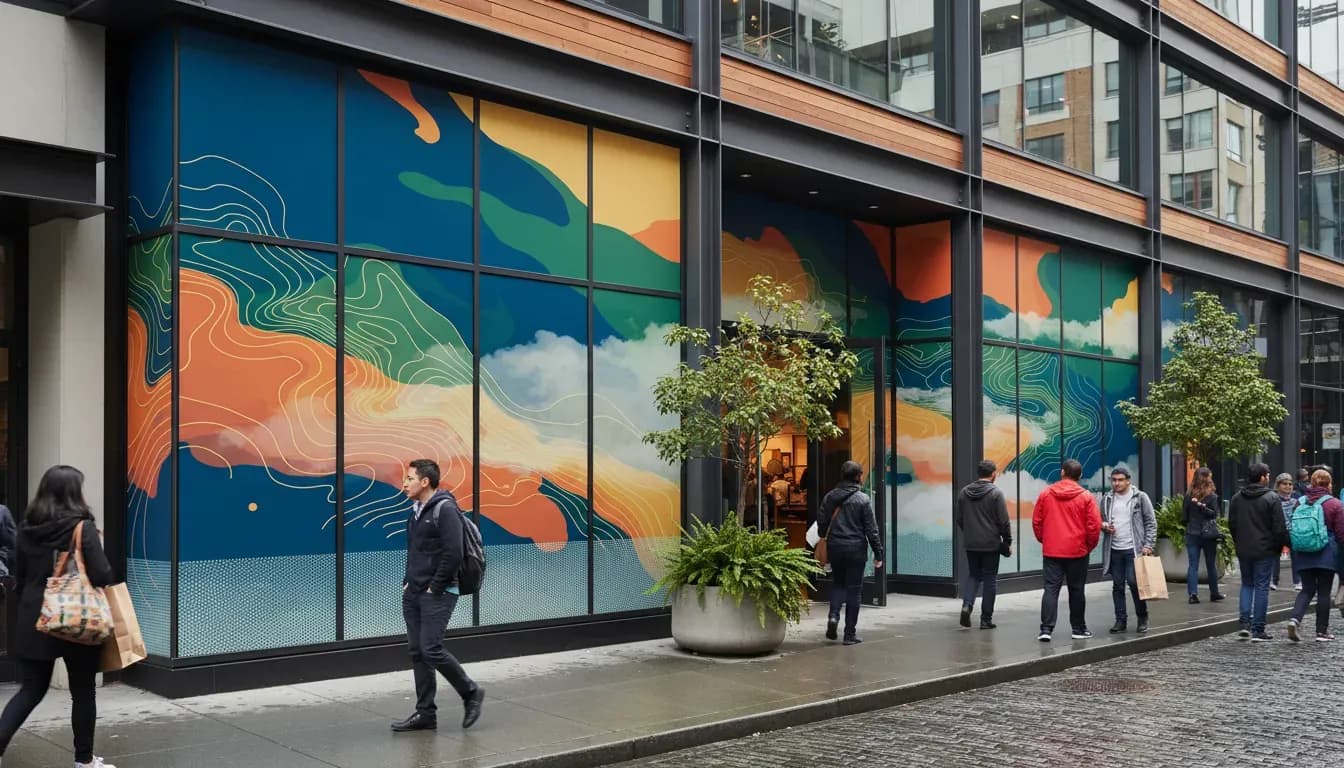
Retail window graphics installation turns storefront glass into a working marketing asset. For retailers, restaurants, salons, showrooms, and service businesses, professionally installed window film can attract attention from the sidewalk, explain what the store offers, support seasonal promotions, and make the brand look polished before a customer walks inside.
Planning a storefront refresh or seasonal retail campaign? Contact AP Installations for a free consultation on professionally installed retail window graphics.
Your windows are one of the few marketing surfaces that work every hour your location faces the street. The right graphics can stop a passerby, introduce a new product line, guide visitors toward the entrance, or make an empty storefront feel active during a buildout. The wrong installation can do the opposite. Bubbles, wrinkles, lifting corners, and misaligned panels make even strong artwork look temporary.
AP Installations helps businesses avoid those issues by matching the material, layout, and installation method to the storefront conditions. As a 3M Preferred Installer serving the Pacific Northwest with nationwide capabilities, the team understands how glass, light, traffic patterns, weather, and brand standards affect the finished result.
Professional retail window graphics installation increases foot traffic by making the storefront easier to notice, understand, and trust from the sidewalk. AP Installations helps retailers use glass graphics to create stronger visibility, clearer promotional messaging, and a more polished first impression that encourages people to step inside.
Foot traffic often starts before a customer consciously decides to visit. A person walking through a shopping district may only glance at each storefront for a few seconds. During that short window, the display needs to answer basic questions: What is this business? Is it open? What is new? Is there a reason to come in today?
Window graphics support those answers at several distances. From across the street, color and contrast make the store visible. From the sidewalk, larger text and product imagery communicate the offer. At the entrance, door graphics, hours, brand marks, and directional cues help customers feel confident they are in the right place.
Installation quality protects that visibility. A graphic that is centered, smooth, trimmed cleanly, and aligned across panes feels intentional. A graphic with trapped air, edge curl, or crooked seams feels unfinished. Customers may not know the technical reason, but they will notice whether the storefront looks cared for.
The right material depends on the glass, campaign length, privacy needs, lighting, and viewing distance. AP Installations helps retailers compare perforated vinyl, frosted film, full-color prints, cut vinyl, and removable promotional graphics so the final choice supports both marketing goals and real storefront conditions.
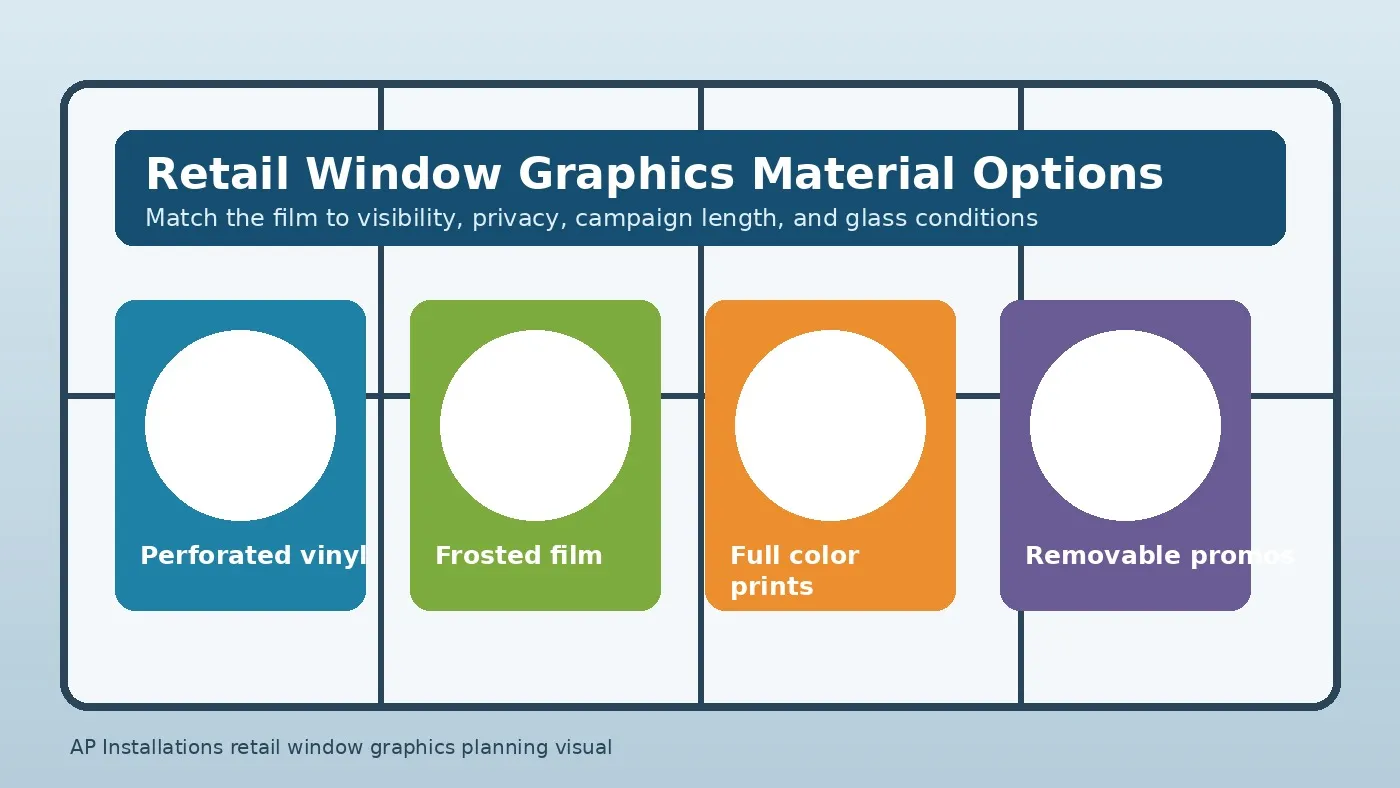
Perforated vinyl, often called one-way vision film, is a strong choice when a storefront needs exterior advertising without fully blocking the view from inside. The printed side faces the street, while small perforations allow people inside the store to see out. Retailers often use it for large promotional images, grand openings, sales events, product launches, and branded window takeovers.
Lighting matters with perforated vinyl. It usually performs best when the outside is brighter than the inside. If interior lighting is very bright at night, the one-way effect may be reduced. A professional installer can evaluate the glass, lighting, and viewing angle before the material is printed.
Frosted film creates privacy while still allowing light to pass through. It is useful for fitting rooms, consultation areas, medical retail spaces, salons, showrooms, and interior glass. It can be cut into logos, privacy bands, geometric patterns, or decorative borders. The result is usually quieter and more premium than a full-color promotional graphic.
Full-color printed graphics are built for visibility. They can cover one pane, a door, a complete storefront, or a coordinated set of windows across multiple locations. Retailers use them for seasonal campaigns, new collections, local events, construction screens, and temporary merchandising themes. When installed well, they make a storefront look current and active.
Cut vinyl lettering is often used for store hours, logos, directional text, safety notices, and simple promotional messages. It can be paired with larger printed graphics or used on its own when the goal is a clean, minimal storefront. Because lettering exposes every alignment issue, professional measuring and placement are important.
| Material | Best Use | Key Installation Concern |
|---|---|---|
| Perforated vinyl | Large exterior promotions with interior visibility | Lighting, edge finishing, and viewing distance |
| Frosted film | Privacy, subtle branding, interior glass | Clean cuts, level bands, and dust control |
| Full-color print | Seasonal campaigns, product launches, storefront takeovers | Panel alignment, seams, and trimming around frames |
| Cut vinyl | Hours, logos, directional text, small messages | Precise spacing, straight baselines, and transfer removal |
For related material guidance, see AP Installations’ guide to 3M certified window graphics.
Effective storefront graphics are designed for real viewing conditions, not just for a flat proof on a screen. AP Installations helps brands think through panes, frames, door handles, glare, sightlines, and customer approach paths so the graphic stays readable and visually balanced after installation.
Retail glass is rarely a clean rectangle. It may include mullions, tinted film, security sensors, window locks, door pulls, transoms, decals, and uneven sidewalk sightlines. Interior shelving or bright displays can also compete with the window graphic. The artwork needs to account for all of those factors before production.
Use these design principles to improve results:
Professional installers can also flag production issues before installation, such as where panels need overlap, how much bleed is needed, whether the film should be applied first or second surface, and how the design will align across multiple panes.
Most retail window graphics installation timelines depend on the number of panes, material type, access conditions, removal needs, and whether the store is open during the work. AP Installations can usually help retailers plan a practical schedule after reviewing artwork, storefront photos, measurements, and site constraints.
A simple door graphic or small set of cut vinyl hours may be completed quickly once the film is produced and the glass is ready. A full storefront wrap, multi-pane promotional display, or installation that requires removal of old adhesive will take longer. Multi-location campaigns also need scheduling, shipping coordination, and consistency checks so every store receives the same brand presentation.
Retailers should build in time for these steps:
If the store must remain open, installation can often be coordinated around slower traffic periods. The work area should stay clear, and staff should know how customers will move around the installation zone. For shopping centers, landlords may also require approvals, insurance documentation, or specific work hours.
Professional installation prevents early failure by controlling the glass surface, environment, alignment, pressure, trimming, and edge finish. AP Installations uses trained installers and proven large-format graphics methods to help window film bond properly and look clean from the street and up close.
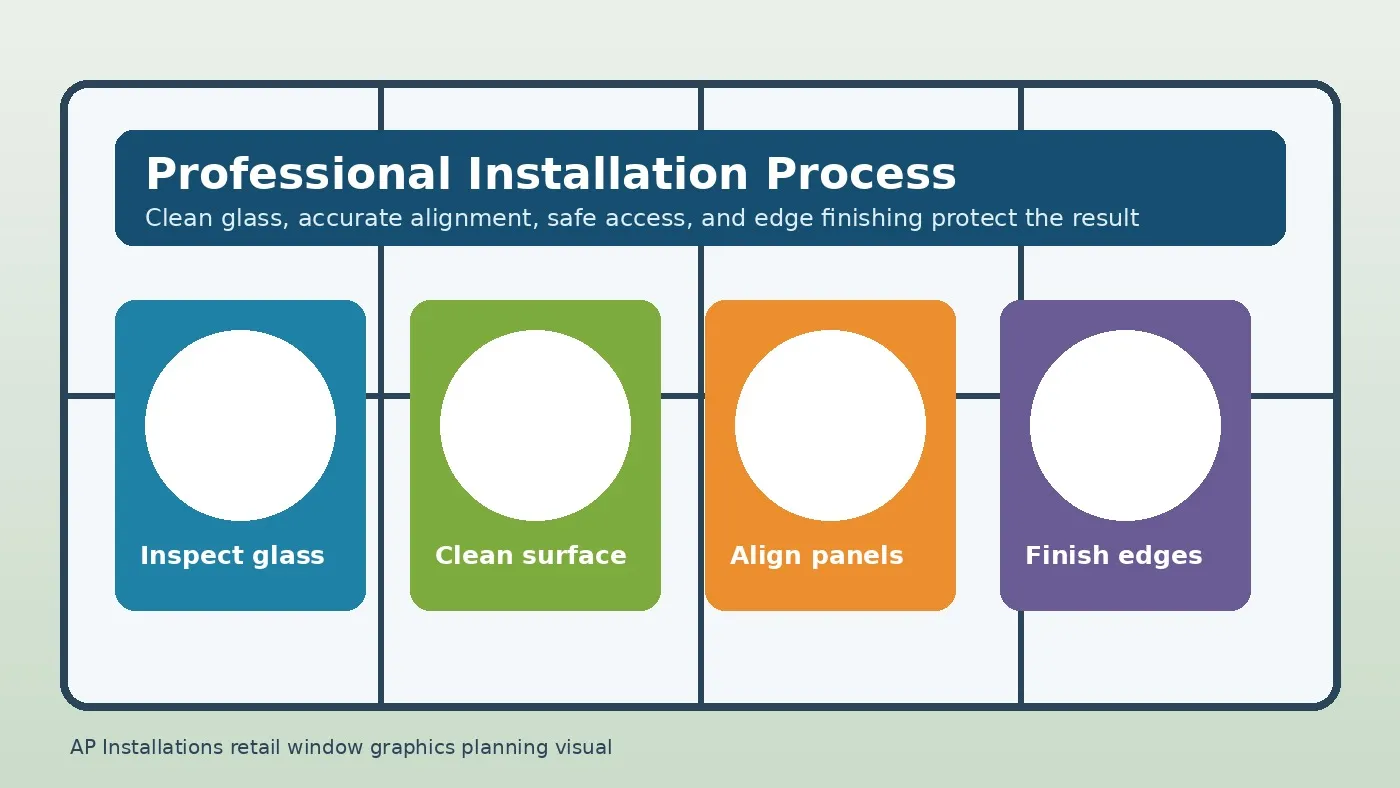
Retail windows look simple, but glass installation is technical. Dust, cleaner residue, moisture, temperature, humidity, silicone, previous adhesive, and damaged glass can all affect adhesion. A certified installer evaluates the surface before film is applied and chooses the right method for the material and conditions.
Professional retail window graphics installation usually includes:
AP Installations is a 3M Preferred Installer with experience across storefronts, retail environments, fleet graphics, murals, and large-format brand installations. That matters because installation quality affects both appearance and long-term performance. Learn more about related retail and brand environments on the AP Installations solutions page.
Need a campaign installed cleanly across one store or multiple locations? Get in touch with AP Installations to discuss your timeline, materials, and storefront conditions.
A smooth installation depends on access and coordination. AP Installations recommends confirming artwork, site access, glass conditions, landlord rules, security contacts, and customer flow before installation day so the graphics can be applied safely and efficiently.
Before the installer arrives, clear merchandise, displays, tables, plants, cords, and signage away from the windows. If there are security sensors, alarm contacts, blinds, or interior fixtures attached to the glass, share that information in advance. The installer also needs to know if the work requires a ladder, lift, special access, parking permission, or after-hours entry.
Retailers should also confirm who can approve field decisions. Small adjustments may be needed if glass measurements differ from the artwork, if old adhesive is more difficult to remove than expected, or if a landlord rule affects placement. Having the right contact available prevents delays.
If the store is open during installation, plan customer movement around the work area. Keep staff informed, create a clear path to the entrance, and avoid scheduling the work during major deliveries, events, or peak shopping periods when possible.
Installed window graphics last longer when store teams follow the curing, cleaning, and maintenance instructions for the specific material. AP Installations helps retailers protect the finished display by giving practical guidance on cleaning timing, safe tools, and high-touch areas to monitor.
Follow the installer’s curing guidance before cleaning the windows. Avoid aggressive scraping near film edges. Use soft cloths or non-abrasive tools, and avoid harsh chemicals unless the material manufacturer recommends them. Pressure washers, razor blades, abrasive pads, and strong solvents can shorten the life of the graphic.
Store teams should watch high-touch areas. Door graphics, lower window panels, and edges near handles can take more abuse than upper panes. If a corner starts to lift, address it early rather than letting dirt and moisture get underneath the film.
Seasonal graphics should also be removed carefully. Pulling film too aggressively can leave adhesive, damage a printed surface, or create extra cleanup work for the next campaign. For a deeper checklist, read AP Installations’ vinyl graphics maintenance tips.
Seasonal window graphics keep a storefront relevant by giving retailers a flexible way to promote holidays, launches, sales periods, local events, and merchandising themes. AP Installations can help brands plan repeatable graphic systems that update the storefront without making every campaign feel like a full rebrand.
The best seasonal strategy balances impact with installation efficiency. For example, a retailer might keep a permanent frosted brand element on part of the glass, then rotate removable promotional panels each quarter. A boutique might update one feature pane for each new collection. A multi-location brand might standardize core artwork while customizing local messages for specific stores.
Seasonal planning also helps protect budgets and timelines. If the same pane sizes, templates, and installation windows are used repeatedly, future campaigns become easier to produce and schedule. The brand still gets a fresh look, but the process becomes more predictable.
AP Installations can support larger visual rollouts, including point-of-purchase displays, retail graphics, wall murals, and experiential brand installations. Browse the project gallery to see the range of commercial graphics work the team has installed.
Small door graphics or lettering can often be installed faster than a full storefront campaign, but timing depends on pane count, material, access, cleaning, removal, and store traffic. AP Installations can estimate the schedule after reviewing the storefront, artwork, and installation conditions.
The best vinyl depends on the goal. Perforated vinyl works well for large exterior promotions with some interior visibility. Frosted film is better for privacy and subtle branding. Full-color prints are often best for seasonal campaigns, product launches, and bold storefront messaging.
Yes. Many retail window graphics can be removed or replaced for seasonal campaigns, but removal should be planned around the film type, adhesive, age, and glass condition. Professional removal helps reduce adhesive residue and prepares the glass for the next installation.
Often, yes. The work should be coordinated around customer flow, safety, access, and peak traffic times. Retailers should clear the work area, notify staff, and confirm any landlord or shopping center rules before installation begins.
Some materials block more light than others. Perforated vinyl allows more visibility than full-coverage opaque graphics, while frosted film diffuses light and adds privacy. AP Installations can help choose a material that balances branding, privacy, and natural light.
Professional installers control surface preparation, alignment, pressure, trimming, and edge finishing. Those details help prevent bubbles, peeling, crooked panels, and premature failure, especially on large panes, multi-panel designs, or high-visibility retail storefronts.
Retail window graphics can do much more than fill empty glass. They can attract attention, explain your brand, promote timely offers, support privacy, and create a more polished customer experience. The key is pairing the right design and material with installation that protects the final appearance.
If you are planning new storefront graphics, a seasonal campaign, or a multi-location retail rollout, AP Installations can help you move from concept to clean execution. The team understands how to install window graphics that look professional, align with brand standards, and hold up in real retail environments.
Ready to boost foot traffic with professionally installed retail window graphics? Contact AP Installations for a free consultation.