Blog
Restaurant Floor Graphics for High-Traffic Dining
Call for a quote on durable restaurant floor graphics that withstand heavy foot traffic, protect your brand, and keep diners safe in busy dining spaces.
Blog
Call for a quote on durable restaurant floor graphics that withstand heavy foot traffic, protect your brand, and keep diners safe in busy dining spaces.
Restaurant floors carry more than foot traffic. They guide guests, reinforce a brand, support promotions, and absorb the daily demands of an active dining space. When graphics are specified and installed correctly, otherwise overlooked floor area can become a durable part of the customer experience without compromising safe movement through the room.
Request a free, no-obligation quote for professional restaurant floor graphics installation.
Restaurant floor graphics are professionally installed vinyl graphics designed for branding, wayfinding, promotions, and messaging in busy dining environments. The right floor film, slip-resistant surface, adhesive, and installation method help graphics withstand routine traffic while reducing the risk of lifting edges, premature wear, and difficult removal.
Success depends on more than printing an attractive design. Restaurant operators need to match the graphic system to the flooring, traffic level, cleaning routine, and intended service life. That starts with understanding where floor graphics add practical value and how they fit into the overall dining environment.
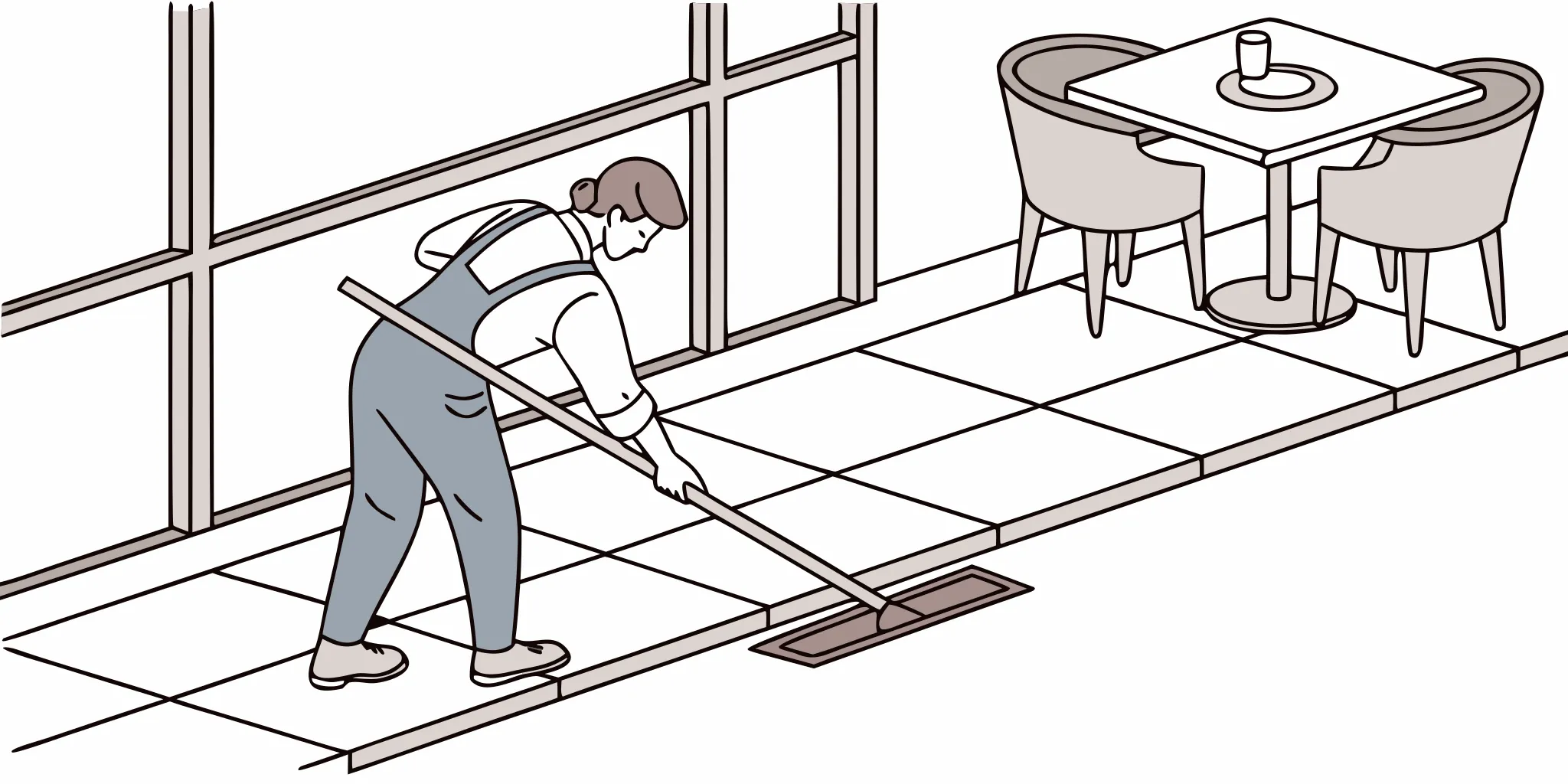
Restaurant floor graphics are printed vinyl graphics applied to walking surfaces to communicate information, reinforce a brand, or guide customers through a space. They can be installed near entrances, ordering points, queues, dining areas, restrooms, and other locations where guests naturally look down as they move through the restaurant. The format works for independent restaurants, food halls, breweries, cafeterias, and multi-location brands.
A floor graphic can extend a restaurant’s visual identity beyond menus, walls, and windows. Logos, colors, directional arrows, location markers, and branded patterns help organize the customer journey while making otherwise overlooked floor space useful. For broader ideas on coordinated graphics, see this guide to high-traffic restaurant branding. Customers who pair floor branding with counter or menu areas can also reference our guide to professional drive-thru menu board installation for a complete front-of-house treatment.
Design flexibility makes the application practical for different layouts. The University of Delaware notes that vinyl can be contour cut to any shape. Allowing a graphic to follow a logo, mascot, icon, or custom illustration instead of being limited to a rectangle. The same source explains that floor graphics can be adhered to floors and carpets when the appropriate material is selected: University of Delaware floor-vinyl guidance.
Restaurants can use floor graphics to call attention to a limited-time offer, promote a featured product, mark a pickup area, or direct guests toward ordering and payment. They can also identify caution zones, queue spacing, or temporary social-distance positions when operational messaging needs to be visible without adding a freestanding sign.
For temporary campaigns, removable materials can make updates easier. The University of Minnesota describes durable, removable clings for indoor hard surfaces as a peel-and-place option for wayfinding and messaging: University of Minnesota floor-graphics information. Choosing the right surface, adhesive, and finish remains important, especially in a busy dining space where cleaning, foot traffic, and moisture can affect performance.
Restaurant floors face a demanding combination of foot traffic, rolling carts, cleaning routines, spills, and frequent changes in customer movement. The material system for a floor graphic must do more than display a design. It must maintain traction, stay bonded at the edges, and remain appropriate for the specific flooring and operating conditions.
A dedicated anti-slip floor film provides the textured surface needed for safer movement through dining rooms, entries, queues, and service areas. For example, Drytac SpotOn Floor 200 is an 8-mil indoor floor film described as having low slip potential. Its product information lists DIN 51130 R-10 and ASTM E303 slip ratings, giving installers and restaurant operators concrete performance references when evaluating material options: review the manufacturer’s floor-film specifications.
Those ratings do not replace a site assessment. A graphic near an entrance may encounter tracked-in moisture, while one beside a counter may receive concentrated wear and cleaning. The selected film should match the location, expected traffic, flooring texture, and planned maintenance process.
Cast and calendered vinyl can serve different installation requirements, so the choice should be based on the floor. Graphic size, expected service life, and the contours or texture the material must conform to. A qualified installer can determine whether the project calls for a more conformable cast construction or a cost-effective calendered option. Rather than treating every restaurant floor as the same surface.
The protective overlaminate is equally important. A slip-resistant laminate helps protect the printed graphic while preserving the intended traction. 3M notes that the film, adhesive, and overlaminate work together to resist fading and lifting. Its guidance also emphasizes adhesive performance testing for peel, shear, and tack. Those properties matter at the perimeter: an edge that lifts in a busy aisle can become a trip hazard. Serving as an early sign that the material or preparation was not suitable for the application. See 3M’s guidance on doing floor graphics correctly.
Before installation, the floor should be clean, dry, sound, and free of contamination that could interfere with adhesion. In a restaurant, material selection and preparation are safety decisions, not merely design choices. A durable graphic should support the customer experience without compromising secure footing or creating avoidable maintenance problems.
Restaurant floor graphics operate in one of the most demanding environments for vinyl. Customers, staff, carts, spills, cleaning routines, and constant foot traffic all test the bond between the graphic and the floor. Professional installation protects the investment by addressing the details that determine whether the finished graphic stays flat, secure, and presentable.
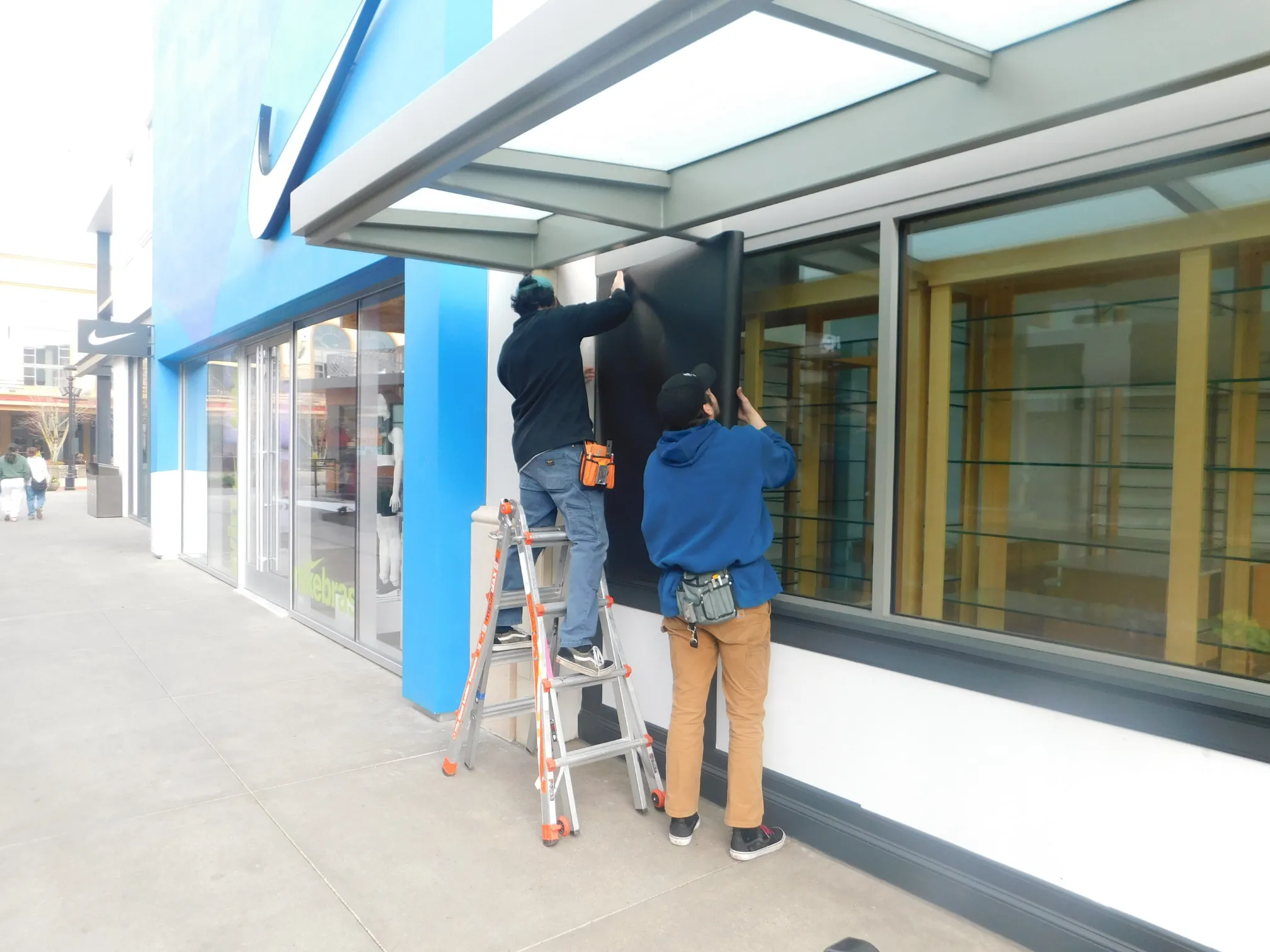
Preparation starts before the first piece of vinyl is positioned. The installer should assess the floor material, identify texture or coating issues, and remove dust, grease, moisture, and residue that can interfere with adhesion. A clean, properly prepared surface gives the adhesive a reliable foundation and helps prevent premature lifting.
Application technique matters just as much. Graphics need to be aligned accurately, applied without trapped air, and firmly worked into the surface. The edges deserve particular attention because exposed or poorly bonded edges are vulnerable to foot traffic, mopping, and rolling equipment. Sealing those edges helps reduce lifting and keeps the graphic from becoming a trip hazard or collecting dirt along the perimeter.
Material selection and installation also work together. A slip-resistant laminate is essential when graphics are used in high-traffic areas, not simply an optional finishing detail. The University of Delaware notes that floor graphics can be protected with slip-proof laminate, while the appropriate vinyl can be adhered to floors and carpets. Those choices should be made with the restaurant’s flooring, traffic pattern, cleaning requirements, and campaign duration in mind.
Certification adds another layer of protection. AP Installations is a 3M Preferred Installer, a distinction held by only approximately two companies in Oregon. Certified installation can preserve eligibility for 3M MCS warranty coverage, which may extend up to eight or nine years when the specified materials and installation requirements are followed. That warranty protection can be significant when a restaurant is investing in graphics across multiple locations or high-visibility areas.
Removal should be planned at the start, too. Professional floor sticker services commonly include both installation and removal in the project scope. A defined removal plan helps the restaurant avoid rushed teardown, unnecessary adhesive residue, or damage to the underlying surface when a promotion ends. For a structured approach to taking graphics down cleanly, see professional vinyl graphics removal guidance.
For a broader look at how skilled application supports long-term value, review this guide to professional vinyl graphics installation. The right process turns restaurant floor graphics from a temporary decoration into a controlled, maintainable branding asset.
There is no single service-life number for every restaurant floor graphic. A properly specified installation can perform for years, while a short-term promotional film may be intended for only a few months. The expected life depends on the film and laminate, the amount and type of foot traffic, the floor surface, and the cleaning routine used around the graphic.
Entrances, queue lines, service counters, and paths between tables experience different levels of abrasion. A graphic placed in a dense traffic lane needs a floor-rated, slip-resistant system designed for that environment, not a general-purpose wall vinyl. Protective laminate helps shield the printed surface from scuffing and wear, while the right adhesive and surface preparation help prevent edge lifting. Those details matter for both appearance and safety because curled edges can become a trip hazard.
When specifying a system for a dining environment, review the full picture before production:
Short-term and long-term products should also be distinguished before production. For example, Drytac SpotOn Floor 200 is an 8-mil non-slip floor film intended for indoor floor graphics and is removable within 6 months. That makes it a useful option for a temporary promotion or seasonal message, but it should not be treated as a permanent restaurant installation. Review the manufacturer’s product guidance when selecting a short-term application.
| Consideration | Short-term promotional film | Long-term branding system |
|---|---|---|
| Typical service life | A few weeks to a few months. | Rated for extended service with compatible laminate. |
| Best use | Seasonal offers, events, and campaign messaging. | Permanent branding, wayfinding, and safety zones. |
| Removal | Designed for clean removal within the rated window. | Planned removal with proper process and surface care. |
| Material priority | Ease of removal and clean teardown. | Slip resistance, edge stability, and durability. |
Inspect high-use graphics regularly for fading, scuffed or abraded areas, loss of surface texture. Bubbling, peeling corners, open seams, and visible dirt that no longer lifts with approved cleaning. Replace a graphic when the printed message is no longer clear, the surface no longer provides the intended slip resistance, or the edges cannot remain securely bonded. A planned replacement is safer and less disruptive than waiting for a damaged graphic to affect guest circulation.
For longer-term projects, certified installation can also support 3M MCS warranty coverage of up to 8-9 years when the selected materials and application meet the program requirements. That warranty is not a promise that every restaurant graphic will last that long. It is a reason to confirm the exact product system, environment, maintenance expectations, and coverage with the installer before work begins.
Restaurant floors face spills, grease, tracked-in grit, rolling equipment, and constant foot traffic. A consistent cleaning routine protects the printed surface and helps floor graphics remain clear, secure, and professional throughout the day. The right cleaning approach also reduces the chance that dirt will work into seams or catch on an edge.
Start by removing loose debris with a soft broom, dust mop, or vacuum without an aggressive beater bar. Grit can act like an abrasive when it is dragged across the graphic. For routine cleaning, use a damp microfiber mop and a mild, graphics-safe cleaner diluted according to the product instructions. Apply enough solution to lift soil, but avoid leaving standing water around seams or edges.
Do not use harsh scrubbing pads, wire brushes, abrasive powders, or concentrated solvents on the graphic. These tools can dull the print, wear the overlaminate, or put unnecessary stress on seams. If a spill occurs, blot it promptly rather than scrubbing back and forth. Grease and food residue may require a second gentle pass, not more aggressive pressure.
3M notes that properly specified floor graphics can withstand heavy foot traffic and increased floor cleaning. Performance depends on selecting the compatible film, adhesive, and overlaminate for the surface and use conditions. The same material choices can support clean removal without residue when the system is matched correctly. Review 3M’s floor-graphics guidance before changing cleaning protocols or material specifications.
When a restaurant adopts an enhanced-cleaning or sanitizing protocol, confirm that the cleaning chemicals and equipment are suitable for the installed graphic system. Test any unfamiliar product in a small, inconspicuous area first, and follow the film and overlaminate manufacturer’s instructions. High-pressure spray should not be directed at seams, corners, or exposed edges, where force can encourage lifting.
Build a quick visual inspection into opening or closing procedures. Look for lifted corners, bubbling, curled seams, worn laminate, fading, or areas where the graphic has started to separate from the floor. Mark damaged areas for review and keep traffic away from a loose edge when practical. Prompt repair or replacement is safer and more cost-effective than allowing a small defect to become a trip point or a larger removal problem.
Cleaning preserves the finish, but it cannot correct poor surface preparation or an unsuitable material choice. If edges repeatedly lift despite careful maintenance, have the installation assessed before simply applying more adhesive or covering the problem.
The installer you choose affects more than the appearance of your restaurant floor graphics on installation day. Proper assessment, material selection, application, and documentation all influence how the graphics perform under spills, cleaning, rolling carts, and constant foot traffic. A qualified partner should be able to explain the installation plan clearly and stand behind the finished work.
Look for a 3M Preferred Installer rather than relying on a general claim of experience with vinyl. The certification reflects tested knowledge of material handling, physical application technique, and job-site professionalism. It is also a meaningful differentiator: only approximately two companies in Oregon hold 3M Preferred Installer status, according to AP Installations’ company knowledge base.
Certified installation can help preserve eligibility for 3M MCS warranty coverage of up to eight to nine years, depending on the approved product system, environment, and installation requirements. That protection matters when a restaurant is investing in branded graphics across multiple locations. Ask the installer which film, laminate, adhesive, and warranty conditions apply to your project. A credible provider will explain those details instead of treating the warranty as a vague promise.
A proper surface assessment should cover floor condition, cleanliness, texture, moisture, existing coatings, seams, and areas subject to unusual wear. The installer should also identify whether the chosen material is appropriate for the surface and expected traffic. This step helps prevent avoidable edge lifting, adhesion problems, and premature replacement.
Your quote should identify preparation, installation, edge treatment, curing or access requirements, removal, and any exclusions. Confirm that the company is bonded and insured, and ask who will manage scheduling and quality control. Professional floor sticker services commonly include installation and removal, so removal should be discussed before a seasonal promotion or rebrand is installed. For supporting details about the investment case, review AP Installations’ professional vinyl graphics installation guidance.
Print shops, sign shops, and advertising agencies should also ask whether the installer offers white-label support. A wholesale partner can work behind the scenes, coordinate with the production team, follow the agency’s client-facing process, and protect the quality of the final delivery. For a look at how this partnership model works, review AP Installations’ professional vinyl installation partnership for print and sign shops. That arrangement adds installation capability without requiring the print or sign company to build an in-house crew.
For a restaurant owner or a production partner, the right choice is straightforward: select a certified. Insured installer that assesses the site, quotes the full scope, documents the approved system, and remains accountable after the graphics are applied. Request a project quote with the floor type, approximate dimensions, traffic conditions, and installation schedule so the recommendation is based on the actual site.
Request a project quote for certified restaurant floor graphics and get a clear recommendation matched to your dining space, traffic, and brand goals.
Yes, when the graphic uses a floor-rated vinyl, compatible adhesive, and a slip-resistant overlaminate. The material should be selected for the restaurant’s traffic, cleaning routine, and surface conditions. Professional surface preparation and edge sealing also help prevent lifting, which can create a trip hazard.
Service life depends on the film, traffic volume, cleaning methods, and whether the graphic is installed indoors or outdoors. A short-term removable film may be appropriate for a promotion, while a more durable system is better for permanent branding. A certified installation may also qualify for 3M MCS warranty coverage of up to 8-9 years when the specified materials and requirements are met.
No single material works on every floor. Graphics can be applied to hard floors and carpets with the appropriate product, according to the University of Delaware’s printing guidance: floor graphics can be adhered to floors and carpets. The installer should assess the surface for texture, moisture, coatings, grout lines, wax, and existing damage before recommending a material.
They can be, provided the graphic includes a slip-resistant laminate or floor film rated for the intended environment. Slip performance should be treated as a material-selection requirement, not assumed from the printed vinyl alone. The University of Delaware notes the use of slip-proof laminate for floor graphics, and the finished surface should be inspected regularly for lifting, damage, or contamination.
Follow the material manufacturer’s cleaning instructions, use routine floor-cleaning methods that are compatible with the laminate, and avoid aggressive scrubbing directly across seams or edges. Remove spills promptly, keep abrasive debris from accumulating, and inspect high-traffic areas regularly. If edges begin lifting or the surface becomes damaged, arrange repair or replacement before the condition affects safety.
A professional installation helps your floor graphics fit the space, perform in demanding dining areas, and support the finish you want customers to see. Request a free consultation and custom quote for certified restaurant floor graphics installation. Contact AP Installations to discuss your project and next steps.