Blog
How to Wrap a Car Professionally: Step-by-Step
Learn the professional car wrap installation process step by step. From surface prep to post-heat finishing, discover what makes a flawless vinyl car wrap.
Blog
Learn the professional car wrap installation process step by step. From surface prep to post-heat finishing, discover what makes a flawless vinyl car wrap.
A professional car wrap can completely transform a vehicle’s appearance, protect its original paint, and turn it into a mobile marketing asset. Whether you’re wrapping a company car for brand visibility or customizing a personal vehicle, reviewing fleet graphics installation examples and understanding the professional installation process ensures you get a result that looks flawless and lasts for years. As a 3M Preferred Installer, AP Installations has wrapped thousands of vehicles across the country. In this guide, we’ll walk you through every step of a professional car wrap installation. Ready to get started on your project? Contact our team at (503) 924-6168 for a free consultation.
A professional car wrap is the application of a high-quality vinyl film over a vehicle’s painted surfaces. Unlike a DIY approach, professional installation uses specialized tools, controlled environments, and trained technicians to achieve a seamless, paint-like finish. The vinyl conforms to every curve, crease, and body line of the car, creating a second skin that can display custom graphics, brand messaging, or a complete color change.
Professional-grade wraps use cast vinyl film, which is manufactured to be thin, conformable, and durable. This is distinctly different from calendered vinyl, which is thicker, less flexible, and prone to shrinking over time. When applied correctly by a certified installer, a cast vinyl wrap protects the original paint from UV rays, minor abrasions, and road debris while delivering a stunning visual result. AP Installations uses 3M and other premium materials for every project, ensuring each custom vehicle wrap meets the highest standards.
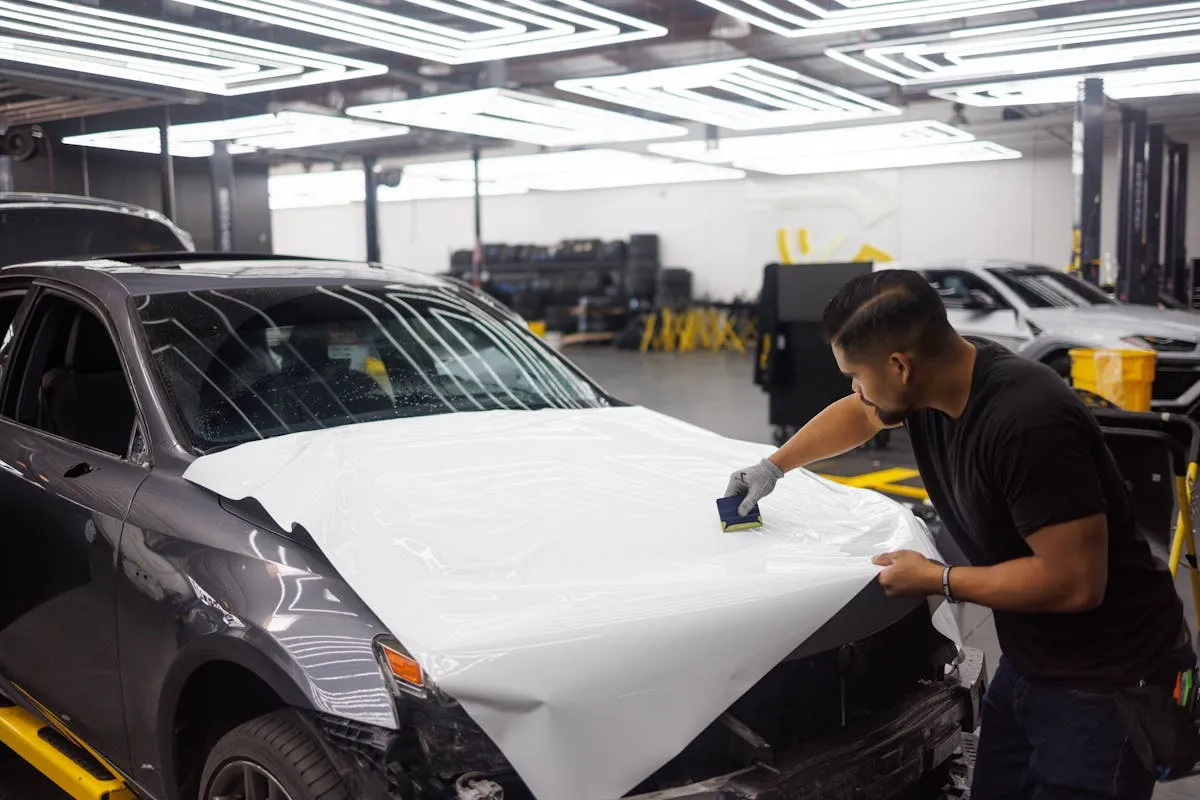
The quality of a car wrap depends heavily on using the right tools. Here is a breakdown of the essential equipment that professional installers rely on for every job:
Premium cast vinyl from 3M, Avery Dennison, or KPMF is the industry standard. Cast films are typically 2–4 mils thick and feature air-release adhesive channels that allow bubbles to be squeegeed out easily. These films conform to complex curves without excessive stretching and resist shrinking for 5–7 years.
Professional installers work in temperature-controlled environments, typically between 60°F and 80°F. The space must be clean, well-lit, and free from dust and debris. A dirty or cold workspace is one of the most common causes of wrap failure, which is why professional shops invest heavily in their facilities.
Surface preparation is the most critical phase of a professional car wrap. Experienced installers spend 30–40% of their total project time on prep work because even a tiny speck of dust or residue trapped under the vinyl creates a visible imperfection. Here is the step-by-step process:
The car receives a thorough hand wash using automotive soap to remove surface dirt. This is followed by a clay bar treatment across every panel to pull out embedded contaminants like tree sap, tar, industrial fallout, and brake dust. These microscopic particles create bumps under vinyl that are impossible to fix after application.
Every panel is inspected for chips, dents, rust spots, and paint defects. Vinyl conforms to whatever is underneath it, so any imperfection in the paint telegraphs through the wrap. Minor chips may need touch-up paint, and dents should be repaired with paintless dent removal (PDR) before installation begins.
Professional installers remove door handles, mirrors, badges, antenna covers, and trim pieces where possible. Wrapping around these components leads to lifted edges and premature failure. Removal allows the vinyl to tuck cleanly into gaps and creates a factory-finish appearance.
Every surface that will receive vinyl gets a final wipe with isopropyl alcohol. This removes any remaining oils, wax, or silicone residue that would compromise adhesion. Special attention goes to edges, seams, and recessed areas where contaminants tend to accumulate.
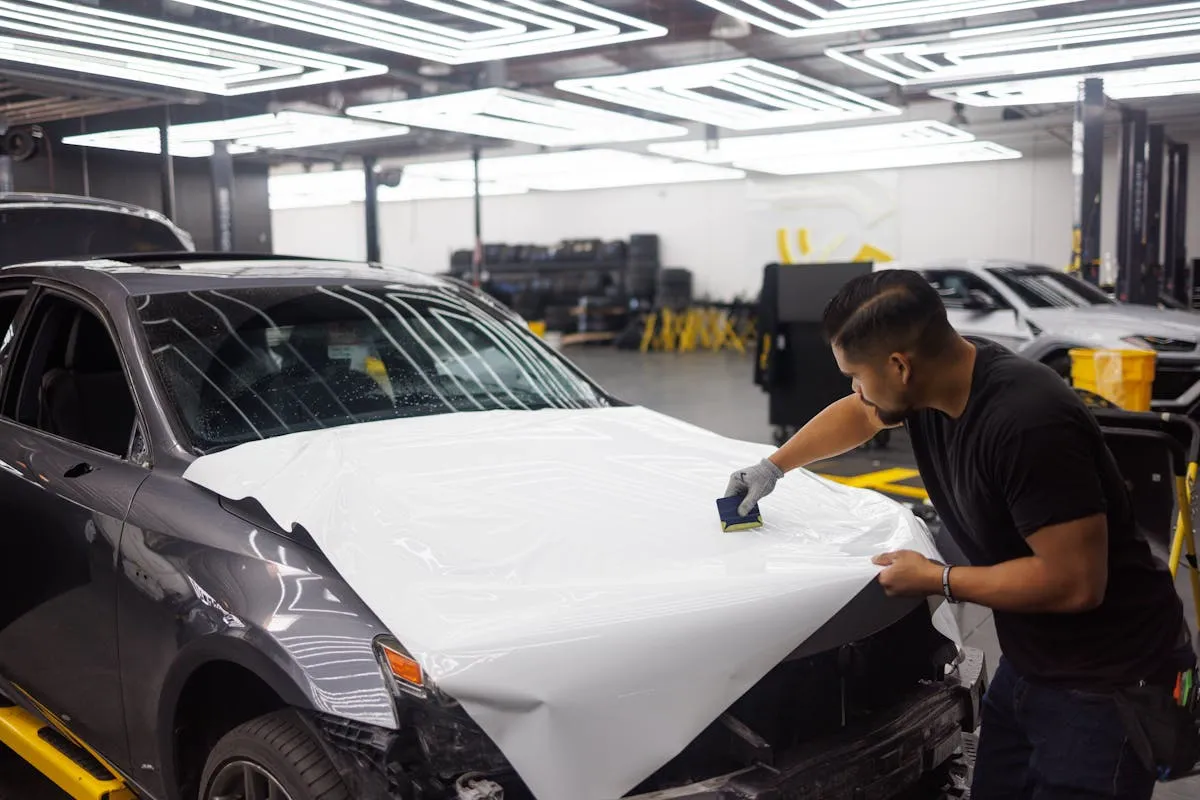
With the vehicle fully prepped, the actual vinyl application begins. This is where technique, experience, and patience converge to produce a professional result. The process typically takes 1–3 days for a full car wrap depending on the vehicle’s complexity and the design.
The vinyl is measured against each body panel and cut with 4–6 inches of extra material on every side. This overage provides grip for the installer and ensures full coverage around edges. For printed wraps with specific graphics, alignment marks are used to ensure design continuity across panels.
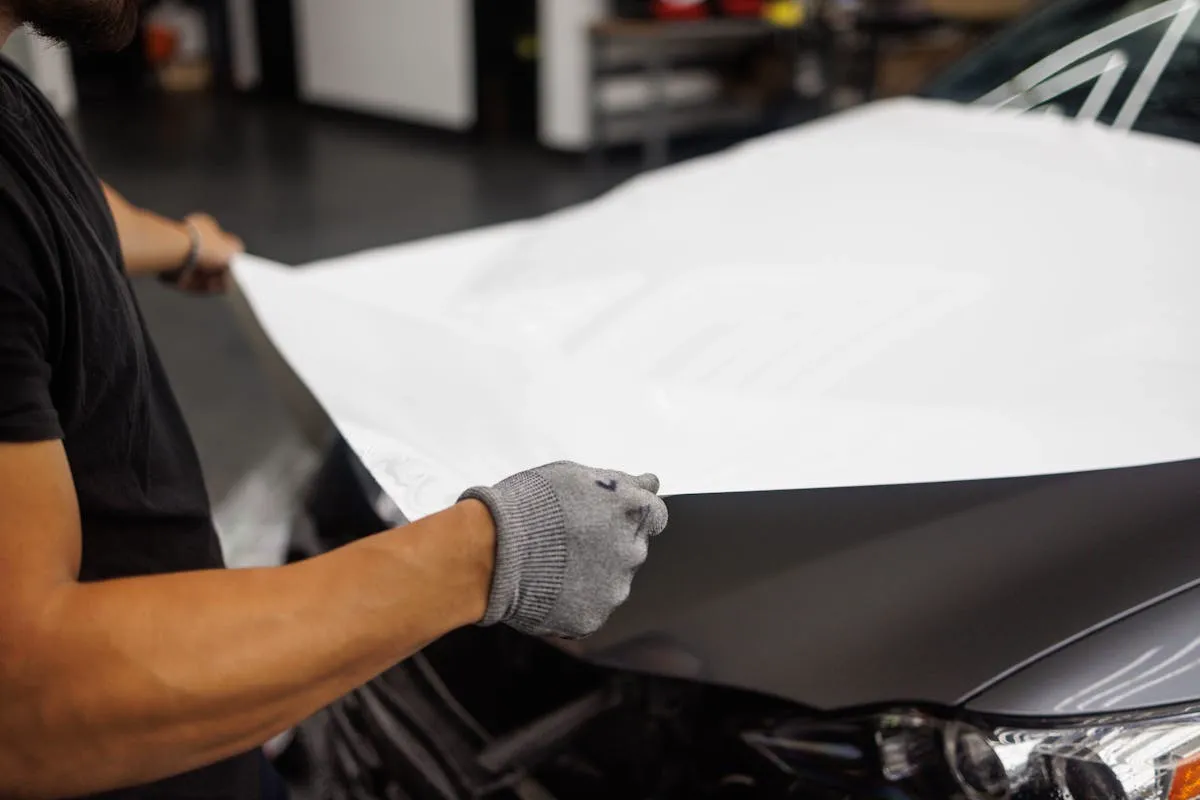
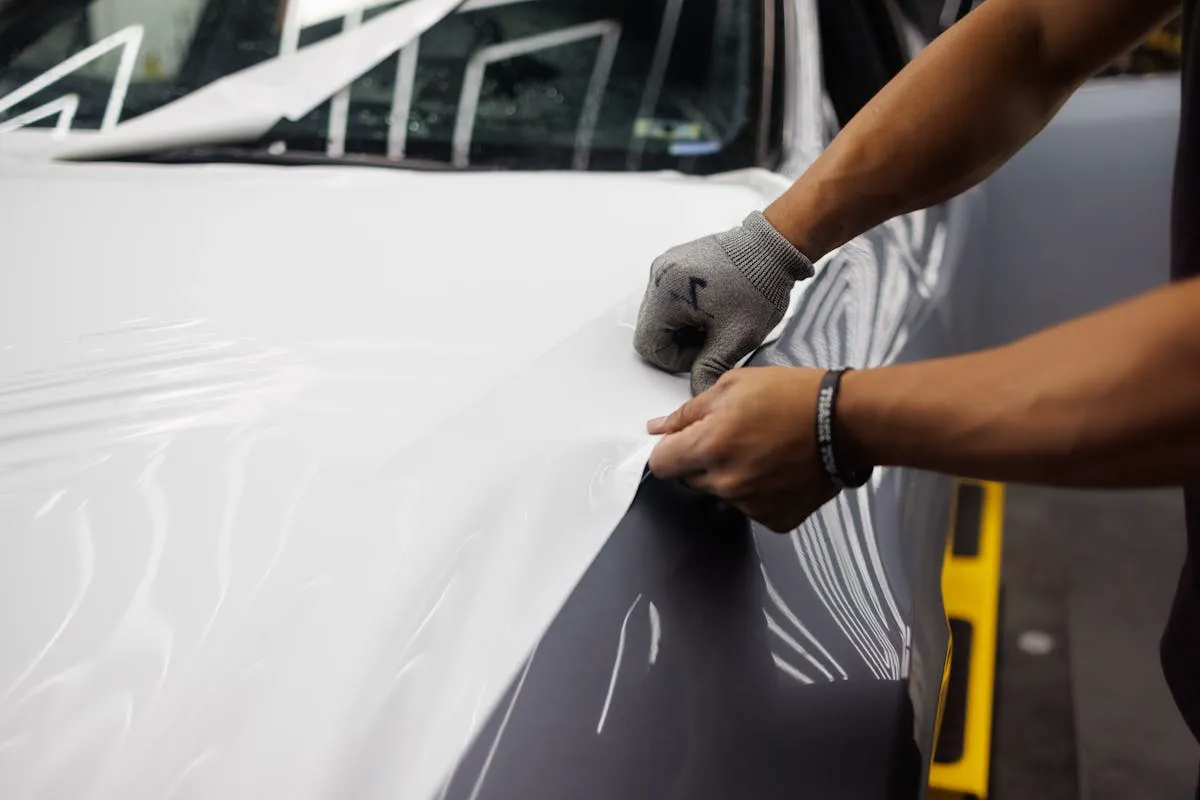
The backing paper is removed, and the vinyl is held above the panel with even tension. The installer “floats” the vinyl over the surface, touching down in the center first. This center-first approach prevents air from getting trapped between the film and the paint.
Using firm, overlapping strokes, the installer pushes air out from the center toward the edges with a felt-edge squeegee. Each stroke overlaps the previous one by about 50% to prevent trapped air channels. The pressure must be consistent; too light leaves bubbles, too heavy stretches the film unevenly.
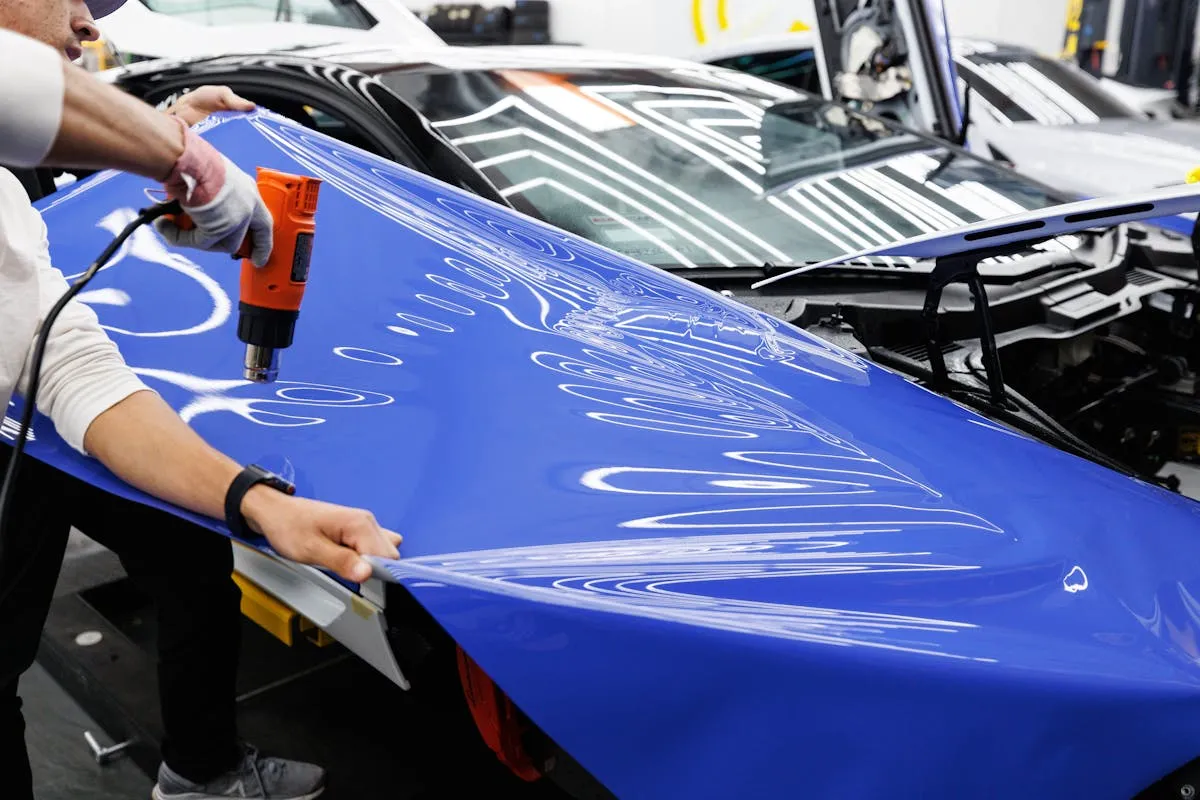
Complex body lines, bumpers, mirrors, and recessed areas require heat. The installer uses a heat gun to warm the vinyl to approximately 180°F–200°F, making it pliable enough to stretch and conform to compound curves. An infrared thermometer monitors the temperature to prevent overheating, which can thin the vinyl and cause premature failure.
Once the vinyl is fully adhered, excess material is trimmed using knifeless tape or a precision blade. Knifeless tape is preferred because it creates a clean cut line without any risk of blade marks on the paint. The edges are then tucked into body gaps, under trim, and around seams for a seamless finish.
This is the step that separates professional installations from amateur ones. After all panels are complete, the entire vehicle is post-heated. The installer passes a heat gun over every square inch of vinyl, raising its temperature to activate the adhesive’s memory. This step locks the vinyl into its stretched position and prevents it from lifting, shrinking, or pulling away from edges over time. It’s particularly critical on curves, bumper wraps, and any area where the vinyl was stretched more than 10%.
The professional installation process is similar across vehicle types. If you’re curious about the process for larger vehicles, our truck wrap installation guide covers the unique considerations for commercial trucks and vans.
A professionally installed car wrap using premium cast vinyl typically lasts 5–7 years. Several factors influence this lifespan:
The cost of a vehicle wrap is a fraction of a custom paint job and includes the added benefit of paint protection. When you factor in the marketing impressions a branded car wrap generates daily, the ROI is substantial.
Proper aftercare is essential to maximize the life and appearance of your car wrap. Here are the guidelines that professional installers recommend:
Allow the adhesive to fully cure for at least 72 hours after installation. During this period, avoid washing the vehicle, driving at highway speeds for extended periods, or exposing it to rain if possible. The curing process allows the adhesive to reach full bond strength.
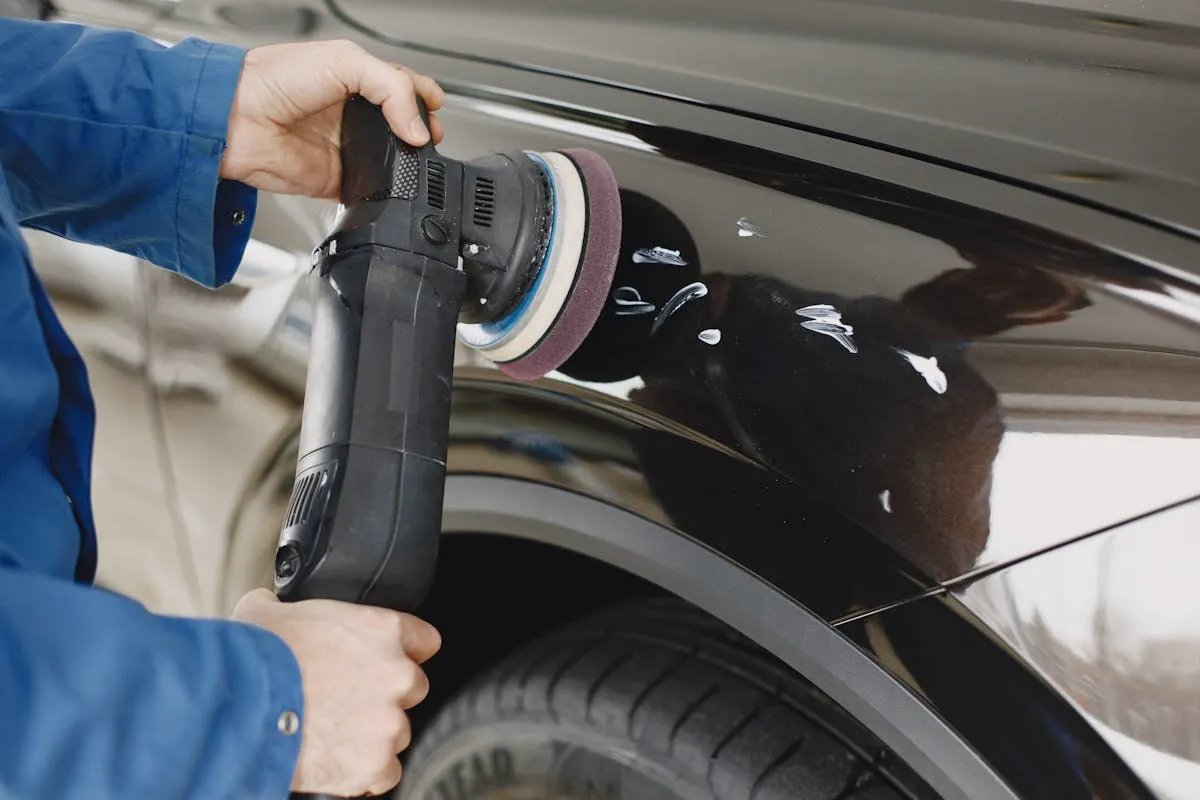
Car wrapping may look straightforward in time-lapse videos, but the reality involves years of training and thousands of hours of practice. Here is why certification and experience matter:
As a 3M Preferred Installer, AP Installations brings certified expertise to every car wrap project. Our team handles everything from fleet graphics and fleet wraps to individual vehicle color changes and custom designs. We serve clients across the Pacific Northwest and nationwide.
A full professional car wrap typically costs between $2,500 and $6,000 depending on the vehicle size, design complexity, and material choice. Partial wraps and color-change wraps may fall at the lower end, while complex branded designs with printed graphics cost more. The investment includes surface preparation, premium materials, certified installation labor, and post-heat finishing.
Minor chips and scratches can be wrapped over, but they may telegraph through the vinyl. Significant paint damage, rust, or peeling clear coat should be repaired before wrapping. Vinyl adheres best to smooth, intact surfaces. A professional installer will assess your paint condition during the initial consultation and recommend any necessary repairs.
A full car wrap installation typically takes 2–5 days. This includes 1–2 days of surface preparation and disassembly, 1–2 days of vinyl application, and a final day for post-heating, reassembly, and quality inspection. Complex designs, custom graphics, or vehicles with challenging body lines may extend the timeline.
No. When installed and removed correctly by a certified professional, a vinyl wrap actually protects the paint underneath. Premium cast vinyl uses repositionable adhesive that releases cleanly. Problems only arise from improper installation, using low-quality materials, or leaving a wrap on well past its intended lifespan (10+ years).
A car wrap is a colored or printed vinyl designed to change a vehicle’s appearance. Paint protection film (PPF) is a clear, thicker urethane film designed purely to protect the paint from rock chips and scratches. They serve different purposes but can be used together; some vehicle owners apply PPF to high-impact areas like the hood and bumper, then wrap the rest.
A professional car wrap is one of the most impactful upgrades you can make to a vehicle, whether for branding, style, or paint protection. The difference between a wrap that turns heads and one that peels in six months comes down to material quality, installation expertise, and proper aftercare.
AP Installations is a 3M Preferred Installer with a team of certified technicians who handle car wraps, custom business vehicle wrap designs, and large-scale fleet graphics installations nationwide. Whether you need a single car wrapped or an entire fleet branded, we deliver the quality and durability your investment deserves.
Ready to start your car wrap project? Contact AP Installations today or call us at (503) 924-6168 for a free consultation.