Blog
How Long Does a Vehicle Wrap Last? A Commercial Guide
How long does a vehicle wrap last? Learn how film, installation, sun, vehicle use, washing, storage, and maintenance shape commercial wrap life.
Blog
How long does a vehicle wrap last? Learn how film, installation, sun, vehicle use, washing, storage, and maintenance shape commercial wrap life.
Short answer: If you are asking, "how long does a vehicle wrap last," plan for several years of service. That range assumes the film system, vehicle surface, installation, exposure, and maintenance routine are well matched. Many commercial projects use roughly five to seven years as a planning range. That is guidance, not a guarantee. A local service van parked outside every night faces different conditions from a low-mileage vehicle stored indoors.
Explore AP's fleet and transit graphics installation capabilities
The useful question is not only the number of years. It is which conditions will support the wrap, which conditions will shorten its service life, and when a fleet manager should inspect or replace it. This guide explains those decisions in practical terms.
There is no universal expiration date for a vehicle wrap. A professionally installed wrap may remain presentable for several years, while a heavily used vehicle may need repairs or replacement sooner. The result depends on the material specification, the condition of the paint, the quality of surface preparation, the application process, and the vehicle's daily environment.
For budgeting, use a service-life range rather than a promised end date. Five to seven years can be a reasonable planning window for many commercial applications in suitable conditions. But the range should be adjusted for mileage, climate, storage, washing, and the areas covered. Some projects may perform longer. Others may show localized wear earlier around door edges, lower panels, wheel arches, handles, or loading areas.
A fleet replacement plan should therefore include regular inspections. A wrap does not need to be completely failed before a manager reviews its condition. Early repairs, replacement of a damaged panel, or a planned changeout can protect the vehicle's appearance and avoid an unplanned branding gap.
Vehicle wrap durability is shaped by several connected variables. The table below provides a practical planning framework, not a guaranteed lifespan calculator.
| Condition | Supports longer service life. | Can shorten service life. |
|---|---|---|
| Film and laminate | Match the material system to the vehicle, artwork, and exposure. | Using the wrong film, an incompatible laminate, or material outside its intended application. |
| Surface | Use fully cured, sound paint that is clean and properly prepared. | Peeling paint, rust, deep scratches, failing clear coat, wax, grease, or silicone. |
| Installation | Use accurate application, appropriate post-heating, clean edges, and consistent finishing. | Overstretched film, trapped air, wrinkles, contamination, or unfinished edges. |
| Exposure | Use covered or shaded storage and limit unnecessary daily exposure. | Direct sun, heat, moisture, road salt, pollutants, and major temperature changes. |
| Vehicle use | Lower mileage, careful loading, and limited contact with debris. | Highway mileage, gravel, branches, fuel, loading activity, and frequent contact. |
| Care | Use gentle, regular cleaning and report damage early. | Abrasive brushes, harsh solvents, concentrated spray at edges, and delayed repairs. |
These factors interact. A premium film cannot compensate for a contaminated substrate. A careful wash routine cannot undo an edge that was stretched or left unfinished during installation. The strongest durability plan addresses the entire system from vehicle assessment through maintenance.
Fleet managers can use this framework during planning meetings. Record the vehicle type, route, storage arrangement, wash method, and expected changeout schedule. That simple record makes it easier to compare vehicles and spot unusual wear. It also helps the installer recommend a process that fits the fleet instead of relying on a generic lifespan estimate.
Material selection should follow the vehicle and the project conditions, not only the artwork. Commercial graphics may need to cover flat panels, compound curves, seams, rivets, door recesses, and other areas that place different demands on the film. The print, ink, adhesive, and protective laminate should be considered together.
A laminate can help protect the printed surface from ultraviolet exposure, abrasion, and routine cleaning. It does not make every wrap suitable for every environment. Vehicle color, graphic coverage, surface orientation, climate, and maintenance still matter. A fleet that spends long hours in direct sun has a different exposure profile from a vehicle stored indoors between short local routes.
For a multi-vehicle program, document the selected material system and the intended application. That record helps future replacement panels follow the same standard. It also gives the fleet manager a clear starting point when asking about care, repairs, or applicable manufacturer requirements.
Material choice should also reflect the graphic's role. A full wrap, partial wrap, and spot graphic do not expose the same amount of film to sun, abrasion, or cleaning. Lower body panels may need a different durability discussion from upper doors. Review the vehicle template with the installer before production so the team can identify seams, recesses, and high-contact zones rather than discovering them during application.
Adhesive performance depends on the condition of the surface beneath the graphic. Paint should be fully cured and firmly bonded. Previous graphics, wax, grease, silicone, road film, and other contaminants must be removed using a process compatible with the substrate and selected material.
Existing damage deserves attention before a wrap is installed. Peeling paint, rust, deep scratches, body filler, loose trim, and failing clear coat can affect both appearance and future removal. Covering a weak surface may transfer the problem to the graphic instead of solving it.
A professional assessment should also identify areas that need special handling. Door edges, handles, mirrors, wheel arches, seams, bumpers, and lower panels often receive more contact and abrasion. Planning those areas in advance supports cleaner finishing and makes later inspections more useful.
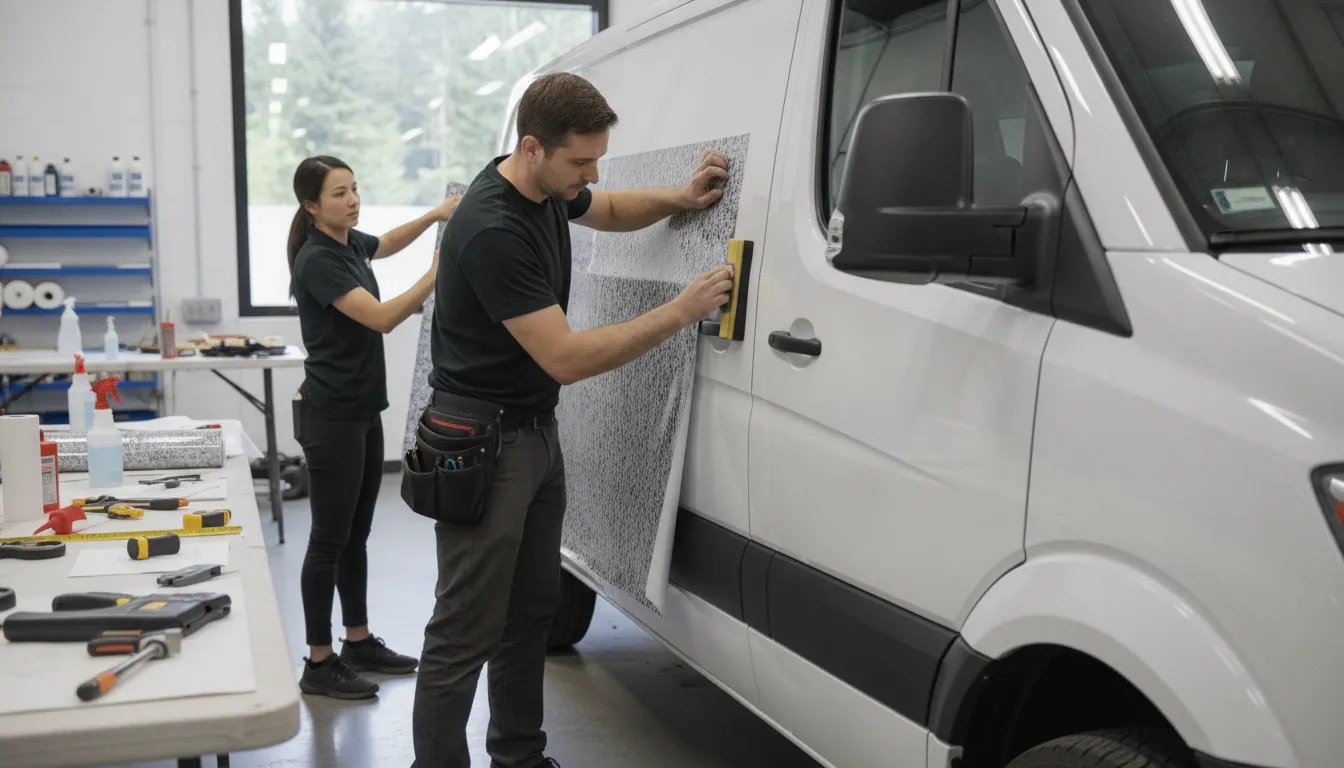
Installation is one of the most important points in a wrap's service life. A trained crew prepares the surface, follows the material manufacturer's application guidance, manages temperature and humidity, and uses techniques suited to the vehicle's contours.
Edges and transitions deserve particular care. Lifted edges can allow moisture, dirt, and road debris to work beneath the film. Wrinkles, trapped air, overstretched material, and insufficient post-heating can create stress that becomes more visible as the vehicle is used.
Consistency matters as much as the first vehicle's appearance in a commercial fleet. A repeatable process helps each unit receive the same surface preparation, panel alignment, finishing standard, and closeout documentation. AP Installations supports fleet programs with vehicle assessment, scheduled installation, and project documentation designed to reduce downtime and keep branding consistent. See the fleet vehicle wrap planning guide for broader program considerations.
Exposure is often the difference between a wrap that remains presentable for years and one that shows premature wear. Direct ultraviolet exposure can contribute to fading. Heat and temperature changes can increase stress on the film and adhesive. Rain, road salt, pollutants, and moisture can collect around edges and lower panels.
Driving conditions add mechanical wear. Highway mileage can increase contact with dust, gravel, insects, and other debris. Loading activity can affect graphics near doors and cargo areas. Branches, tools, fuel, and cleaning equipment can create local damage even when the rest of the wrap remains sound.
Storage decisions help where fleet operations allow them. Covered parking reduces direct sun and weather exposure. If indoor storage is not possible, shade can still be useful. These choices do not eliminate wear, but they can reduce cumulative stress on the film system.
Routine care should be simple enough for drivers and fleet teams to follow consistently. Use the material manufacturer's cleaning guidance as the controlling instruction. In general, a gentle hand wash or an appropriate touchless process is safer than aggressive brushes, abrasive tools, or concentrated solvents.
Avoid abrasive brushes, harsh degreasers, strong solvents, and direct high-pressure spray at edges. A short inspection during normal vehicle service can prevent a small issue from spreading. Keep records of installation dates, repairs, cleaning guidance, and replacement panels. The commercial vehicle wrap maintenance guidance can support a more detailed care routine for fleet managers.
Do not wait for a wrap to fail across an entire vehicle before reviewing its condition. A practical inspection looks for lifting, shrinking, or dirt along edges. Check for cracks, punctures, scratches, bubbling, or delamination. Also check for fading, color changes, and wear on door edges, handles, mirrors, bumpers, wheel arches, and lower panels.
Also look for damage caused by loading, impact, fuel, chemicals, or cleaning equipment. Changes to the paint or substrate may affect safe removal, so a visible problem should not be treated as only a cosmetic issue.
Some localized damage may be a candidate for repair. Widespread fading, cracking, adhesive failure, or substrate problems may point toward a larger replacement project. An installer can assess the condition and help sequence work around vehicle availability, brand standards, artwork, and operational deadlines.
AP Installations is a 3M Preferred Installer. That credential signals tested installation expertise and adherence to manufacturer procedures. It is a trust signal for a commercial buyer, but it is not a promise that every wrap will last a particular number of years.
Warranty eligibility depends on the matched component system, approved materials, documented production, proper installation, surface conditions, exposure environment, and other requirements. The 3M graphics and signage warranty information explains that coverage varies by product and application. The 3M Graphic Installer network explains the distinction between installer credentials and different graphics specialties.
Before approving a commercial wrap program, ask for the proposed material system, care instructions, installation documentation, and any applicable warranty requirements. Clear records help everyone understand what was installed and which conditions apply.
Request a vehicle graphics quote from AP Installations
Many professionally installed vehicle wraps are planned for several years of service, often around five to seven years in suitable conditions. Actual performance depends on film and laminate selection, surface condition, installation, exposure, mileage, storage, and maintenance. Treat any range as guidance rather than a guarantee.
Commercial fleet wraps can perform for several years, but high mileage, outdoor storage, heavy loading activity, road debris, and frequent washing can shorten the service window. A fleet-specific assessment is more useful than applying one fixed lifespan to every vehicle.
Appropriate cleaning helps remove contaminants that can stain or abrade the film. Use the manufacturer's care instructions, mild compatible products, soft tools, and safe pressure. Avoid abrasive brushes, harsh solvents, and concentrated spray at seams and edges.
Some localized damage may be repairable, depending on the film, graphic design, location, and condition of the surrounding area. Extensive fading, cracking, lifting, or adhesive failure may require replacement. An installer should assess the vehicle before a repair decision is made.
No. It indicates tested expertise in relevant graphics installation specialties and adherence to manufacturer procedures. Any applicable warranty or durability eligibility depends on the selected system, documented production, installation, surface, exposure, and other requirements.
Plan a review when the wrap shows repeated edge lifting, widespread fading, cracking, bubbling, delamination, or damage that affects brand presentation. Review early enough to coordinate vehicle availability, artwork, production, and installation without creating avoidable downtime.