Blog
Commercial Wall Graphics Manufacturing Facility Readiness
Measure commercial wall graphics manufacturing facility readiness: surfaces, access, downtime windows, and documentation before install day.
Blog
Measure commercial wall graphics manufacturing facility readiness: surfaces, access, downtime windows, and documentation before install day.
A commercial wall graphics manufacturing facility is ready for install only when the walls, the work window, and the artwork all agree. Paint that is still curing, a live production line with no downtime, or panels that do not match the wall will stop a crew on site. Plant managers and print partners can measure that readiness before anyone books a lift.
Request a wall graphics quote.
AP Installations is a 3M Preferred Installer that applies vinyl wall graphics in plants, warehouses, and other commercial buildings across the Pacific Northwest and on national projects. This guide is the measurement, not the food-plant graphics program and not a general office mural plan. Use it to decide go, hold, or fix before install day.
Readiness is a yes or no on five things: the wall can take film, the plant can host a crew, the artwork matches the wall, safety rules are clear, and someone can sign the record. A pretty rendering is not a ready wall.
Commercial wall graphics in a plant are working surfaces. They brand a lobby, mark a department, or carry a safety message beside active equipment. They fail when the wall was never checked. Dust, oil mist, fresh paint, and textured block all change how film sticks.
3M's substrate bulletin says every wall should be treated as dirty until it is cleaned. The last cleaning happens right before the film goes on. The wall also has to be dry. Moisture under film causes bubbles and early failure. Rough texture makes full adhesive contact harder. 3M flags surfaces rougher than about 150-grit sandpaper as the hard case. That is why a plant wall needs a test, not a guess. Read 3M's substrate selection and preparation bulletin before you lock a film.
Score each wall, not the whole building. One cured drywall lobby and one oily block wall on the production floor are two different jobs. A single building score hides the wall that will fail.
Give each wall a 1 to 5 on four lines: clean and dry, coating condition, texture, and damage. A 4 or 5 can move forward to an adhesion test. A 1 or 2 is a fix, even if the rendering looks finished. Write the score where facilities and the print partner can both see it. A verbal "the wall looks fine" is how plants lose a shift.
Start with a list. Walk the plant with operations, facilities, and the person who owns the brand file. Write down every wall that might get graphics.
Keep safety posters and accident-prevention signs out of this inventory unless a safety lead has already specified them. OSHA's sign rules in 29 CFR 1910.145 cover hazard signs and tags. They do not turn a brand mural into a compliant warning. If a wall must carry a hazard message, spec that sign on its own.
Food and beverage plants have a tighter program for sanitation zones, floor marks, and wash-down walls. That scope lives in the facility graphics guide for food manufacturing plants. Use this readiness check for general manufacturing walls, then add food-plant rules only if the site needs them.
Surface score comes before design. A wall that fails adhesion will not be saved by a better layout.
| Check | Ready | Hold |
|---|---|---|
| Clean and dry | No dust, oil, or moisture. Final clean is planned for install morning. | Oil mist, condensation, or a wall that cannot be washed and dried. |
| Paint or coating | Fully cured per the paint maker. Adhesion test passed. | Fresh paint, unknown coating, or chalking and peel. |
| Texture | Smooth, or a texture the chosen film is built to bridge. | Rougher than about 150 grit with no tested film match. |
| Existing graphics | Removed, or approved as a base with a passed test. | Loose edges, unknown film, or bubbled vinyl left in place. |
| Damage | Holes, cracks, and loose block patched and cured. | Open damage inside the graphic area. |
Painted drywall should be fully cured per the paint manufacturer. The crew should run an adhesion test before installation. Low-VOC interior paints do not all behave the same under film. 3M's wall application notes say there is no single film that wins on every paint. The practical step is an adhesion test on the actual wall. Test in a spot the graphic will cover, or on a matching off-cut of the same coating.
Warranty eligibility depends on using the correct 3M Matched Component System, approved materials, documented production, proper installation, surface conditions, and exposure environment. A passed test supports that record. It does not promise that every plant wall qualifies. 3M publishes the program rules on its graphics warranty resources and lists qualified companies on its installer locator. Oily production air, high heat, and frequent chemical wash-down can sit outside what a standard interior film is built for. Say that in the scope instead of hoping the film will cope.
Do not film over a failing graphic to hide it. Loose vinyl, thick texture, and damp masonry are hold items. Fix them, then retest. If the repair is new paint or new joint compound, restart the cure clock before the test. Filming a patch that feels dry but is not cured is a common plant shortcut, and it lifts later.
A useful test note is short. It names the wall, the film sample, the cleaner used, how long the sample sat, and whether the adhesive stayed or released. Photograph the sample on the wall and after removal. If the plant will not allow a test patch in a public lobby, test a same-paint return, a closet, or a panel the painter saved. An untested wall in another building is not a substitute.
A ready wall with no work window is still a hold. Manufacturing floors run on shifts, changeovers, and shipping cutoffs. The install has to fit a window the plant can actually give.
Ask operations for the hours when the wall is empty of people, product, and moving equipment. Add time for protection, cleaning, application, and a quiet period before the area goes back to work. A lobby after close is a different window than a line-side wall during second shift. If the only open slot is a 45-minute break, the wall is not ready, no matter how clean it is.
Write the window as a clock time and a shift name. "Next month during the shutdown" is not a window. Name the shutdown start, the hour the crew may enter, and the hour the wall must be clear. Add a backup date. Plants slip shutdowns. A printed graphic sitting in a hot trailer is its own risk.
Then confirm the physical path:
Dust from grinding, wash-down spray, and forklift traffic are install hazards, not background noise. If those cannot pause, move the graphic or move the date. Heat from nearby ovens and cold dock doors also belong on the note. Film has a workable temperature range. A January dock wall is not the same job as a tempered lobby.
The broader site walk, photos, and handoff list belong in the commercial vinyl installation site survey checklist. This section only decides whether the plant can host the wall job. Bring that checklist to the visit. Do not copy its whole procedure into the wall decision.
Readiness includes the file. A wall that passes adhesion still fails if the graphic is the wrong size or the panels do not meet on a seam the eye can forgive.
Large plant walls often ship as several panels. Number them in the same order the crew will hang them, left to right and top to bottom. Keep a printed map on site. A missed number in a live plant costs more than a missed number in an empty office. The crew may not get a second shift to sort the crate.
Also check delivery. Who receives the panels, where they can lie flat, and whether the plant allows an outside trailer overnight. Graphics left in a damp loading dock pick up the moisture the wall prep just removed. If the plant cannot store the job, schedule delivery for the same morning as the install.
If the project is a full mural with lifts, multi-day sequencing, and closeout photos, read the commercial wall mural installation guide for that sequence. Keep this page focused on the decision that comes first: is this manufacturing wall ready?
Turn the notes into one decision per wall. Share it with the print partner and the plant so nobody prints a hold.
Put the decision in writing. Include wall name, substrate, test result, photo links, work window, film callout, and who approved it. That packet is what a certified installer needs in order to schedule without guessing. It also protects the brand if a wall is later questioned.
Review the packet with the people who can still change it: facilities, operations, safety, and the print partner. A go that operations never saw becomes a refused badge on install morning. A go that safety never saw can put a ladder in a restricted bay. Ten minutes in a standing meeting is cheaper than a bounced crew.
If more than one building is in the program, keep one row per wall and one status. Do not roll them into one regional status. The point of the measurement is to see which wall can be printed now. The same sheet shows which wall still needs paint, access, or a new date.
Wayfinding routes, dock labels, and floor lanes are a separate system. Plan those in the industrial wayfinding graphics guide instead of folding them into a wall mural decision. Warehouse floor and aisle safety marks belong in the warehouse safety graphics guide.
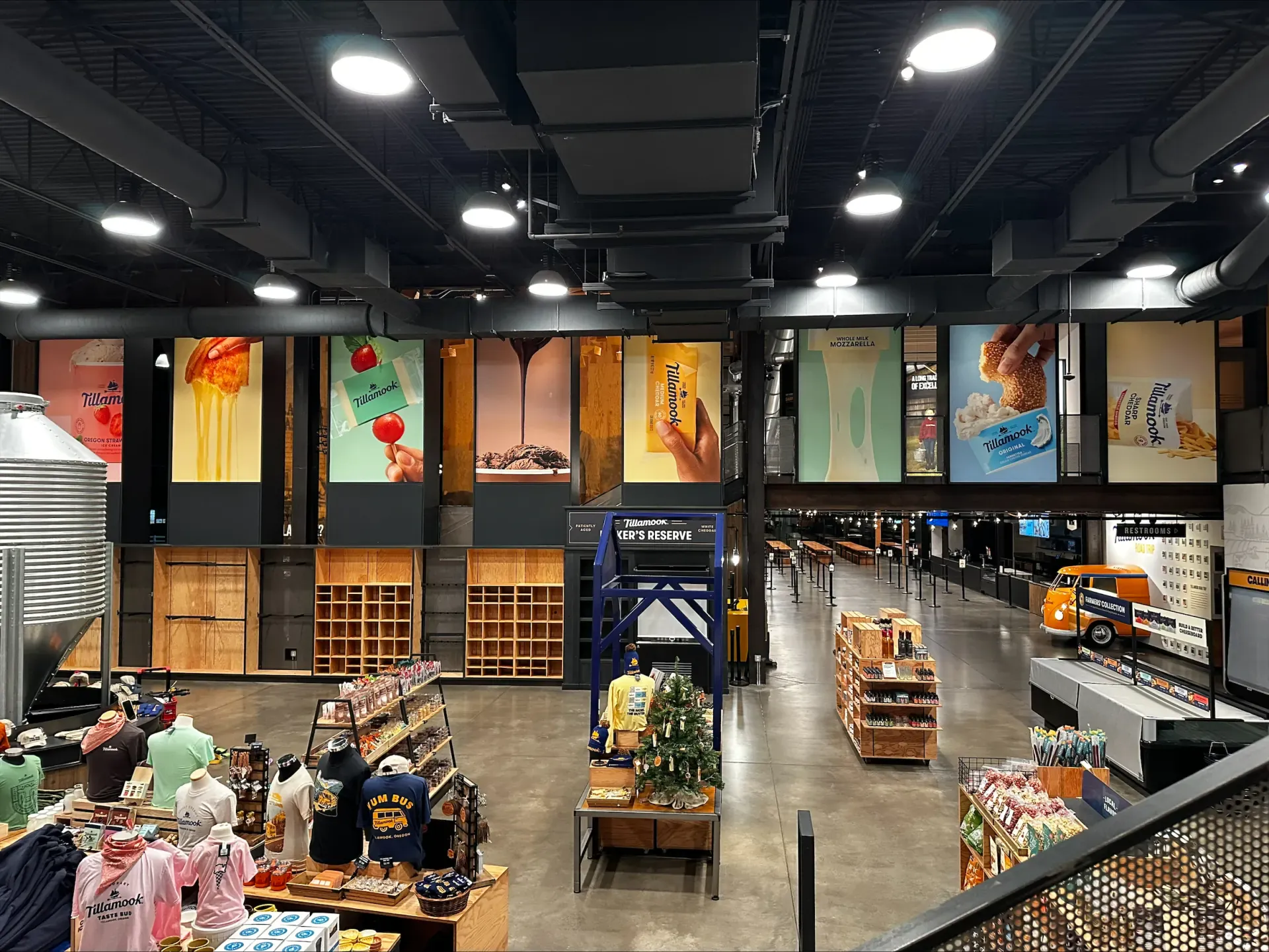
AP Installations plans wall, window, fleet, and specialty installs with the same field standard: access confirmed, surfaces checked, and closeout documented. See the murals and wall graphics capability for the install scope. The Tillamook Creamery project is a reference point for large-format graphics. Confirm the actual substrate, graphics type, and access requirements for your facility instead of assuming a project example matches the new wall.
Send your wall list for a quote.
Measure as soon as a wall is chosen and before print is released. Fresh paint, missing access, and bad dimensions are cheap to catch on a walk and expensive to catch with a crew in the building.
Sometimes. The block needs a sound, dry coating, and the film has to pass an adhesion test on that texture. Rough or chalking block should be repaired or given a different finish before anyone promises a graphic.
No. Accident-prevention signs follow their own rules. A brand graphic can sit near a hazard, but it does not satisfy a required danger, caution, or safety instruction sign.
Facilities signs the surface. Operations signs the work window and site rules. The brand or print partner signs the art and film. One missing signature is a hold, not a detail to settle on install morning.
Send the wall list, photos, approximate sizes, substrate notes, the target install window, and whether art is already printed. A short packet gets a more useful scope than a single hallway photo.