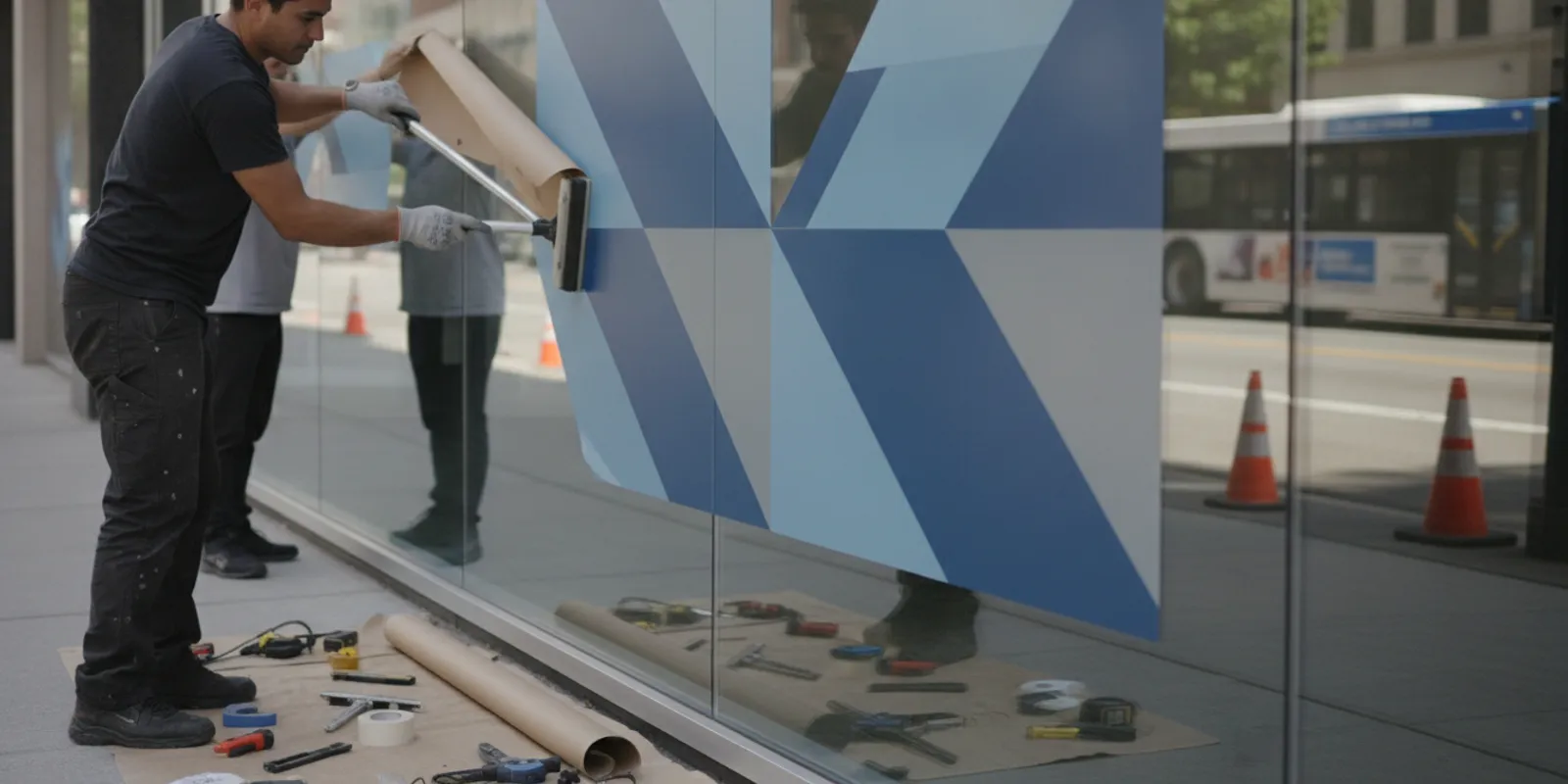
The best commercial vinyl graphics substrates are clean, stable, smooth enough for the chosen film, and suited to the graphic's location and exposure. Glass and smooth painted surfaces are often straightforward starting points, while concrete, brick, textured walls, and some plastics need closer review, testing, or a material system made for the surface. Choose the substrate and film together, then confirm the condition of the actual installation area before production.
Discuss your installation plans with AP Installations
Choose a substrate by its condition and use
A substrate is the surface that receives the graphic. It affects adhesion, appearance, installation time, and how the finished graphic performs in its setting. The same material can behave differently from one site to another. A new painted wall, a weathered painted wall, and a wall with a chalky finish are not equivalent just because they are all drywall.
Start by answering four questions:
- What is the surface made of? Identify glass, painted gypsum board, metal, masonry, plastic, or a vehicle finish. If the surface has a coating or sealant, identify it too.
- What is its condition? Look for dust, grease, moisture, loose paint, oxidation, cracks, texture, repairs, or residue from an earlier graphic.
- Where will it be used? Note interior or exterior placement, direct sun, rain, cleaning routines, temperature changes, public contact, and expected service conditions.
- What does the design require? Large panels, small lettering, cut graphics, perforated window film, and a full vehicle wrap can place different demands on the surface and installation plan.
Give the installer photographs and accurate details about the surface, including recent painting, cleaning, or coating work. When the substrate is unknown or inconsistent, a site review is more useful than choosing a film based only on a product description. AP Installations works on commercial vinyl graphics applications including walls, windows, floors, murals, and fleet graphics.
Compare common commercial graphic surfaces
This table is a planning aid, not a guarantee that a particular film will adhere to every surface in a category. Product selection and preparation depend on the specific material, finish, condition, location, and manufacturer's guidance.
| Substrate | Typical strengths | Questions to resolve | Planning emphasis |
|---|
| Glass | Smooth, nonporous face; useful for storefronts and interior glazing | Interior or exterior application? Clear, tinted, coated, or textured glass? | Clean thoroughly; confirm film type, visibility needs, edges, and exposure |
| Painted drywall | Common interior wall surface with a potentially smooth finish | Is paint cured, sound, and compatible with adhesion? | Confirm paint condition and cure guidance; test adhesion where needed |
| Painted metal | Often smooth and durable when the coating is intact | Is there corrosion, chalking, powder coating, or a low-energy finish? | Inspect coating, seams, edges, and exposure; clean and test as appropriate |
| Concrete | Can support graphics when the surface and product are suitable | Is it sealed, porous, rough, damp, or subject to traffic? | Assess texture and moisture; use a system designed for that surface and use |
| Brick or masonry | Distinctive architectural surface, but often highly textured | How deep are joints? Is the surface sound, clean, and consistent? | Expect more evaluation; select conformable material and plan for texture |
| Plastic | Common on panels, equipment, displays, and some vehicle components | Which plastic and finish? Is it treated, flexible, or difficult to bond? | Identify the specific plastic; verify compatibility and test when uncertain |
| Vehicle finish | Designed vehicle paint can provide a suitable base for many vehicle graphics | Is the paint original, repaired, aged, or failing? Are there complex contours? | Inspect the finish and body details; match film and installation method to the vehicle |
Use glass for visibility, while planning for the viewing side
Storefront windows and interior glass can be useful graphic surfaces because the face is usually smooth and nonporous. The main choice is not simply whether vinyl can go on glass. Decide which side of the glass receives the film, what people should see from each side, and whether the graphic needs to preserve a view or admit light.
Different projects may call for opaque, translucent, clear, or perforated materials. Perforated window film has a specific viewing effect and is not interchangeable with a solid print. Confirm the intended appearance in daylight and at night, especially where interior lighting or a strong reflection can change what is visible. Also identify coatings, tint, textured panes, and existing window treatments before specifying materials.
Preparation matters even on a smooth pane. Dust, fingerprints, cleaner residue, and small particles can affect the finish. The installer should use an appropriate cleaning process and plan edges, seams, mullions, handles, and door movement. For a fuller look at options, see AP Installations' window graphics types and materials guide and window vinyl installation guide.
Check paint condition before applying graphics to drywall
Painted drywall is a common interior substrate for murals, branded workplace graphics, and directional messages. A smooth, well-maintained painted wall can offer a clean visual result. Adhesion still depends on the paint and wall condition, not just the fact that the surface looks finished.
Ask when the wall was painted and follow the paint manufacturer's cure guidance before installation. Fresh paint can appear dry before it is ready for an adhesive graphic. Painted walls should be fully cured per the paint manufacturer, with adhesion testing before installation when appropriate. Also look for dust, grease, wall repairs, peeling, glossy or unusual coatings, and uneven texture. Discuss any cleaning needed before installation so that the surface is not damaged or left with residue.
Large graphics can make minor wall variations more noticeable. Review seams, corners, outlets, trim, and transitions in advance. If a mural crosses more than one wall or a repaired section, align the artwork and installation plan with the actual site measurements. AP's wall mural installation guide covers additional planning considerations, and its office wall mural information can help teams plan a branded workplace environment.
Inspect metal coatings, seams, and edges
Metal can be a suitable base for commercial graphics when its finish is clean, intact, and compatible with the selected material. Smooth painted panels may be easier to work with than corroded, heavily textured, or chalking surfaces. The installer needs to distinguish the metal itself from the coating on top of it. A stable substrate does not make a failing coating stable.
Inspect for rust, oxidation, loose paint, powdery residue, oil, and damage around fasteners. On exterior panels, consider water exposure, temperature changes, panel seams, and edges where the graphic may be exposed. On doors or equipment, confirm that movement, heat, or routine handling will not put the graphic in an unsuitable location. If the coating is unfamiliar or the finish is questionable, ask about a test rather than assuming compatibility.
Roll-up doors and other moving panels have their own surface and movement concerns, so they need a project-specific review. Do not assume that a recommendation for a flat metal panel will apply to a door with joints or repeated flexing.
Set realistic expectations for concrete, brick, and textured surfaces
Masonry is where substrate selection often needs the most careful discussion. Concrete may be smooth or porous, sealed or unsealed, clean or dusty. Brick and block can have deep mortar joints and pronounced texture. A graphic that looks flat on a sample may not conform or appear the same way across a rough wall.
Review the surface closely for loose material, moisture, efflorescence, coatings, rough repairs, and changes in texture. Ask whether the surface is appropriate for the intended installation and whether the chosen film is designed to conform to its profile. The artwork may need to account for mortar lines, recesses, corners, and irregularities. Installation may require more time and a different approach than a smooth interior wall.
Textured surfaces do not all present the same challenge. A lightly textured painted wall differs from exposed brick or rough concrete. A close-up photo can help with early planning, but it cannot always reveal adhesion, moisture, or surface stability. For a large or prominent installation, a site assessment and test area can clarify appearance and feasibility before the full graphic is produced.
Identify the exact plastic before choosing a film
Plastic is a broad category, not one predictable substrate. Signs, display components, equipment covers, and vehicle trim can use different plastics, surface treatments, and finishes. Some surfaces are flexible or have low surface energy, which can make adhesion more challenging. A graphic suitable for one plastic panel may not be suitable for another.
Find out the material name when possible and share it with the installer. Note whether it is new, weathered, textured, molded, or treated with a coating. Check if the panel bends, heats up, or is regularly cleaned with chemicals. Where the exact material or treatment is uncertain, product documentation and a test application are safer than relying on appearance alone.
Match vehicle graphics to the paint and body shape
Vehicle paint is a substrate as well as a finish that needs protection. Before applying graphics, inspect the vehicle's paint condition and history. Repainted areas, peeling clear coat, corrosion, wax, or contamination may affect whether a graphic is appropriate and how it should be removed later. Confirm any concerns before artwork and production are finalized.
Vehicle geometry also matters. Flat doors, compound curves, body seams, handles, rivets, and recesses require different planning. A fleet program should standardize vehicle models and identify differences between units instead of assuming every van or truck has identical dimensions. For examples of project types, browse the AP Installations project gallery, or review the fleet graphics guide for service vans.
Do not treat a durability statement as a universal lifespan. Performance varies with the film, surface, exposure, maintenance, and installation conditions. The installer can help align the material choice and the intended use, but the specific vehicle and graphic system must be considered.
Consider floors as a separate application
Floor graphics have different demands from wall or window graphics. Foot traffic, cleaning, moisture, floor texture, and the intended duration all affect material selection and placement. A smooth floor in a controlled interior is not the same as rough concrete or a busy entry exposed to water and grit.
Plan for a graphic and protective overlaminate intended for the surface and traffic conditions. For locations where people walk, confirm that the complete system is appropriate for the use and applicable site requirements. Check transitions, edges, accessible routes, and maintenance procedures before approving the layout. AP's removable floor decals guide offers a starting point for temporary floor applications.
Coordinate substrate selection with the graphic system
The substrate is one part of a system that can include the face film, adhesive, laminate, print method, and installation technique. Selecting a graphic by color or price alone leaves out conditions that may determine whether it is a good fit. Share the following project details with the print and installation teams:
- Surface material, finish, age, and any known coating or treatment.
- Interior or exterior location, exposure to sun and weather, and routine cleaning.
- Approximate dimensions, seams, corners, joints, curves, and access restrictions.
- Whether the graphic is temporary, part of a recurring campaign, or intended to remain in place for a specific period.
- Photos of the full area and close-ups of surface condition, repairs, and transitions.
- Any prior graphics, adhesive residue, removal history, or surface testing.
For wallcovering projects, the Wallcoverings Association's grounds and substrates overview describes categories of wallcovering backings. That information is relevant to wallcovering materials, but it does not replace product-specific guidance for pressure-sensitive vinyl graphics. Confirm the chosen product's own specifications for the intended substrate.
Use a test area to resolve uncertain surface conditions
When the material or surface condition is uncertain, a small test area can help teams assess fit before committing to a full production run. Make the test representative: select the same type of surface, coating, finish, and exposure as the planned installation. A test on one clean section of a building does not establish that a different wall, vehicle panel, or plastic component will behave the same way.
- Agree on the question. Decide whether the test is checking adhesion, appearance across texture, edge behavior, removal, or another specific concern.
- Record the location and conditions. Note the surface type, finish, visible defects, cleaning or preparation performed, product information, and date. Photograph the test and the surrounding area.
- Allow the test to be reviewed appropriately. Follow the material manufacturer's instructions and the installer's guidance for application and evaluation. Consider the real lighting, viewing distance, and operating conditions of the site.
- Set a decision point. Review the result with the project team and resolve any concerns before finalizing the material, artwork, schedule, or full installation scope.
A test area is useful evidence, not a universal promise about future performance. Its value comes from using it to identify questions early and document the conditions that informed the decision. If the site includes several surface types, evaluate each one that could materially change the appearance or installation approach.
Prepare the site before installation day
After the surface and material are selected, coordinate the site conditions with the installer. Agree on which areas must be cleared, who will provide access, and whether other work is happening nearby. Dust-generating construction, wet cleaning, painting, or active use of the installation area can interfere with preparation and sequencing.
Confirm that the surface is ready based on its material and condition. Do not apply a generic cleaning or primer method to every substrate. The right process depends on the coating and graphic system. If painting or repairs are needed, schedule them with enough time to follow the coating manufacturer's cure instructions. For a multi-panel design, verify measurements, artwork orientation, panel order, and site reference points before work begins.
At handoff, review the installed graphic in context. Check alignment, seams, edges, corners, and the areas around hardware or architectural features. Discuss any care instructions for the selected material and keep the product and project information with the site records. If the project includes multiple surfaces, record which materials were used in each location so future replacement or expansion can be planned accurately.
Make the decision with a surface review, not a guess
Glass and smooth, sound painted surfaces are often practical starting points for commercial graphics. Metal can also work when its coating is stable. Masonry, plastic, textured walls, floors, and vehicle surfaces call for a closer match between substrate, graphic system, and use. No single material is best for every project.
Describe the surface, exposure, and intended result before approving production. When condition or compatibility is uncertain, ask for a review or test area and resolve the question early. AP Installations provides large-format graphic installation services and can discuss project scope through its graphic installation quote request.
Request a conversation about your graphic installation
Frequently Asked Questions
Which surface is easiest for commercial vinyl graphics?
Clean, smooth, stable surfaces such as many glass panes and well-maintained painted walls are often simpler to evaluate and prepare than rough masonry or unidentified plastic. The actual condition and coating still matter, so confirm compatibility for the selected material.
Can vinyl graphics be installed on brick or concrete?
Some projects may be possible, but brick and concrete vary in texture, porosity, moisture, coatings, and condition. The installer should assess the specific surface and choose a material system intended for it. A test area can help establish appearance and feasibility.
Does new paint need time before applying a wall graphic?
Yes. Follow the paint manufacturer's cure guidance rather than relying only on whether the wall feels dry. The wall should be fully cured, and an adhesion test may be appropriate before installation.
Can the same vinyl go on glass, metal, and plastic?
Not necessarily. Different surfaces and coatings can require different adhesives or film properties. Identify the exact substrate, intended exposure, and use, then verify the product specifications with the print and installation teams.
What should I send an installer before requesting a quote?
Share the surface material if known, dimensions, clear photos, location and exposure, project timing, and any history of paint, coatings, repairs, or earlier graphics. These details help the team identify questions to resolve before materials and installation are scheduled.
A thoughtful substrate review helps set clear expectations, supports a better material choice, and makes the installation plan more reliable for the space or vehicle.