Blog
Commercial Vinyl Graphic Installation Planning Guide
Plan commercial vinyl graphic installation with practical guidance on surfaces, materials, access, scheduling, safety, coordination, and closeout.
Blog
Plan commercial vinyl graphic installation with practical guidance on surfaces, materials, access, scheduling, safety, coordination, and closeout.
Commercial graphics succeed when installation is planned as part of the project, not treated as the final handoff after printing. A storefront, fleet, mural, floor, or event installation can involve different surfaces and access conditions. Schedules and stakeholders also matter, so early coordination protects both the visual result and the operating plan.
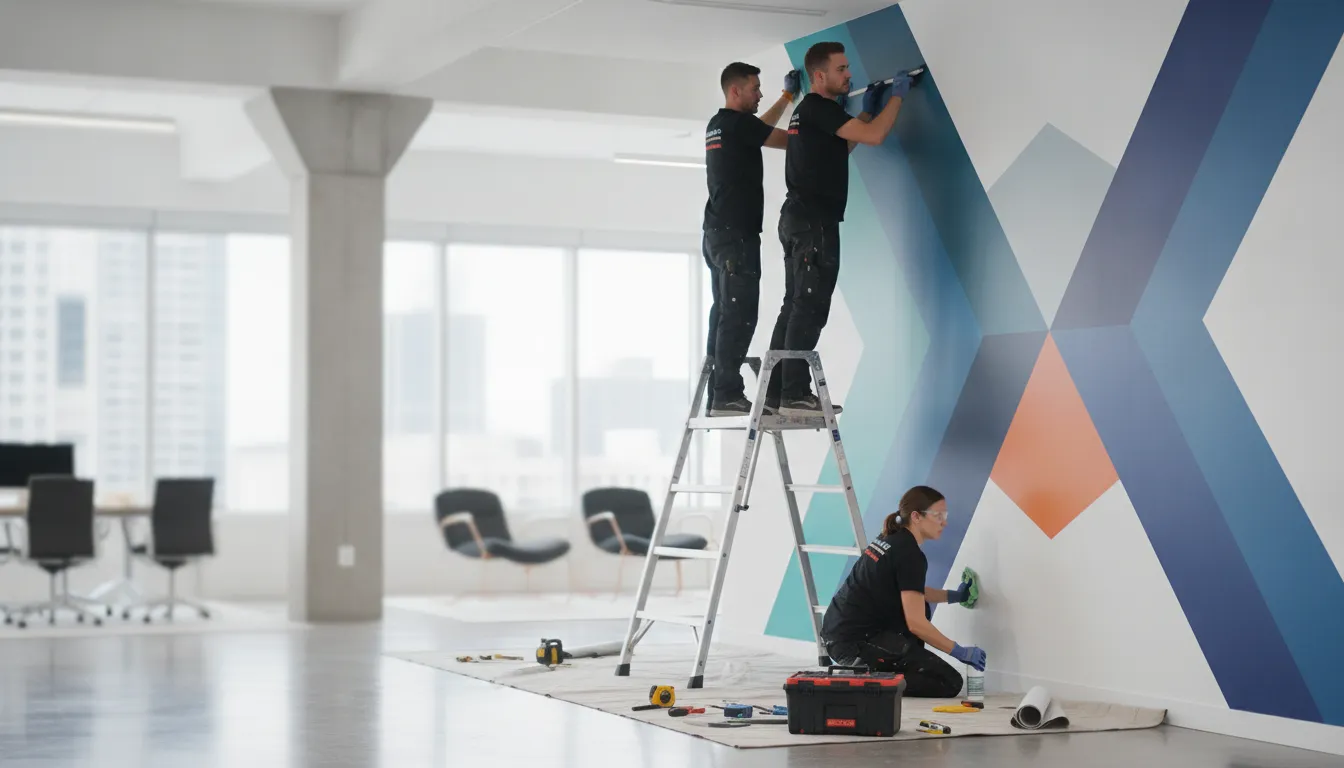
Commercial vinyl graphic installation is the controlled process of preparing the site, confirming materials and surfaces, coordinating access and timing, applying the graphics, and documenting the finished work. The right plan connects the buyer, designer or printer, facility contact, and installer before production begins, with requirements adjusted for the application and site conditions. Applications range from windows and walls to vehicles, floors, building wraps, events, and sponsorship graphics.
Request a project discussion with AP Installations
The first planning decision is to make the project scope specific enough for every partner to work from the same expectations.
A clear project brief gives every participant the same definition of success before artwork is printed or installation dates are reserved. Start with the objective: are the graphics intended for storefront visibility, interior branding, fleet identification, wayfinding, an event environment, or a broader rollout? The answer affects the application, production requirements, site coordination, and inspection plan. Commercial vinyl graphic installation can cover windows, walls, floors, vehicles, murals, building wraps, events, and sponsorship graphics, so the intended use should be specific from the outset.
Document the locations, approximate dimensions, quantities, artwork status, and required completion date. Note whether the artwork is final, still in design, or awaiting brand approval. The production partner should confirm the film, laminate, color requirements, paneling, and file specifications. If materials are not selected yet, identify who owns that decision and what conditions may affect it. A buyer should not assume that a film suitable for a smooth indoor wall will also be appropriate for a vehicle, exterior surface, textured substrate, or high-traffic floor.
Record the actual surfaces and their condition. Include substrate type, paint or finish, texture, seams, joints, curves, existing graphics, repairs, contamination, and any areas that may need preparation. Environmental conditions matter as well, particularly temperature, humidity, moisture, and exposure. These details help the installer identify questions early rather than discovering a site constraint after materials have arrived. AP's commercial vinyl graphics solutions provide a useful overview of the application types that may require different planning decisions.
Access information belongs in the brief, not in a last-minute email. Identify loading areas, parking restrictions, building hours, security procedures, lifts or other equipment, clearance limitations, escort requirements, and areas that must remain open. Confirm whether permits, facility approvals, tenant coordination, or safety documentation are required. For an operating store, office, fleet, or venue, note customer traffic, employee schedules, vehicle availability, and any work that must happen during a defined shutdown window.
Finally, name the stakeholders and establish who approves each milestone. Early communication among the buyer, designer or printer, facility contact, and installer supports practical decisions about artwork, materials, access, timing, and responsibilities. Include the project location, complexity, surface conditions, access limitations, and schedule when requesting a plan or quote. Those inputs influence the installation approach and the resources required, so a detailed brief produces a more useful response than a request based only on square footage.
The same graphic film will not perform identically on every commercial surface. Glass, painted metal, drywall, acrylic, plastic, vehicle panels, textured walls, curved surfaces, exterior substrates, and high-traffic floors each present different preparation and adhesion considerations. AP Installations works across these applications, but the installation plan should begin with the substrate, not the artwork alone.
| Project factor | Questions to confirm | Why it matters |
|---|---|---|
| Surface | What is the substrate, finish, texture, and condition? | Determines preparation, testing, and compatible film. |
| Environment | Is the graphic interior, exterior, mobile, wet, or high traffic? | Guides film, laminate, cleaning, and exposure decisions. |
| Operations | When can the site, vehicles, or work area be accessed? | Shapes safety controls, crew sequencing, and scheduling. |
Start by documenting what the surface is made of, how it has been finished, and whether it is smooth, porous, painted, textured, curved, or exposed to weather or heavy contact. A wall with a fresh coating may need additional cure time. A porous surface may absorb moisture. A floor may require a film and protective overlaminate designed for pedestrian traffic rather than a product intended for a clean interior wall.
Film and laminate selection should also reflect the environment. Interior and exterior exposure, cleaning practices, sunlight, temperature changes, vehicle movement, and expected contact all influence the appropriate material combination. This does not mean assigning a fixed lifespan in advance. It means choosing a system that fits the documented surface and operating conditions, then following the manufacturer's application requirements.
Surface preparation is a technical step, not a quick wipe immediately before application. The 3M substrate preparation bulletin states that substrates should be treated as contaminated and cleaned before film application, with the final cleaning step completed immediately before installation. Dust can collect quickly, even on a surface that appeared clean during an earlier site visit.
The substrate must also be fully dry. According to 3M, moisture beneath a graphic can interfere with adhesive bonding, create bubbles, and contribute to premature failure. Inadequate drying, condensation at low temperatures, and high humidity can all introduce moisture. Porous materials require particular attention because they can absorb moisture and change how well the film adheres.
Texture changes the amount of adhesive contact available. 3M notes that good contact becomes more difficult on textured surfaces rougher than 150-grit sandpaper. On a textured, painted, porous, or unusually coated substrate, an installer may recommend an adhesion test before committing the full graphic. Testing can help identify whether the planned film, adhesive, application method, or surface preparation needs to change.
For window projects, review the planning details in this commercial window vinyl installation guide. Early surface review gives the buyer, printer, facility contact, and installer time to resolve compatibility questions before production, when material changes are easier and less disruptive.
A strong commercial vinyl graphic installation plan accounts for the location as carefully as it accounts for the artwork. The installer needs to understand where the work will happen, how the crew will reach each surface, what equipment is appropriate, and how the installation fits around normal operations. Early coordination also gives the facility contact, buyer, printer, and installation team a shared schedule instead of forcing site decisions at the last minute.
For examples of completed environments and installation contexts, review AP project examples. The goal is a predictable installation that protects the site, respects operating constraints, and gives the crew enough information to execute accurately.
A reliable commercial vinyl graphic installation should follow a documented workflow rather than depend on memory or last-minute adjustments. The record gives the project team a shared reference for site conditions, application decisions, quality checks, and final acceptance. It also makes it easier to identify what needs correction before the installer leaves the site.
Preparation starts with confirming that the surface is ready and that the working environment is suitable for the selected materials. The installation team can review the substrate, clean and prepare the application area, and monitor temperature and humidity when those conditions may affect the work. If the surface or environment does not support a clean application, the issue should be addressed before film is applied, not concealed afterward.
Once conditions are confirmed, the installer positions and applies the graphic with attention to alignment, seams, overlaps, contours, and other project-specific details. Edge sealing may be appropriate in locations or applications where exposed edges need additional protection. It should be used according to the material, surface, and installation requirements, rather than treated as an automatic step for every graphic.
This is where a specialist installation partner adds practical value. AP Installations works across commercial applications and documents quality controls such as surface preparation, environmental monitoring, precise application, and edge sealing when applicable. See the company's commercial installation capabilities for a broader view of the work involved.
A multi-point inspection should look at the finished graphic from the angles and distances that matter in its actual setting. The team can check alignment, adhesion, edges, seams, bubbles, wrinkles, surface appearance, and any details identified in the project scope. Photographs create a useful record of the completed work. If an imperfection is found, it should be corrected where practical and recorded along with the resolution. A client walkthrough then gives the buyer or site contact an opportunity to review the result and identify any remaining questions.
AP is a 3M Preferred Installer. The 3M program describes training, practical examinations, written assessments, annual recertification, insurance verification, and business-standards compliance as part of its installer requirements. You can review the program context through 3M's official installer resource.
That credential supports a structured installation process, but it does not make warranty coverage automatic. When warranty eligibility is relevant, it depends on the applicable system and materials, documented production, installation quality, surface conditions, exposure, and other project requirements. Keeping the workflow and inspection record helps the project team retain the documentation needed to evaluate those conditions.
A successful commercial vinyl graphic installation depends on more than the installer arriving with the finished graphics. The buyer, designer or printer, facility contact, and installation team should share the same scope, artwork details, site information, and access plan before production is finalized. Early communication reduces avoidable revisions and gives each stakeholder a clear responsibility.
For print shops, sign companies, and agencies, AP Installations can serve as a specialized installation partner rather than competing with the team that sold or produced the project. This supports white-label and wholesale coordination when a production partner needs experienced field capacity for a complex installation, a multi-location rollout, or an overflow project. The print partner can remain the primary client contact while AP handles the installation scope and reports progress through the agreed communication channel. Review AP's commercial installation capabilities when defining that division of responsibilities.
The handoff should identify the approved artwork, material specifications, graphic quantities, installation locations, site contacts, and any open questions about surfaces or access. Designers and printers should provide the production information the installer needs, while facilities teams can confirm building rules, loading procedures, work hours, security requirements, and areas that must remain operational. Direct buyers should also identify who can approve a field decision if conditions differ from the original plan.
Fleet projects benefit from the same discipline. Vehicle counts, unit locations, templates, access windows, and downtime expectations should be confirmed before vehicles are presented for installation. AP's fleet vehicle graphics process provides useful context for coordinating vehicle assessment and scheduling. Event, venue, and large-format work may require additional communication with production managers, facilities staff, and site safety contacts. AP project examples show the range of environments that can require coordinated planning.
Closeout should record what was installed, where it was installed, and whether any corrections, follow-up access, or maintenance guidance remains. Photos, inspection notes, client walkthrough feedback, and approved correction records give the buyer and production partner a shared project record. They also make it easier to distinguish an installation issue from a later site change or surface condition.
When requesting a quote, provide as much detail as possible about the graphic type, project complexity, access, surface condition, location, and timing. Those factors affect the installation plan and quote, so a clear brief is more useful than a broad request for a standard rate.
A clear decision record helps the installation team solve problems before they become schedule changes, reprints, or site delays. Before approving production, bring the buyer, designer or printer, facility contact, and installer into the same conversation. Early coordination gives the team a realistic view of the scope, site conditions, access requirements, and timing.
Use this checklist to confirm that the project is ready to move forward:
Project complexity, access, surface condition, location, and timing all influence the installation plan and quote. Reviewing those details early creates a more useful scope and gives the team a practical basis for coordinating the work. For examples of completed commercial and experiential projects, review AP project examples.
Request a project discussion with AP Installations
Commercial vinyl graphics can be installed on windows, walls, floors, vehicles, transit assets, murals, building surfaces, event spaces, and sponsorship signage. The right material and application method depend on the substrate, exposure, traffic, and project purpose.
Often, but textured surfaces require closer evaluation than smooth glass or painted metal. Texture can reduce adhesive contact, so the installer may need to assess the surface, confirm compatibility, and select materials and preparation methods suited to the condition.
Confirm the project objective, final artwork, material specifications, installation surfaces, site access, safety requirements, schedule, facility contacts, and inspection process. Early coordination among the buyer, designer or printer, facility contact, and installer helps identify conflicts before graphics are produced.
Yes. A print shop, sign shop, agency, or design firm can coordinate with a specialized installer when it needs additional field capacity or expertise. Sharing artwork details, site conditions, access requirements, and timing early helps the installation partner plan accurately.
AP Installations identifies as a 3M Preferred Installer. The program includes training, practical examinations, written assessments, annual recertification, insurance verification, and business-standards compliance. Certification supports qualified execution, but project results still depend on the materials, substrate, conditions, and documented installation process. Learn more about the 3M installer program.
Commercial vinyl graphic installation runs more smoothly when artwork, surfaces, access, scheduling, and responsibilities are aligned before production begins. A project discussion can help clarify the installation scope and identify the information your team or print partner should prepare. To request a project discussion for your commercial installation, contact us.