Blog
Commercial Glass Graphics Seattle: A Practical Guide
Plan commercial glass graphics in Seattle with practical guidance on goals, artwork, surface checks, access, installation timing, and project handoff.
Commercial glass graphics in Seattle can help a storefront, office, or retail location present a consistent brand without changing the building itself. A successful project starts before installation: define what the glass needs to communicate, prepare accurate artwork and measurements, confirm surface and site conditions, and coordinate access. This guide walks through those decisions so your team can brief a printer and installer clearly and avoid preventable delays.
Request a quote for your glass graphics project
Start by listing what each glass area needs to do. A storefront display may introduce the brand or support a promotion. Interior office glass may carry a logo or other approved brand elements. A display case can need a small, precisely placed graphic. Those goals affect the size, placement, artwork, and material decisions that follow.
Walk the site and identify the exact panes included. Note which glass faces the street, which is inside the business, and which panels are separated by doors, frames, or mullions. Record the intended message for each area, the campaign dates if it is temporary, and who will approve the final layout. A simple pane-by-pane schedule is more useful than a general note such as “brand the front windows.”
Decide what the graphic should accomplish from the viewer’s point of approach. Someone walking past a storefront may see it at close range; a person arriving at an office may see the same glass from farther away. Provide the design and print team with photographs and basic dimensions, but treat them as planning references rather than substitutes for field verification.
AP Installations installs window graphics for promotional and permanent applications, including storefront branding and window displays. The company focuses on vinyl graphics application and installation, and can coordinate design or printing support through partners when needed. If you are still comparing approaches, review the window graphics types and materials guide and the practical examples in the business window graphics overview.
The graphic approach should follow the job, not the other way around. Ask the design and print partners to recommend a construction suited to the approved artwork, intended duration, glass location, and viewing conditions. The table below is a planning aid, not a material specification: final selection depends on the project and the product selected by the print provider.
| Approach to discuss | Typical planning purpose | Questions to settle before production |
|---|---|---|
| Cut vinyl lettering or shapes | Focused words, logos, or simple graphic elements | Are all elements sized and spaced for the pane? Is the surface smooth and suitable for the specified film? |
| Printed graphics on a specified vinyl | Artwork with multiple colors, imagery, or a more detailed layout | Which side of the glass receives the graphic? What is the approved material and expected use period? |
| Large-format window display | A coordinated message across several panes or a broader storefront area | How will the art account for frames and pane breaks? Who confirms the final field measurements? |
| Temporary promotional application | A campaign or seasonal message with a defined display period | What removal expectations and timing has the material supplier specified? Who schedules any later changeover? |
These categories can overlap. For example, a campaign might combine lettering and printed elements across several windows. Ask the printer to identify the specific material and intended application in writing, including any preparation instructions. The installer can then assess whether the proposed surface and site conditions match those instructions. Avoid approving a design based only on a single digital mockup when the real storefront has multiple panes, different viewing angles, or prominent frame lines.
Accurate measurements matter because glass is divided into individual working areas. Measure each pane separately, and document the width and height, frame boundaries, door swings, handles, and any other fixed elements that affect placement. Label the panes consistently in photographs and on a simple elevation or schedule. That makes it easier for the business, print partner, and installation crew to refer to the same location.
Field measurements should be confirmed before production. A rough measurement from a floor plan or phone photograph can help scope the project, but it does not verify the actual install area. If the storefront has multiple sections, record each one rather than multiplying a single panel measurement. Note any uneven dimensions or design elements that appear to cross from one pane to another, and ask the responsible design or print partner to account for them in the final proof.
Before approving files, confirm who owns each decision: final copy, brand colors, logo versions, artwork scaling, and approval of the production proof. Check that any message, campaign date, and contact details are current. If artwork is meant to align across adjacent panes, identify the intended alignment point and include it in the approval notes. Small changes made after production may affect the fit or appearance, so establish a clear approval checkpoint.
AP Installations evaluates glass-surface compatibility and preparation requirements as part of planning. Its installation method includes surface preparation, temperature and humidity monitoring, precise application intended to avoid bubbles and wrinkles, and edge finishing. Share the material specification, final approved artwork, pane schedule, and relevant site photos with the installation team early enough for questions to be resolved before the crew arrives.
Glass is not automatically ready for every vinyl application. The installer needs to assess the actual surface and the preparation required for the selected product. Arrange a site review or provide the information requested by the installer; do not assume a photograph alone can confirm compatibility. The review should identify which panes are included, where the work will happen, and what access or preparation needs to be coordinated.
Environmental conditions also matter to installation planning. Temperature, humidity, and exposure are among the factors AP Installations considers before work. Ask the print provider for product-specific handling and application requirements, and share any known indoor or outdoor conditions with the installer. The schedule should leave room to resolve a mismatch between the material instructions, surface, or conditions rather than forcing the crew to proceed without the right information.
Make access practical. Identify business hours, customer activity, loading or staging arrangements, and any restrictions the property manager has communicated. For a retail location, consider whether work outside normal customer hours would reduce disruption; AP Installations can coordinate retail installations with operations and work off-hours when requested. Confirm the requested schedule, access method, and point of contact before the installation date.
For complex work, discuss safe access and work areas in advance. Identify whether the crew needs to work around customers, staff, furnishings, or nearby operations. The U.S. Occupational Safety and Health Administration’s workplace safety resources are a starting point for general workplace safety information; project-specific site rules and applicable requirements still need to be addressed with the responsible parties. Do not assume a particular Seattle permit, access rule, or building procedure applies without checking with the property or relevant authority.
Glass graphics projects often involve more than one organization. A brand or operations lead may own the objective, an agency may manage artwork, a print shop may produce the vinyl, and an installer may handle field application. Set one project contact to keep decisions and updates moving. AP Installations works with design firms and print shops as an installation partner rather than an in-house design and production agency.
Before production, make sure the handoff includes:
This information reduces avoidable questions, but it does not remove the need for the installer to evaluate the site. If the print shop has not yet selected a material, share the intended application and ask the print partner and installer to coordinate on a suitable specification before files go to production. If your organization needs printing or design assistance, AP Installations can help coordinate partner support; confirm the scope and handoffs directly.
For a broader overview of AP Installations’ installation work, see its vinyl graphics solutions and large-format graphic installation capabilities. Businesses working with a print or sign shop can also review installation support for brands, agencies, and print shops. These pages can help clarify whether your project needs a dedicated field installation partner.
Before the crew arrives, make sure the agreed glass is accessible and the business contact knows the work sequence. Confirm the location, install window, site access, and any customer or staff coordination. If work is occurring during open hours, identify who can answer questions and who can help maintain the agreed work area. If off-hours are requested, confirm how the team will access the site and whom to contact if the plan changes.
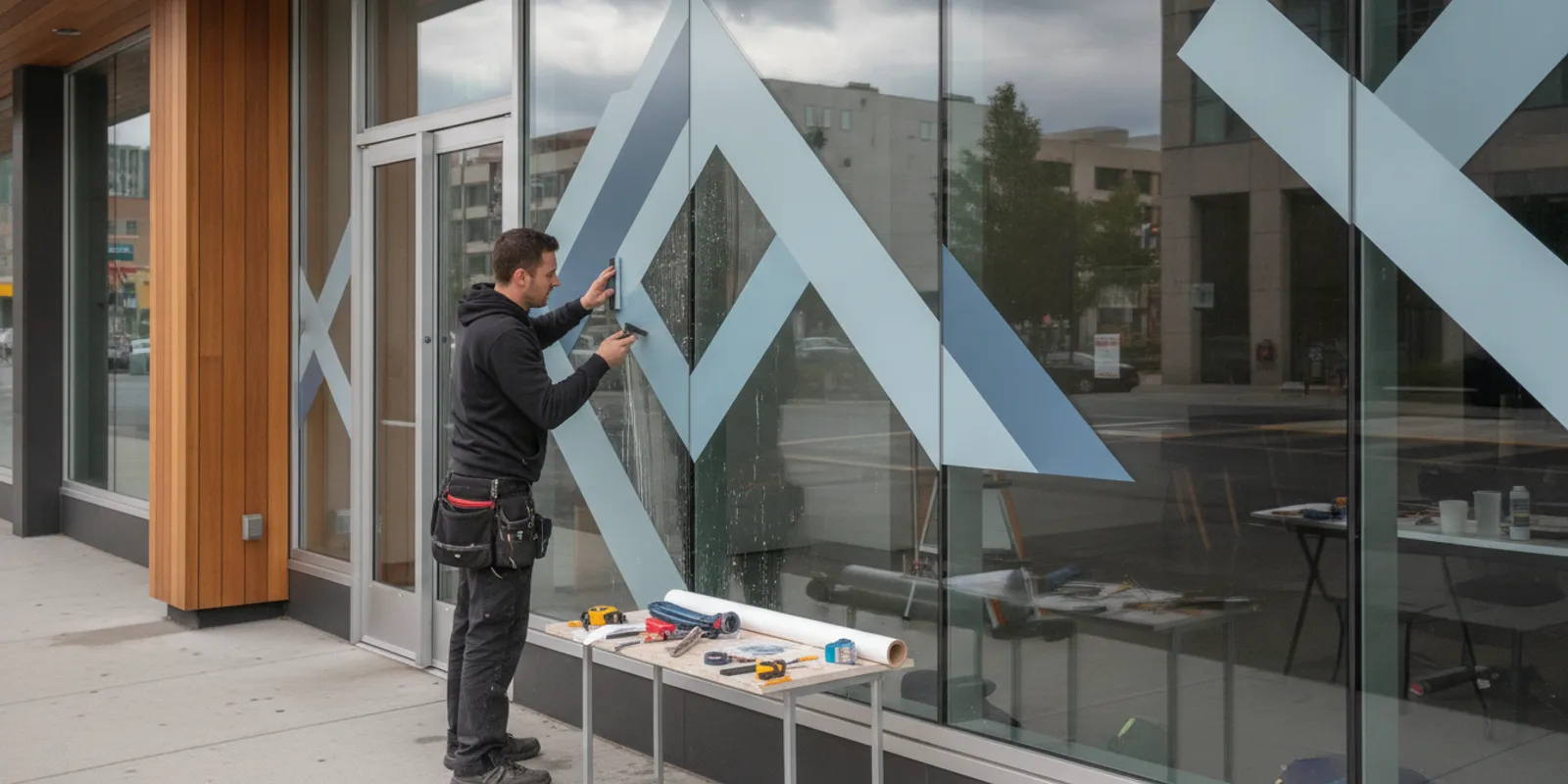
The installer prepares the surface according to the selected material’s requirements, monitors environmental conditions, applies the graphic carefully, and finishes the edges. Actual steps depend on the product and site. Avoid arranging cleaning or other work on the glass at the same time unless the installer and material instructions allow it. Keep the approved pane schedule available so the intended placement can be checked as work progresses.
After application, review the work against the approved proof and pane schedule. Check that the correct graphic is on the intended pane, the placement is consistent with the plan, and there are no obvious bubbles, wrinkles, or unfinished edges. Raise questions promptly with the project contact and installer, while the team can still review the installation details together. AP Installations includes post-installation quality inspection and documentation for retail projects.
Save the final proof, material information provided by the print partner, installation notes, and any completion documentation with your campaign or facilities records. If the graphic is temporary, record the planned display period and identify who will arrange the next change. For permanent applications, ask the material supplier or responsible project partner for care guidance appropriate to the chosen product; do not assume the same cleaning or service advice applies to every graphic.
Use this short checklist to find gaps before production or scheduling:
If important details remain unanswered, pause the handoff and clarify them with the relevant partner. A short coordination conversation before production is usually more useful than trying to resolve material, measurement, or access questions on installation day. AP Installations serves the Pacific Northwest, including Seattle, and can discuss installation needs for commercial windows, storefronts, and display cases. Read more about Seattle glass graphics installation services. Explore its graphic installation projects for examples of completed work, then share your own scope and timing when requesting a quote.
Get in touch to discuss your Seattle glass graphics quote
Yes, window graphics can be used for promotional as well as permanent applications. Tell the print partner the intended display period and ask which material and removal expectations apply to the product they specify. Coordinate the installation and any later changeover with the site contact.
AP Installations focuses on vinyl graphics application and installation, rather than operating as an in-house design and production agency. It works with design firms and print shops and can help coordinate design or printing support through partners when needed. Confirm who is responsible for the final artwork, production, and material specification.
AP Installations can coordinate retail installations with operations and work off-hours when requested to help avoid customer interference. Discuss the preferred schedule, site access, and business contact in advance so the team can confirm whether the requested arrangement works for the project.
The supplied project information does not establish a Seattle-specific price or turnaround time. Cost and schedule depend on the project scope and conditions, so share the number and size of panes, graphic approach, site details, and timing with AP Installations to request a quote.
With a clear purpose, confirmed pane information, coordinated material choices, and a practical access plan, your team can move commercial glass graphics from concept to installation with fewer avoidable surprises.