Blog
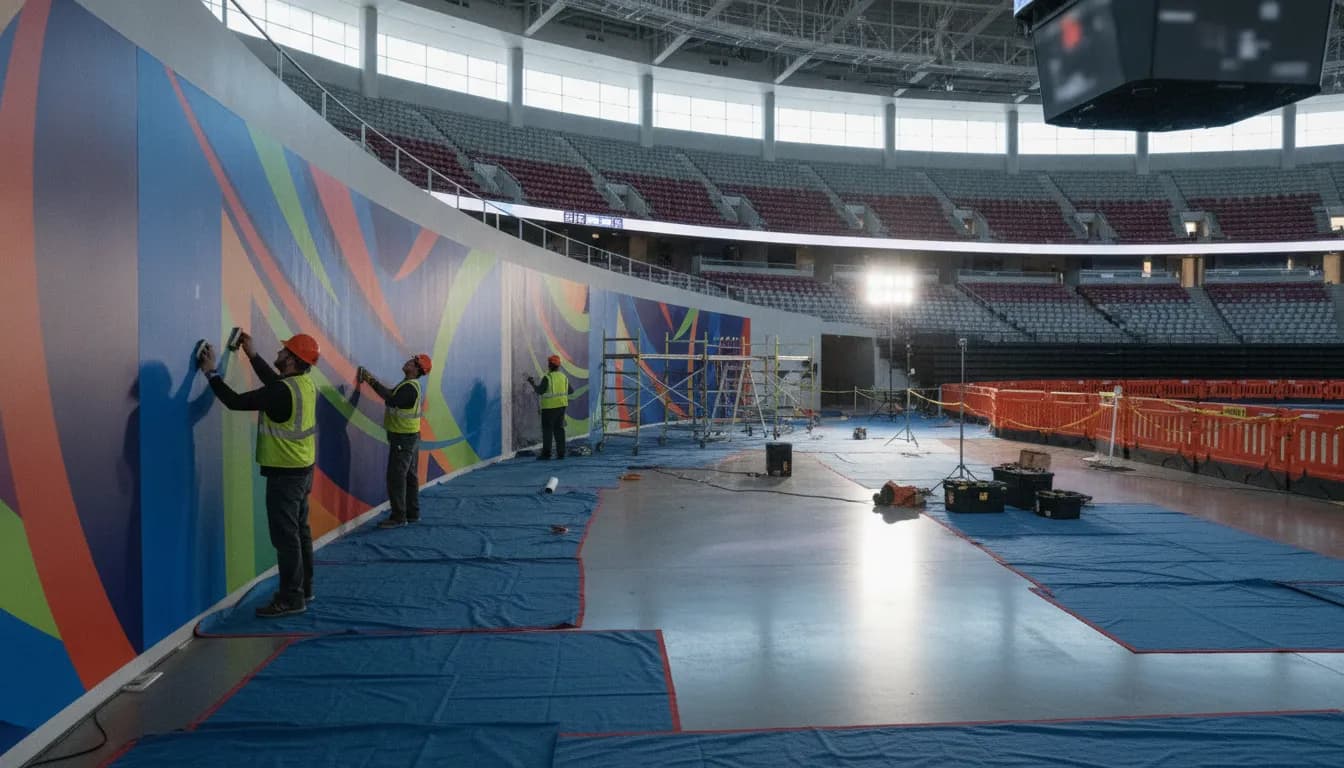
Arena Wall Wraps Installation: Venue Planning Guide
Plan arena wall wraps installation with practical guidance on surfaces, materials, venue access, guest flow, and closeout for commercial projects.
Blog
Plan arena wall wraps installation with practical guidance on surfaces, materials, venue access, guest flow, and closeout for commercial projects.
Arena wall graphics are only as dependable as the plan behind them. Venue buyers need to evaluate the wall surface, confirm when and how installers can work, and protect guest circulation before production is scheduled.
A successful arena wall wraps installation starts with a site-ready substrate and a graphic system suited to the venue's use. It also needs a controlled work plan that keeps access, equipment, and guest movement coordinated. The right installation partner should define inspection and closeout steps before mobilization.
This buyer-focused guidance addresses wall-wrap readiness and execution, not broad sports sponsorship strategy or general stadium concourse graphics. It is designed for venue teams, agencies, brand managers, and print partners who need practical answers before committing to a large-format installation. Begin by confirming the conditions that can affect the work window, installation method, and final result.
Request arena wall wrap installation guidance for your venue and project team.
Before approving an arena wall wraps installation plan, confirm that the wall, schedule, access route, guest circulation plan, and closeout process are ready. The goal is not simply to place a large graphic on a visible surface. It is to complete the work without compromising the venue's operating schedule, the finished graphic, or the next team's ability to maintain or change it.
This checklist is narrower than a general sponsorship or concourse graphics plan. It helps venue teams, agencies, and print partners evaluate whether a specific wall-wrap project is ready to mobilize and whether the installation partner has the information needed to execute it responsibly.
A successful arena wall wrap installation begins with the wall, not the printed graphic. Before scheduling application, inspect the substrate for its material, texture, paint condition, moisture, repairs, and areas affected by equipment or frequent contact. Painted drywall, wallboard, concrete, and other surfaces can require different preparation, so the installer should confirm the actual substrate and the selected film system before mobilization.
Dust, oils, cleaning residue, and construction debris can compromise adhesion. The 3M surface preparation bulletin recommends treating substrates as contaminated and completing the final cleaning immediately before applying the film. That timing matters in an arena, where an otherwise clean wall can collect dust while crews stage equipment or other work continues nearby.
The surface must also be dry. Trapped moisture can contribute to premature graphic failure, interfere with adhesive bonding, and create bubbles beneath the film. Condensation or high humidity can make it difficult to keep the substrate dry, so the installation plan should account for the venue's conditions rather than relying on a visual check alone. If moisture is present, pause and resolve the condition before application.
Peeling, lifting, or bubbling paint signals poor paint-to-substrate adhesion. If the paint is not firmly bonded, the graphic and paint may pull away together. Review patched or recently painted areas closely, and complete a small adhesion test in a representative location when the surface or coating is uncertain. The test should be evaluated before approving full production application.
Fresh paint also needs adequate time to dry and cure according to the paint manufacturer's recommendations. Under-cured paint may outgas, prevent the adhesive from bonding adequately, or affect how a removable or changeable product comes off later. For product-specific requirements, consult the relevant film product bulletins in addition to the general 3M installation guidance.
Changeable graphics do not eliminate substrate risk. Removing even a changeable graphic can damage wallboard, particularly if the wallboard is cut during application. Document the wall condition before work, identify sensitive areas, and align the graphic system with the venue's expectations for future changeovers. That preparation helps the facility team make an informed decision about placement, access, and replacement planning.
The right wall graphic system depends on what the venue needs the installation to do, how often the space will change, and what the wall can support. Adhesive graphics may be temporary or semi-permanent depending on the selected material and adhesive, so a tournament takeover should not be specified the same way as a permanent branded feature wall. Ami Graphics also notes that the adhesive and material should match the intended duration and application environment. Review the material and adhesive considerations with the print and installation team before production.
| Arena use | Material and adhesive focus | Planning considerations |
|---|---|---|
| Temporary event or changeover | Choose a system intended for the planned campaign window and removal process. A changeable product may be appropriate, but it does not eliminate surface risk. | Confirm the changeover date, removal method, and wall condition. Wallboard can be damaged during removal, particularly if it is cut during application. |
| Repeated seasonal use | Prioritize consistent application and removal requirements across each campaign. A protective laminate may add UV shielding and scratch resistance when the use case calls for it. | Document the surface, cleaning approach, and approved products so future installations do not rely on assumptions from a previous season. |
| Longer-term branded wall | Specify a system suited to the wall, exposure, cleaning demands, and expected service conditions. Lamination can add protection, but it is not a universal durability guarantee. | Coordinate artwork, seams, access, and maintenance expectations before printing. Confirm product-specific requirements in the applicable 3M product bulletins. |
Removal, durability, and laminate performance vary with the film, adhesive, substrate, installation conditions, exposure, and maintenance. The 3M Instruction Bulletin advises consulting the product bulletins for the specific products used in the graphic construction: 3M's substrate and application guidance. That review should happen before arena wall wraps installation is scheduled, especially when the venue expects recurring changeovers or a future wall refresh.
Arena-scale wall work has to fit around the building's operating calendar, not just the install team's availability. Scheduled events, facility activities, and equipment use can make timeline coordination critical. A public-facility work plan may also require coordination with maintenance staff and a site that remains safe and operational between workdays. The exact requirements will vary by venue, so the access plan should be reviewed with the facility's operations contacts before mobilization. A government arena project RFP illustrates the planning principle by calling for timeline coordination, maintenance coordination, and continued equipment use during the week: read the arena project RFP.
Build the access plan around these six checkpoints:
This level of coordination helps the installation stay aligned with venue operations while keeping responsibilities visible across the facility, print partner, agency, and installation crew.
Wall-wrap installation should fit around the venue's operating plan, not force guests, staff, or event equipment to work around an uncontrolled jobsite. Before mobilization, define a protected work zone with clear boundaries, overhead protection where needed, and a routing plan for pedestrians moving past the installation area. The exact controls depend on the venue, work location, and schedule, so the facility's operations and safety contacts should approve the plan.
Keep guest routes visibly separated from ladders, lifts, tools, panels, adhesive materials, and staging carts. A temporary closure may be appropriate in one corridor, while a narrowed or redirected route may work elsewhere. Plan for event-day conditions as well as quieter installation windows. CISA guidance highlights the need to consider crowds, traffic, venue location, and egress points in stadium evacuation planning, including how pedestrian and vehicle traffic moves through venue perimeters. Those principles support early coordination, but they do not replace the venue's own plans or the review of applicable authorities.
Review egress and accessibility before work begins. The Access Board describes accessible egress as a continuous and unobstructed way of egress travel. Venue management, code officials, and other responsible authorities should determine the site-specific requirements. The installation plan should also protect sightlines to directional signs, exits, stairs, doors, fire equipment, and other operational features. Do not assume a visually minor wrap or a short work window makes an obstruction acceptable.
Build cleanup into every workday. Remove debris, secure materials, and leave the area safe and operational between shifts. Confirm that venue equipment can still be used when required, and document who receives the area at the end of each shift. CISA's stadium evacuation planning guidance emphasizes coordination among venue operators and response organizations. A clear handoff should identify unfinished panels, protected surfaces, changed routes, remaining equipment, and the contact responsible for reopening the space.
Artwork planning should account for the wall as it exists, not just the finished image. Before production, document each installation surface with accurate width and height measurements, changes in elevation, corners, columns, doors, rails, outlets, scoreboards, and any other obstruction that could affect panel placement. Large-scale work leaves little room for an estimate based on visual inspection alone. Even small variations can change how artwork aligns across a wall or where a seam lands.
Decide where panels will begin and end, how seams will align with architectural features, and which areas require separate pieces because of access or substrate changes. The panel plan should also show bleed, critical logos, sponsor marks, and other elements that cannot be cut, covered, or placed across a seam. This is where precise field measurements and current photos or drawings help the design and production teams avoid preventable rework. A print partner can then use the installation plan to prepare files that match the approved dimensions and sequence.
Assign one approval contact who can resolve artwork, access, and field-condition questions quickly. Before an installer is scheduled, the project file should include the approved artwork, final panel map, measured dimensions, surface notes, and obstruction locations. It should also list the installation sequence, site contact, access window, lift or equipment requirements, and any restrictions on staging. If a print or sign shop is managing production, confirm who owns color approval, proof revisions, packaging, labeling, and delivery to the venue.
AP Installations works with agencies, print shops, sign shops, and venue teams on wall and mural vinyl graphics, event installations, temporary activations, and sponsorship signage. Its installation-specialist role means the handoff can stay clear: the creative and print partners control approved artwork, while the installer uses verified site information to plan application. For broader scheduling context, review this temporary event graphics planning resource. With decisions documented before mobilization, the crew can arrive with the right materials, sequence, and equipment for the arena wall wraps installation.
A strong closeout gives the venue a usable record of what was installed, how it should be cared for, and what the next changeover team will need. Start with a joint visual inspection under the same lighting and access conditions the venue normally uses. Check panel alignment, seams, edges, corners, bubbles, scuffs, lifting, and coverage around fixtures or transitions.
Record any open items in a punch list with a clear owner and due date. Photograph completed walls from several angles, including wide views that show the installation in context and close-ups of details that may matter during a later replacement. If the project involved multiple zones, label photos by location rather than relying on file names alone.
The handoff should identify the film or graphic system used, installation date, areas covered, cleaning cautions, and any conditions that could affect future removal. Temporary or changeable graphics can still damage wallboard, particularly if the wallboard is cut during application. Removal should follow the agreed method and be coordinated with the facility team. Product-specific instructions should remain with the project record.
Keep a small, labeled sample or documented record of leftover material when available. It can help identify colors, finishes, and panel positions during a repair or future changeover. Note which sections are intended for a short event, a seasonal activation, or continued branding. That distinction supports better scheduling and material decisions later, rather than treating every wall as a permanent installation.
Have the venue representative, project lead, and installation partner confirm the punch list status and sign-off record. The record should also note when tools, debris, lifts, and protective materials were removed. Arena-scale schedules are often shaped by booked events and operational needs, while facility scopes may require coordination with maintenance staff and a safe, operational site between workdays. A documented handoff helps protect that continuity.
AP Installations supports wall and mural vinyl graphics, event installations, temporary activations, and sponsorship signage as an installation specialist. Its 3M Preferred Installer positioning is a relevant credential, not a blanket warranty promise. For projects that will change with the event calendar, use the temporary event graphics planning resource to keep closeout records connected to the next installation window.
A wall wrap is a printed adhesive graphic applied directly to a prepared surface, while a mural can describe a broader visual treatment, including painted or printed work. For arena projects, the practical decision depends on the wall condition, desired changeover schedule, graphic system, and access requirements.
Not necessarily. Depending on the selected materials and adhesives, a graphic may be temporary, semi-permanent, or intended for longer use. A one-season activation and a multi-year branded wall should not use the same specification automatically. Confirm the intended lifecycle, removal plan, and maintenance expectations before approving materials.
The wall should be clean, dry, sound, and suitable for the selected film. 3M recommends cleaning immediately before application and notes that trapped moisture can interfere with adhesion and create bubbles. Peeling, lifting, or bubbling paint should be addressed, and paint must cure according to the manufacturer's recommendations. Review the 3M surface guidance before mobilization.
Yes, with a documented access plan. The venue, installer, and other project partners should coordinate event dates, loading and staging areas, equipment access, protected work zones, guest routing, cleanup, and the handoff between workdays. The venue team remains responsible for reviewing site-specific egress and operational requirements. AP Installations can support wall and mural graphic installation while coordinating with agencies, print shops, and facility teams.
A clear installation plan helps align artwork, surface preparation, access windows, guest-flow considerations, and venue handoff before mobilization. AP Installations can help your team evaluate the practical requirements for an arena wall wraps installation project and coordinate the next planning steps with your venue, agency, or print partner.
Request a project quote and discuss your arena wall wraps installation plan with AP Installations.