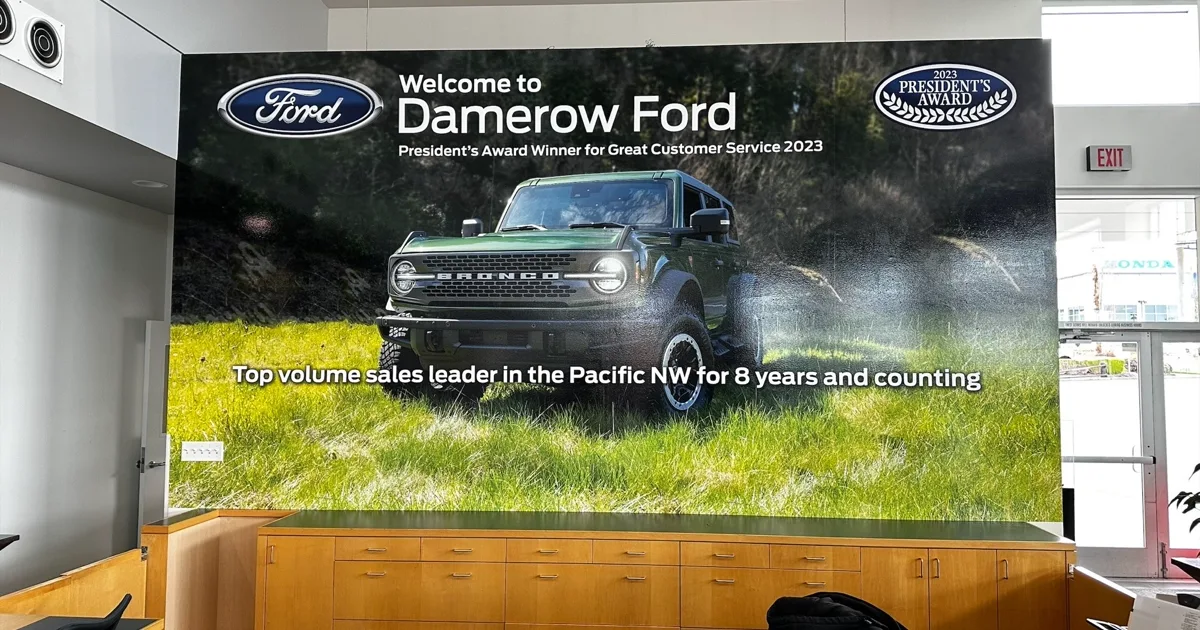
An active construction perimeter is visible long before the finished storefront or development opens. Left bare or poorly wrapped, that same barrier signals disruption instead of a controlled project.
Planning graphics for an active construction perimeter? Share your wall conditions, schedule, and site access needs with AP Installations.
Construction wall graphics installation applies printed vinyl or related graphics to temporary hoarding and perimeter walls at an active job site. It gives developers and retail teams a controlled public-facing surface for branding, opening messages, wayfinding, or required site communication. Successful work starts with a site survey, substrate check, material selection, artwork alignment plan, weather review, safe access plan, and removal expectations. Any safety or traffic-control information must stay readable and comply with applicable requirements. OSHA addresses standards for traffic control signs, signals, barricades, and devices used to protect workers during construction. Professional hoarding wrap installation also reduces visible seams, bubbles, edge failures, avoidable schedule delays, and damage during planned removal.
Project teams usually need to know which surfaces are ready, which conditions can delay work, and how the wrap can come down cleanly later. Construction wall graphics installation turns a barrier into a branded asset, and careful planning makes that asset dependable from opening day through removal. Here’s how.
Construction wall graphics installation turns a barrier into a branded asset
During an active build or renovation, the perimeter is often the first part of the project people see. Construction wall graphics installation can cover exposed work views with a planned visual face. It can also present the development name, tenant concept, or opening message before the doors are ready.
A public-facing perimeter
Developers can use hoarding graphics to keep a street-facing site visually organized while work continues behind the barrier. Rather than leaving raw temporary panels in view, the perimeter can carry renderings, project naming, leasing details, or a simple brand pattern. This gives passersby a clear sense of what is being built.
Retail teams face a similar issue during a store refresh or tenant fit-out. Graphics can screen work zones from customers while keeping the storefront consistent with the planned retail experience. Project marketers can review AP Installations solutions for branded installations when planning an exterior graphic application around a temporary site boundary.
Brand preview and message planning
A construction wall is also a useful preview surface. A future restaurant can introduce its name and visual style before opening. A mixed-use project can show tenant categories, a leasing message, or images that explain the finished setting. The message should be brief enough to read while walking or driving past the site.
The best layout works across the full run of panels, not just one central sign. Logo zones, repeated colors, and clear image crops help a long perimeter look intentional. Teams can use AP Installations project examples to consider scale, sightlines, and finish expectations before a wall graphic installation is scheduled.
Direction without mixed signals
A branded perimeter may include practical cues, such as an open entrance, sales center location, or pedestrian route marker. These elements should be direct and easy to scan. They must also remain distinct from any required job-site traffic controls, warnings, or barricade markings.
Brand graphics do not replace the signs or devices set by the site team. OSHA guidance on traffic control devices addresses signs, signals, barricades, and devices used to protect workers. Keeping brand copy separate helps project teams coordinate a polished perimeter with the parties responsible for site controls.
That distinction matters when an active site shares a sidewalk, parking approach, or retail entrance with the public. Early coordination lets the graphic plan support the visitor path without crowding key notices. The result is a branded temporary surface that reads clearly while the project remains in progress.
What should a site survey cover before installation?
Install-ready information
A site survey should turn an approved concept into a clear field plan. It gives the installer measurements, surface notes, access details, and closeout needs before materials reach the site.
For a construction wall graphics installation, use one marked-up survey record from the field visit through installation day. The record should show where each graphic starts or stops. It should also mark wraps, seams, and fixed objects.
A six-step site survey
Capture the job in a set order, then compare the survey to the final layout. This reduces late questions about panel placement, work areas, and what must be removed later.
- Measure each wall or hoarding run. Record width, height, returns, corners, and any change in plane. Label each elevation so dimensions match the artwork file.
- Check the substrate. Note whether the surface is plywood, painted board, metal, concrete, or another material. Photograph dust, loose paint, moisture, rough areas, or damage that may affect prep.
- Map seams, joints, and edges. Mark panel breaks, gates, trim lines, gaps, and exposed ends. Show where a graphic can finish cleanly and where alignment needs care.
- Record obstructions and interfaces. Locate vents, handles, lights, signage, cameras, fasteners, outlets, doors, and walkways. Add photos with measurements, not broad overview images alone.
- Confirm approved layout references. Match each surveyed area to the current proof, elevation name, panel map, and revision date. Flag site changes that need artwork review before print or install.
- Set the work and removal plan. Record access points, staging limits, lift needs, work windows, cleanup rules, removal timing, and expected surface condition after removal.
Public access and handoff notes
When graphics meet walkways or a public-facing barricade, the survey should identify sight lines and required notices. The OSHA construction signage rule references standards for traffic control signs, signals, barricades, and devices that protect workers.
Finish with a dated photo set, an elevation key, and notes on changes since artwork approval. Planning construction wall graphics installation around that record helps teams review scope and access. They can also confirm removal needs before work is scheduled.
How do weather and substrate checks protect the finished graphics?
Surface condition before film application
Construction wall graphics installation starts with a simple question: is the surface ready to accept film today? A panel can look clean yet still hold dust, grit, damp patches, loose coating, or uncured repair work. Each issue can interrupt contact between the adhesive and the wall face.
A survey should identify what the graphics will cover: plywood hoarding, painted panels, sealed boards, concrete, or a textured wall. The install plan can then match preparation and film choice to that surface. It should not treat every barrier as the same.
Moisture, weather, and changing site conditions
Outdoor barriers change as the job advances. Rain, washdown, fresh paint, airborne dust, and new fasteners can alter a wall after artwork is approved. Before application, the crew should confirm that panels are dry, stable, and firmly fixed. Debris that could show through the graphic should be removed.
If weather leaves the surface damp or unsettled, postponing application protects the finish. It lowers the risk of poor initial bond, trapped dirt, lifted edges, or visible defects. Project teams can review AP Installations’ graphics installation solutions when planning site access and surface preparation.
Substrate checks that prevent rework
Smooth sealed panels often call for a different check than porous concrete or rough-textured surfaces. Plywood hoarding may also change at seams, screw heads, repaired areas, and exposed edges. A test area or installer review helps flag zones that need treatment before full panels are fitted.
Checks also protect information that must remain clear on a site barrier. Hoarding may carry traffic control signs or devices that protect workers. OSHA requires this equipment to meet the Manual on Uniform Traffic Control Devices requirement. Graphics should not hide or distort needed site communication.
During a survey, note rough patches, movement at panel joins, new coatings, and nearby work that may create dust or moisture. Resolving those conditions before the install keeps the finish consistent across a long perimeter.
These checks are small when scheduled early. They help the installer deliver even joins, clean edges, and a consistent public-facing finish. The project team can also avoid preventable removal and replacement work.
A reliable hoarding wrap installation sequence
Approved files and panel plan
A clean install starts before vinyl reaches the site. The installer reviews approved art, panel numbers, sizes, overlap direction, and the panel map. This planning step is central to construction wall graphics installation. One missed panel can break a long image across the barrier.
Panels should be staged in application order, not opened at random on the job site. Labels stay visible until the matching section is ready. The crew also checks the wall run against the map and marks changes at gates or corners. Access points that must stay clear are confirmed.
Site readiness and controlled application
Before application, the team checks that the hoarding is sound, dry, clean, and free of loose material. Work areas need a safe setup. Tools and rolls should stay out of walking routes. If graphics carry safety or access messages, their position must stay clear and readable.
That visibility check is more than a finish detail. OSHA guidance states that job site signs should be visible and readable to people entering the site. The panel map should preserve required notices, gates, and sightlines during site signage placement.
The crew sets a level reference line before placing the first panel. Each panel is lined up with that mark and its mapped starting point. It is then applied with controlled pressure. Installers work out trapped air and check printed features at joins. This limits drift across a long hoarding run.
Seams, edges, and handoff records
After panels are applied, quality checks move from the full image to small details. The team checks seams for even overlap. It also checks edges, corners, cutouts, and door openings for lift or poor contact. A few steps back can reveal shifted text or missed sections.
The final walk-through should match the installed sequence to the approved files and panel map. Photos record full elevations, joins, corners, access points, and any noted site condition. The handoff record shows what was installed. It also flags areas that may need later review.
DIY application versus professional large-format installation
Choosing by project scope
A small, temporary decal on a smooth panel can be a practical DIY task. A branded perimeter is different. It may involve long runs, changing substrates, public sightlines, access limits, and several graphic panels that must read as one image.
For marketers and owners, the choice is less about who can place vinyl. It is about who can plan a visible site asset and control avoidable rework. A guide to construction wall graphics installation can help define scope before artwork and site timing are locked.
Surface review becomes more important as the display grows. A short decal may reveal a problem quickly. A full perimeter can include repairs, seams, rough areas, and gates. These details affect layout decisions and panel sequencing before installation begins.
DIY and professional installation at a glance
Use this comparison for planning, not as a rule for every project. Simple pieces can suit an in-house team. Full hoarding graphics often benefit from an installer who reviews the wall, sequence, site access, and final record set before work begins.
| Planning point | DIY application | Professional installation |
|---|---|---|
| Best fit | Small temporary decals on simple, smooth panels | Long branded perimeters and multi-panel hoarding wraps |
| Surface review | Basic cleaning and visual check | Substrate assessment and adhesion planning before application |
| Panel alignment | A few straightforward panels may be manageable | Planned seams, sightlines, and alignment across long runs |
| Schedule and handoff | Limited documentation and coordination | Coordination with active trades, removal planning, site notes, and completion photos |
Safety, finish, and handoff
Graphics on a construction boundary can share space with signs, gates, pedestrian paths, and work traffic. Some signs and barricades protect workers around the site. In those cases, the devices must meet applicable standards described by OSHA construction safety requirements. Branding should never reduce required sign visibility.
Schedule planning also shapes the finish. The team may need to account for gate use, delivery routes, other trades, and review points. Clear timing keeps panel placement orderly and makes it easier to document completed areas.
A professional crew can also map panel order, confirm exposed edges, and note what must be removed at project close. That record matters when a campaign changes or a temporary wall comes down. It gives the project team a clear handoff rather than relying on memory.
If the site has a large public-facing perimeter or tight dates, discuss wall conditions and the install sequence early.
Use the Contact Us page to share project details. Then plan the next step.
Plan removal before the graphics ever go up
A temporary wall graphic has two deadlines: the date it goes up and the date it comes down. Before construction wall graphics installation starts, record the campaign end date, handover date, and person who can approve removal. That record keeps a leasing team, developer, or retailer from treating a temporary finish as permanent.
The removal brief
Start with the surface beneath the graphic. Note whether each panel is painted drywall, glass, metal, timber hoarding, or a finished shopfront element. Add photos of its condition before fitting. Small chips, repairs, joints, and existing marks are easier to assess when the starting point is clear.
Access also changes over the life of a site. A retail corridor may open to customers, while a development route may move behind a new barrier. Set out working hours, lift access, permit needs, and safe waste staging before removal is due.
The U.S. Environmental Protection Agency guidance on construction and demolition materials supports planning how removed site materials are handled. For a graphic package, identify who removes vinyl, who clears backing or packaging, and where discarded material goes.
A controlled take-down sequence
Removal should follow a simple sequence, not a rush before opening or handover. First, confirm access and photograph each panel. Then remove from an agreed starting edge and check the exposed surface as work moves across the wall.
- Stop if paint lifts, a panel face loosens, or adhesive remains in an unexpected area.
- Record affected areas before any cleaning, touch-up, or repair begins.
- Keep removed graphic sections contained so public areas and active routes remain clear.
- Confirm final surface condition with the site contact before the crew leaves.
This sequence gives retailers a clean record before the next promotion. It also gives developers clear evidence before a hoarding line changes or a unit is handed over.
What follows the campaign?
Removal is often a changeover, not the end of the wall. Decide early whether the surface will carry the next campaign, return to a plain finish, or need repair before tenant use. That choice affects timing, crew access, and how much blank frontage the public sees.
If branding must change around a launch date or site milestone, review relevant project examples while the removal brief is being set. A planned next phase helps the wall move from one clear purpose to the next, with its condition checked in between.
What should you send an installer before quoting or scheduling?
A useful request for construction wall graphics installation starts with the site facts, not just the artwork. Send enough detail for the installer to size the work, plan access, and flag open questions before setting a date.
Site location and wall conditions
Share the full project address, building name, floor, and the exact wall location. Include wall dimensions for each graphic area, with clear photos from straight on and from the side. A nearby object, such as a door, can help show scale.
State the wall substrate and finish if you know them, such as painted drywall, concrete, glass, or temporary hoarding. Note fresh paint, texture, damage, dust, moisture, or seams. These details help an installer decide what should be checked before graphics are produced or fitted.
Artwork, access, and site timing
Tell the installer whether artwork is final, in review, or still being built. If files are ready, share the planned sizes, crop needs, and any match points across panels. If they are not ready, say who will approve the final design.
List access limits that may affect quoting or scheduling. Include public hours, loading areas, lift needs, elevator use, site induction, parking, security check-in, and work outside trading hours. For construction sites, review the OSHA construction guidance with the site lead before installation.
Scope, dates, and contacts
A short brief should make the scope clear. Gather these items before you request a quote:
- Required install date, opening date, and any firm deadline.
- Whether existing graphics or adhesive must be removed first.
- Whether walls will be repaired or painted before the install.
- On-site contact, mobile number, and approved working hours.
- Marketing or construction contact who can approve changes.
Also state whether the graphic is a short-term site display or part of the finished space. That distinction may change the removal plan and close-out needs.
If you have the address, photos, measurements, wall notes, artwork status, access details, dates, removal needs, and contacts, send them through Contact Us. A clear brief helps the team review your project without repeated requests for basic site information.
Frequently Asked Questions
How are construction wall graphic installations scheduled?
Installation is usually scheduled after artwork approval, site measurements, substrate checks, and access plans are confirmed. The installer should coordinate work windows with the superintendent, deliveries, pedestrian routes, and removal timing. If graphics interact with traffic control signs or barricades, review them with the site team because OSHA requires covered traffic control devices to meet applicable standards.
How does weather affect exterior wall graphic installation?
Rain, surface moisture, wind, dust, and unsuitable temperatures can disrupt exterior vinyl application and create poor adhesion or unsafe working conditions. Before construction wall graphics installation, the installer checks weather, substrate condition, and manufacturer guidance for the selected film. If conditions are not suitable, postponing installation helps protect panel alignment, edges, and the intended finish.
How do you know if your construction site project requires union installation?
Union installation requirements depend on the site, owner agreement, general contractor rules, labor agreements, jurisdiction, and any building-specific conditions. Confirm the requirement during planning, before labor is booked or installation dates are promised. A project manager should ask the general contractor or property representative for written site labor requirements, access rules, insurance requirements, and installer documentation needed before work begins.
Ready to plan your construction wall graphics?
Waiting until site work is underway can leave hoarding panels bare, creating a missed chance to present your brand clearly. Beginning installation planning now gives project teams time to confirm surfaces, access, scheduling, and coverage before a busy milestone approaches. Early coordination supports an organized install plan and a finished barrier that looks intentional while construction or retail improvements continue.
A last-minute request can add decisions when your team is already managing site logistics, vendors, and deadlines. A clear start also helps align installation needs with the schedule your active job site must follow. Ready to schedule your next step? Contact AP Installations about your construction wall graphics installation project.