Vinyl Graphics Maintenance Tips for Longer Life
Commercial vinyl graphics work hard. Fleet wraps face road grime and sun exposure. Window graphics deal with glass cleaners, weather, and constant visibility. Wall murals sit in high-touch spaces, and floor decals take direct foot traffic every day. The right vinyl graphics maintenance tips help protect that investment, reduce premature lifting or fading, and keep your brand presentation clean.
Need help protecting a fleet wrap, storefront graphic, wall mural, or floor decal program? Contact AP Installations or call (503) 924-6168 for guidance from a 3M Preferred Installer.
This guide explains how to clean vinyl graphics, what products to avoid, how UV protection and inspections affect service life, and how maintenance connects to the 3M MCS Warranty. It also includes a practical maintenance schedule by application type so your team knows what to do weekly, monthly, and seasonally.
Why Vinyl Graphics Maintenance Matters
Vinyl graphics are designed to be durable, but they are not maintenance-free. Dirt, exhaust, salt, moisture, cleaning chemicals, and physical abrasion all affect how long a graphic looks sharp. Even a professionally installed graphic can fail early if it is scrubbed with abrasive pads, hit with aggressive pressure washing, or left exposed to contaminants for long periods.
Maintenance matters because most vinyl failures start small. A tiny lifted edge can collect water and dirt. A small scratch can become a visible tear. A neglected floor decal can lose slip resistance or develop curling at the corners. Regular care helps you catch these problems before they become reprint or replacement costs.
For commercial buyers, maintenance is also a brand issue. A faded storefront window, peeling wall mural, or dirty fleet wrap sends the wrong message. Clean graphics make a business look organized, consistent, and detail-oriented.
Start With the Right Installation
The best maintenance plan cannot fix a poor installation. Long-lasting vinyl graphics begin with the right material, surface preparation, environmental conditions, and installer technique. For glass-specific prep and application details, use our window vinyl installation guide. That is especially important for vehicle curves, glass, textured walls, brick, concrete, and floor applications.
AP Installations is a 3M Preferred Graphics Installer, which means the team is trained on material behavior, surface prep, application methods, and warranty-backed installation practices. For businesses managing multi-location graphics, fleet branding, or high-visibility commercial spaces, certified installation reduces risk from the beginning.
If you are still planning a project, start with the correct film and laminate for the environment. Interior wall graphics, vehicle wraps, perforated window films, and floor decals are not interchangeable. Each has different exposure, abrasion, cleaning, and safety requirements.
General Vinyl Graphics Cleaning Rules
Most vinyl graphics should be cleaned gently, consistently, and with mild products. The goal is to remove contaminants without weakening the adhesive, scratching the laminate, or dulling the printed surface.
Use Mild Soap and Clean Water
For most applications, use a mild, non-abrasive soap mixed with clean water. A soft microfiber cloth, sponge, or soft brush is usually enough. Rinse with clean water and dry with a soft towel when possible, especially on vehicle graphics and window graphics where mineral spots can show.
Avoid Harsh Chemicals
Avoid solvents, ammonia-heavy cleaners, bleach, degreasers, abrasive powders, tar removers, and aggressive adhesive removers unless a qualified installer confirms they are safe for that exact film. These products can dull the print, soften the adhesive, damage the laminate, or cause edge failure.
Do Not Scrub Edges
Edges are the most vulnerable part of any vinyl graphic. Wipe across edges lightly rather than scrubbing into them. If dirt collects near a seam, use gentle pressure and repeat cleaning instead of forcing it off in one pass.
Clean Spills Quickly
Fuel, oil, road chemicals, food spills, and cleaning residues should not sit on vinyl. Remove them as soon as practical with mild soap and water. This is especially important for fleet vehicles, floor decals, and graphics installed in retail or industrial environments.
Fleet Wraps and Vehicle Graphics Maintenance
Fleet graphics face the toughest combination of exposure: sunlight, temperature swings, road grime, insects, fuel, salt, and washing equipment. A consistent cleaning routine helps protect the printed surface and the edges of the wrap.
For a deeper look at fleet branding strategy, see AP Installations’ guide to fleet vehicle wraps.
Wash Fleet Graphics by Hand When Possible
Hand washing is the safest method for wrapped vehicles. Use mild soap, clean water, and a soft cloth or sponge. Wash from top to bottom so dirty water does not run across areas you already cleaned. Rinse thoroughly and dry with a microfiber towel.
Be Careful With Pressure Washing
Pressure washing can damage vehicle graphics if the pressure is too high, the nozzle is too close, or the spray is aimed at an edge. If pressure washing is necessary, use low pressure, keep the nozzle at a safe distance, and spray at a shallow angle instead of directly into seams, edges, or overlaps.
Avoid Brush-Style Automatic Car Washes
Brush-style automatic washes can scratch the laminate, lift edges, and wear down high points on the wrap. Touchless washes are usually safer, but harsh chemicals can still be a concern. If your fleet uses a wash vendor, make sure they understand that the vehicles are wrapped.
Park Strategically
UV exposure is one of the biggest factors in wrap aging. Covered parking, shade, and indoor storage can extend the appearance of the graphic. If a fleet cannot be stored indoors, rotate vehicle parking when possible so the same side is not always facing direct sun.
Planning new fleet graphics or evaluating aging wraps? Explore AP Installations’ fleet graphics installation services for certified support.
Window Graphics Maintenance
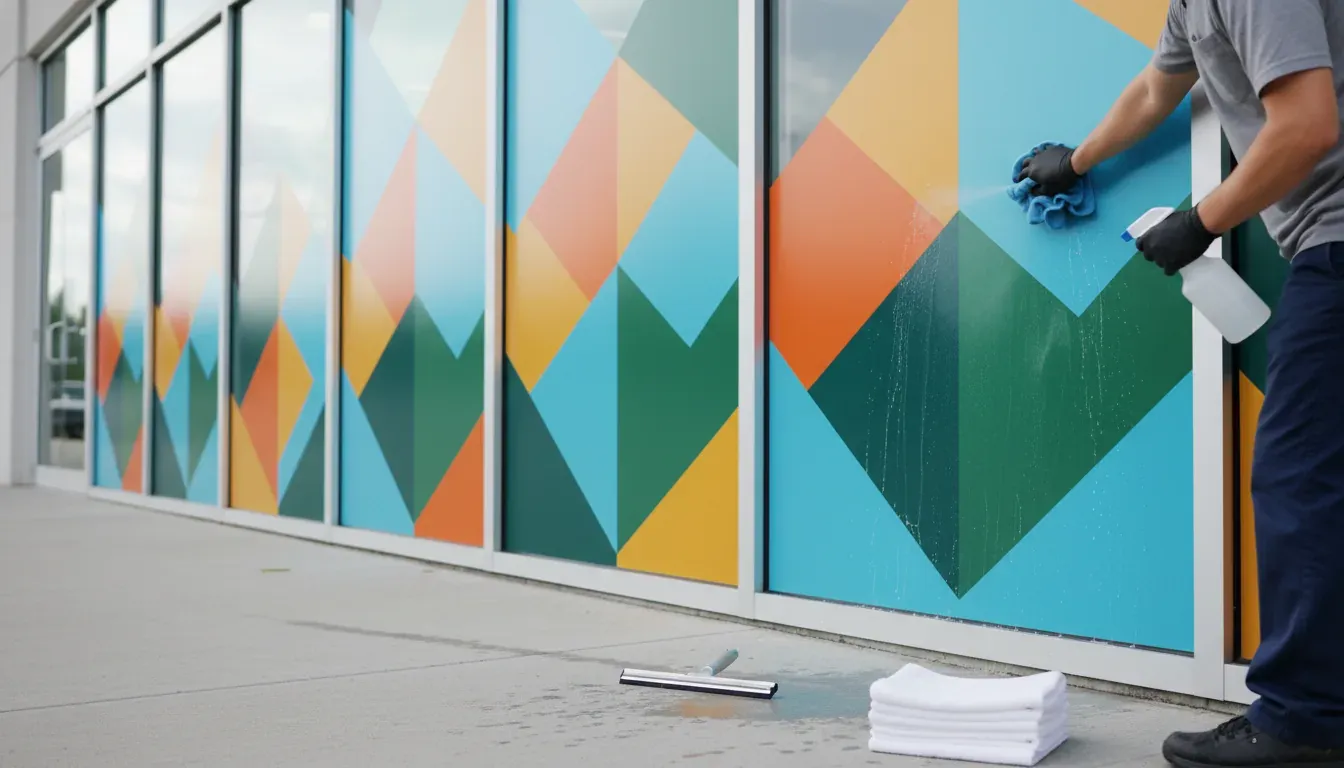
Window graphics are highly visible, so smudges, streaks, and edge issues show quickly. They also interact with routine glass cleaning, which can create problems if the wrong tools or products are used.
For design, material, and installation considerations, read the AP Installations guide to window graphics for business.
Use Vinyl-Safe Glass Cleaning Practices
Do not treat a window graphic like bare glass. Use mild soap and water or a cleaner approved for the film. Avoid ammonia-heavy glass cleaners unless the film manufacturer confirms compatibility. Use a soft cloth rather than razor blades, scrapers, or abrasive pads.
Clean From the Center Out
When cleaning window graphics, wipe from the center of the graphic outward with gentle pressure. Avoid pushing moisture into edges. If the graphic includes perforated film, be especially careful not to saturate perforations or pull at corners.
Watch for Condensation and Edge Lifting
Window graphics can be affected by condensation, repeated cleaning, and direct sun exposure. Inspect edges monthly. If a corner starts to lift, do not pull it or tape it down. Document the issue and contact a professional installer before moisture and dirt make the problem worse.
Wall Murals and Interior Vinyl Graphics Maintenance
Wall murals, office graphics, and branded interior displays usually avoid harsh weather, but they face hand contact, furniture impact, cleaning crews, and building maintenance activity. The best approach is gentle routine cleaning and clear instructions for anyone who cleans the space.
AP Installations covers planning and installation details in its guide to vinyl wall graphics for businesses.
Dust Before Washing
Dust and grit can scratch a wall graphic if they are rubbed into the surface. Use a clean microfiber cloth to dust the surface first, then spot clean with mild soap and water if needed.
Avoid Saturating the Wall
Interior wall graphics depend on the bond between film, adhesive, paint, primer, and wall surface. Excess moisture can cause problems, especially near seams and corners. Use a damp cloth, not a dripping wet sponge.
Protect Graphics During Moves and Repairs
Office moves, ladder work, furniture changes, and maintenance projects can damage wall murals. If work is happening near a graphic, cover the area with clean protective material that will not stick to the vinyl, or ask the installer for the safest protection method.
Floor Decals and Floor Graphics Maintenance
Floor decals need special attention because they are exposed to shoes, carts, moisture, cleaning machines, and safety requirements. A floor graphic that is worn, curled, or slippery should be addressed quickly.
For application ideas and placement guidance, see AP Installations’ resource on removable floor decals.
Sweep or Dust Mop First
Remove loose grit before wet cleaning. Grit acts like sandpaper under shoes and mops, which can shorten the life of the laminate.
Use Neutral Cleaners
Use neutral floor cleaners and avoid aggressive solvents, wax strippers, and abrasive pads directly on the decal. If a cleaning crew uses auto-scrubbers, confirm that the brush, pad, and chemical are safe for the installed floor graphic.
Inspect Edges Weekly
Floor graphics should be inspected more often than wall or window graphics. Look for curling, worn corners, tears, and loss of texture. If an edge lifts, remove the graphic from service or have it repaired so it does not become a trip hazard.
Recommended Maintenance Timeline by Application
Use this schedule as a practical starting point. High-traffic, outdoor, coastal, industrial, or fleet environments may need more frequent care.
| Application | Weekly | Monthly | Quarterly | Seasonal or Annual |
|---|---|---|---|---|
| Fleet wraps and vehicle graphics | Rinse heavy dirt, bugs, and road grime | Hand wash and check seams, mirrors, door handles, and wheel areas | Inspect fading, scratches, edge lift, and high-wear zones | Review UV exposure, winter salt damage, and replacement timing |
| Window graphics | Remove fingerprints and visible smudges | Clean with vinyl-safe method and inspect edges | Check for fading, bubbling, condensation issues, and adhesive concerns | Evaluate storefront visibility and update promotional graphics |
| Wall murals and interior graphics | Dust high-touch or public-facing areas | Spot clean marks with mild soap and water | Inspect corners, seams, scuffs, and furniture impact zones | Review brand updates, office changes, and replacement needs |
| Floor decals | Sweep and inspect edges | Clean with neutral cleaner and check wear | Assess slip resistance, laminate wear, and traffic patterns | Replace worn decals before safety or brand issues appear |
UV Protection and Environmental Damage Prevention
Sun exposure, heat, moisture, and pollution all affect vinyl graphics. You cannot eliminate environmental exposure, but you can reduce its impact.
- Use the right laminate. Outdoor graphics and fleet wraps should be protected with a laminate matched to the film and exposure conditions.
- Reduce unnecessary sun exposure. Park vehicles under cover, use shaded storage when possible, and avoid placing removable graphics in extreme exposure if another location works.
- Keep contaminants from sitting. Bird droppings, tree sap, fuel, salt, and industrial grime should be cleaned quickly.
- Plan around climate. Pacific Northwest moisture, winter road treatments, and summer sun can all influence cleaning schedules and inspection frequency.
For larger or more complex outdoor applications, material selection and installation planning matter as much as cleaning. Building wraps, vehicle wraps, and exterior window graphics should be specified for their real exposure conditions, not just their initial appearance.
How Maintenance Interacts With the 3M MCS Warranty
The 3M MCS Warranty is one of the strongest reasons to use qualified materials and certified installation for commercial graphics. It can help protect against eligible issues such as fading, cracking, peeling, and other covered defects when the complete graphics system meets 3M requirements.
Maintenance matters because warranty coverage is tied to proper product use, installation, exposure, and care. Harsh chemicals, physical damage, misuse, pressure washing abuse, incompatible cleaners, and neglected edge failure can all complicate a warranty claim. In other words, the warranty is not a substitute for maintenance. It works best when the graphics are installed correctly and cared for responsibly.
AP Installations’ article on why 3M certified vinyl installation is worth it explains how certification, material knowledge, and warranty-backed processes help protect a commercial graphics investment.
If you believe a graphic may have a warranty issue, document it early. Take clear photos, note the installation date if available, describe the cleaning routine, and contact the installer before attempting repairs.
Common Mistakes That Shorten Vinyl Graphics Life
- Using abrasive pads or brushes. These can scratch laminate and dull the print.
- Letting road salt or grime sit on fleet wraps. Contaminants can attack edges and accelerate wear.
- Using ammonia or solvents on window graphics. Some chemicals can damage film or adhesive.
- Pressure washing directly into seams. Water forced under edges can lead to lifting.
- Ignoring small edge lift. Small problems become larger when water, dust, and cleaning chemicals collect underneath.
- Failing to train cleaning crews. A well-meaning janitorial team can damage graphics if they use the same process on vinyl that they use on glass, floors, or painted walls.
When to Call a Professional Installer
Some issues should not be handled with DIY fixes. Call a professional installer if you see large bubbles, repeated edge lift, cracking, widespread fading, water under the film, torn laminate, or floor decal curling. You should also call before using any chemical treatment that was not part of the original maintenance instructions.
Professional inspection is especially important for multi-site rollouts, fleet programs, and graphics tied to brand standards. A certified installer can determine whether the issue is cleaning-related, installation-related, material-related, or simply normal end-of-life wear.
AP Installations helps businesses install and maintain high-visibility graphics across vehicles, windows, walls, floors, and large-format environments. Contact the team to discuss your project or schedule guidance on an existing installation.
Vinyl Graphics Maintenance FAQ
How often should vinyl graphics be cleaned?
Fleet wraps and floor decals should be checked weekly because they face the most wear. Window graphics and wall murals can usually be cleaned monthly, with spot cleaning as needed. High-traffic or outdoor applications may need more frequent care.
Can you pressure wash vinyl graphics?
Pressure washing should be used carefully. Keep pressure low, keep the nozzle at a safe distance, and never spray directly into seams, edges, or overlaps. Hand washing is safer for vehicle wraps and many exterior graphics.
What cleaner is safe for vinyl graphics?
Mild soap and clean water are the safest default. Avoid solvents, bleach, ammonia-heavy cleaners, abrasive powders, and aggressive degreasers unless the film manufacturer or installer confirms they are compatible.
Do vinyl graphics need UV protection?
Outdoor graphics should be produced with the right film and laminate for the exposure. You can also reduce UV wear by parking vehicles under cover, choosing shaded placement when possible, and keeping contaminants off the surface.
Does poor maintenance affect the 3M MCS Warranty?
It can. Warranty eligibility depends on the complete graphics system, installation, exposure, and proper care. Damage from misuse, harsh cleaning, physical abrasion, or neglected problems may not be treated the same as a covered material or system defect.
Protect the Brand Investment You Already Made
Vinyl graphics are part of how customers, employees, and the public experience your brand. A simple maintenance routine can extend their useful life, preserve color and clarity, reduce safety concerns, and help you get more value from every installation.
The best plan is straightforward: clean gently, inspect regularly, avoid harsh chemicals, protect against UV exposure where possible, and call a qualified installer when something looks wrong. If your graphics were installed as part of a 3M-backed system, keep maintenance records and address concerns early so warranty questions are easier to evaluate.
For new graphics, replacement planning, or maintenance questions, contact AP Installations or call (503) 924-6168 to work with a certified installation team.