
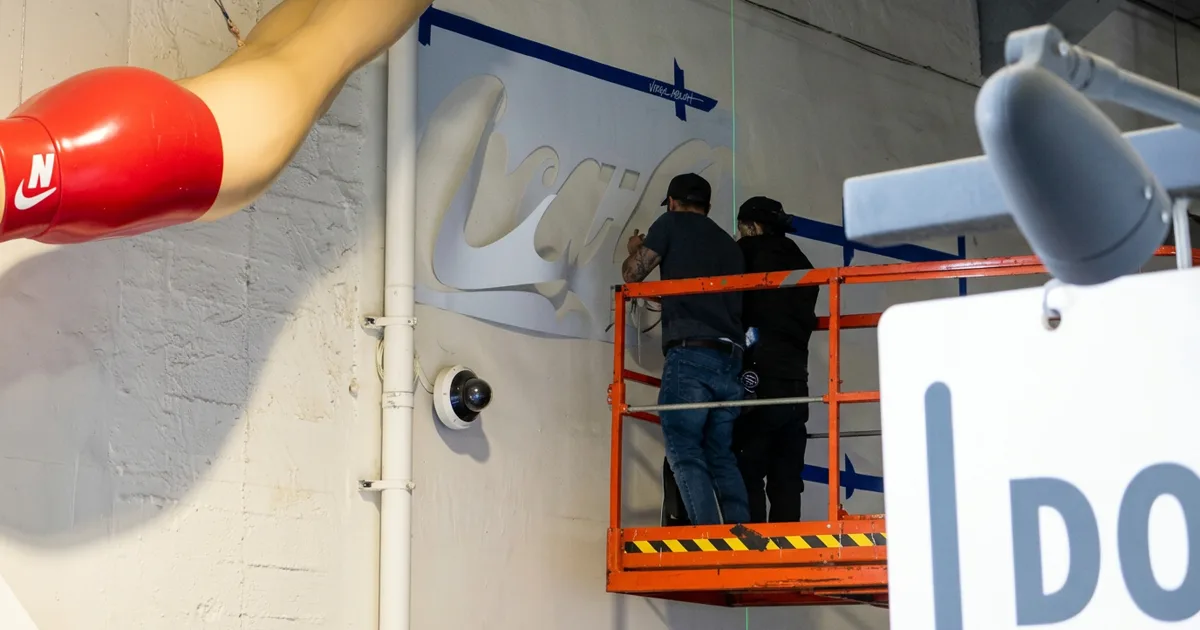
Game-day sponsor graphics fail when the installation window is treated as an afterthought. Every surface, access point, and removal deadline needs a plan before crews arrive.
Sports venue sponsorship graphics installation is the coordinated placement, application, and removal of branded graphics across stadiums, arenas, and athletic facilities. The work can include wall and window graphics, banners, wayfinding areas, and other approved surfaces. Each placement must account for venue operations, sponsor visibility, and substrate conditions. For university facilities, the activation plan should also follow documented signage rules for design, materials, placement, fonts, and colors, as illustrated by Ohio State University’s signage standards. A qualified installation partner coordinates access, security rules, overnight windows, and clean removal. That planning helps ensure graphics are ready before doors open and underlying surfaces remain protected after the event.
For venue managers, agencies, and brand teams, the key question is not simply where each logo will appear. A detailed plan keeps tight game-day turnarounds from becoming last-minute installation risks. Sports venue sponsorship graphics installation starts with an activation plan. Here’s how.
Sports venue sponsorship graphics installation starts with an activation plan
A sports venue sponsorship graphics installation should start before any graphic goes into production. Venue managers, agencies, and sponsor teams need one shared activation plan. The plan should connect each sponsor goal to a location, material, approval path, work window, and removal need.
Sponsor goals and audience movement
Start by noting the goal and audience for each sponsor message. Then trace how fans, staff, media teams, and event crews move through gates, concourses, suites, seating areas, and exits. A placement that looks prominent on a floor plan may be missed during normal crowd flow.
Treat each proposed graphic as part of venue operations, not as a loose decoration. University venues may also set rules for wayfinding, building signs, fonts, and colors. Ohio State’s signage standards show why approval review belongs early in the planning process.
Site walk and placement map
Conduct a site walk with venue operations, the agency team, and the installation partner. Record exact dimensions, surface condition, access limits, lighting, sightlines, and nearby fixtures. Mark each location on a placement map so every team reviews the same scope.
- List the sponsor, graphic type, and placement ID for each location.
- Confirm the measured width and height before final artwork approval.
- Note the substrate, such as glass, painted wall, floor, or rigid panel.
- Record lift access, security steps, and safe work routes.
- Assign the approver for artwork, placement, and venue operations.
Pair the map with the event calendar and a timeline for installation windows. Note load-in hours, rehearsals, games, concerts, and sponsor deadlines. This helps the team separate work that can happen during normal access from work that needs an overnight window.
Materials, approvals, and removal
Confirm the substrate before choosing the graphic material. A concourse wall, entry window, floor zone, and rigid sign panel do not present the same installation conditions. The plan should also state whether each graphic stays for a season, one event, or a short campaign.
Set the removal plan during the same review. Record the removal date, access window, and surface condition that should remain after removal. AP Installations’ vinyl installation services cover wall, window, floor, and other large-format applications that may appear across a venue campaign.
Where should sponsorship graphics appear inside a sports venue?
Sports venue sponsorship graphics installation starts with the fan journey, not an open patch of wall. Each surface should match a sponsor goal and a clear audience moment. Entry zones build early awareness, while concourses and queue lines offer more time for a message to register.
High-traffic arrival and circulation zones
Use entry windows, concourse walls, and floor graphics where fans slow down or choose a route. These placements can support a short brand message, a directional cue, or both. Floor graphics need careful review because foot traffic, cleaning, and slip risk affect the right material choice.
Wayfinding touchpoints are also useful in arenas and campus venues. The sponsor message should not compete with the direction itself. For example, university signage standards may cover wayfinding, building identification, fonts, and colors, as shown in Ohio State University’s signage standards.
Waiting and hospitality areas
Queue lines, food service zones, clubs, and hospitality areas give fans longer viewing time. A sponsor can use these spaces for a fuller message than a fast-moving concourse allows. Window graphics can add visibility without taking up wall space, while wall applications can define a lounge or branded area.
- Use queue-line panels for a simple offer or campaign message.
- Use wall and window graphics to frame hospitality areas.
- Use floor cues only when they support the flow of people.
- Keep access points, safety signs, and venue directions clear.
Placement also needs a review path. Stadium signs and scoreboard advertising can have regulatory context in some settings, as the Cornell Legal Information Institute notes. Venue teams should confirm sponsor approvals, surface access, and local rules before production.
Temporary activations and photo moments
Temporary branded areas work well near entrances, concourses, hospitality zones, and event-specific gathering points. Photo moments need a clean viewing angle and enough space for fans to pause. They should sit outside key travel lanes, not create a bottleneck.
Short-run campaigns also need a removal plan. Match each material to the wall, window, or floor surface before install. The timeline for installation windows helps teams plan access, overnight work, and removal around the venue calendar.
Match large-format graphics to each venue surface
Sports venue sponsorship graphics installation starts with the surface, not the artwork. A wall, concourse floor, entry window, or temporary panel can each create a different application plan. The installer should review the surface condition, expected traffic, exposure, campaign length, and removal goal before work begins.
Surface-by-surface planning
Walls need a close look at finish, texture, repairs, and prior coatings. The same care applies to large-format wall applications in suites, corridors, and fan areas. A test area can help the project team check appearance and adhesion before the full install.
Floors call for a clear safety review because people may walk, queue, or move equipment across them. Windows bring other questions, including sightlines, glare, and the view from each side. Temporary panels may help when a sponsor message needs a defined display area or a planned changeover.
| Venue surface | Application focus | Planning check |
|---|---|---|
| Walls | Finish, texture, and appearance | Review the surface and use a test area when needed. |
| Floors | Foot traffic and safe placement | Confirm the graphics fit the walking path and venue rules. |
| Windows | Visibility, glare, and sightlines | Check the view from inside and outside. |
| Temporary panels | Campaign changes and clean edges | Plan access, placement, and removal timing. |
| Outdoor areas | Exposure and site conditions | Review sun, moisture, temperature, and campaign length. |
Traffic, exposure, and venue rules
High-traffic areas need added planning for placement, access, and checks during the campaign. Indoor and outdoor graphics also face different site conditions. Outdoor applications need a review of sun, moisture, temperature, and exposure. Indoor applications still need checks for traffic and cleaning routines.
Venue rules belong in the material review. For example, university signage standards can govern design, materials, placement, fonts, and colors. The project team should confirm venue requirements before choosing the application approach.
Removal as part of the install plan
Temporary campaigns should include a removal plan from the start. Record the surface condition, define the removal window, and confirm access after the event. This keeps the next sponsor change from becoming a rushed repair job.
The install schedule should also reflect the venue calendar. A clear timeline for installation windows helps teams plan testing, application, checks, and removal around game-day needs.
How do crews install graphics between events?
Access planning before arrival
Sports venue sponsorship graphics installation often happens between a game, cleanup, and the next scheduled event. The crew needs a clear work window before arrival. Venue staff should confirm entry points, security check-in, loading access, work zones, lift rules, and the final exit time.
Campus venues may also have detailed rules for sign placement, colors, and materials. For example, Ohio State publishes signage standards for campus facilities. A pre-install walk and marked placement plan help crews follow the approved scope without slowing venue operations.
The overnight installation sequence
A tight window works best when each task has an owner and a cutoff time. The timeline for installation windows should account for access, staging, application, review, cleanup, and handoff. Crew size and shift timing should match the number of surfaces and the venue schedule.
- Confirm access and safety controls. Check in with the venue lead, review restricted areas, and verify the route for tools, lifts, and graphics.
- Stage graphics by zone. Sort each panel, label its location, and place materials near the planned work area. Keep public routes clear.
- Check surface readiness. Review each surface for dirt, moisture, damage, or other conditions that may affect the approved application plan.
- Install in a set order. Start with zones that have the earliest access cutoff or the most setup needs. Move crews through the venue in planned groups.
- Inspect each completed zone. Check alignment, edges, seams, and placement against the approved layout. Record any fix while the crew is still onsite.
- Complete the venue handoff. Remove waste, clear equipment, and walk the finished areas with the venue contact. Document any open item.
- Use the contingency plan if needed. Keep alternate work zones, spare material, and a final decision point for issues that could affect reopening.
Quality checks without added disruption
The final review should be part of the work window, not an afterthought. Assign one lead to track completed zones and compare them with the placement plan. This keeps fixes focused and reduces repeat trips through active venue areas.
For event-specific work, coordinate the installation plan with experiential and event installation services. The same plan should state who can approve a field change. It should also show what moves to a later window if access closes early.
Plan clean removal before the campaign begins
Temporary sponsorship graphics need an exit plan before installation starts. For sports venue sponsorship graphics installation, removal planning protects the venue surface and keeps the next activation on schedule.
Surface checks before production
Start with a site walk and record each planned location. Note the surface type, finish, age, condition, and any repairs. Photograph existing chips, stains, and seams so the venue team has a clear baseline.
Some university venues set detailed rules for signs, wayfinding, building IDs, fonts, and colors. Ohio State’s signage standards show why venue rules should be checked before materials are approved. Confirm any restricted surfaces, security steps, and approved work hours during the same review.
Materials matched to the campaign
Choose the graphic system for the actual surface and campaign length. A short concourse promotion, a window graphic, and a wall application may need different plans. Test the proposed material on a small, hidden area when the substrate history is unclear.
Document the selected material, adhesive type, install date, and planned removal date for every location. Tie that record to the timeline for installation windows. This keeps removal from becoming an afterthought when sponsors change or event crews turn the venue.
Post-event removal and reset
Book the removal window as part of the install plan. Assign access contacts, loading details, lift needs, and disposal steps in advance. The removal crew should follow the location list, inspect each area, and flag residue or surface changes as work progresses.
Remove graphics with care instead of rushing the final shift. Specialized installation experience supports clean campaign removal and helps preserve the substrate after an event. AP Installations also supports experiential and event installation services where fast resets matter.
Finish with a post-removal walk, photos, and a written issue log. Note any residue, damage, or repair request by location. A clean handoff gives the venue team a usable record and makes the next sponsorship activation easier to stage.
What should venue teams confirm before install day?
Sports venue sponsorship graphics installation works best when the venue, sponsor, print partner, and installer share one approved plan. Confirm a primary contact for each group, plus the person who can answer questions during the work window. Record who has authority to approve placement changes if site conditions differ from the plan.
Approved artwork and surfaces
Before scheduling crews, confirm the final artwork, dimensions, materials, quantities, and exact placement for each graphic. Check whether the venue has its own rules for colors, fonts, or signs. For example, university facilities may follow formal signage standards for wayfinding, building identification, fonts, and colors.
Match each graphic to a marked photo, floor plan, or elevation. Confirm that each surface is ready, clean, and free of planned repairs. Note whether crews can reach the wall, window, floor, concourse, or exterior area without blocking another event setup.
Site access and work windows
Share the timeline for installation windows with security, operations, and facilities teams. Confirm arrival time, work hours, crew credentials, check-in instructions, parking, and loading access. State whether escorts, badges, or restricted-area approvals are needed.
- Confirm loading dock hours and the staging area for graphics, tools, and lifts.
- Walk the equipment path from unloading to each placement area.
- Check door widths, elevator limits, floor protection needs, and public access controls.
- List venue safety rules, required protective gear, and emergency contacts.
Equipment paths matter as much as surface access. A lift may fit the concourse but fail at a service door or turn. Early checks help the crew plan a safe route and reduce delays during tight changeovers.
Removal and final sign-off
Temporary campaigns need a removal plan before installation starts. Confirm which graphics come down, who owns removal, where waste goes, and whether the surface needs a final inspection. This is useful for sponsor swaps and short event runs.
End the plan with a walkthrough owner and a sign-off process. The walkthrough should compare installed graphics with approved locations and note any follow-up items. A related checklist for game day graphics can help operations teams prepare details before crews arrive.
Choose an installation partner for high-visibility activations
Surface and schedule fit
Start with the real venue conditions, not a generic install quote. Ask each partner to explain its work on walls, windows, floors, banners, and rigid signs. Review the substrate, finish, access points, and high-traffic areas before production starts. For college venues, confirm whether campus signage standards set rules for design, materials, or placement.
Sports venue sponsorship graphics installation often has a narrow work window. Ask who will coordinate access, security rules, lifts, loading areas, and crew timing. The plan should account for games, practices, and public events. AP Installations can work overnight or around event schedules when the activation calls for it.
Detail checks and clear communication
Ask how the installer checks alignment, seams, edges, and sightlines. A graphic may look right from the floor but read poorly from seats, concourses, or camera angles. The partner should name one project lead and set a clear path for updates. It should also explain how field issues are recorded and resolved.
- Request a site survey before production.
- Confirm the install sequence for each zone.
- Set an approval process for changes in the field.
- Ask for completion photos by location.
Review the installer’s past installation projects for proof of work in demanding spaces. Look for clean edges, consistent placement, and examples across more than one surface. Ask which team handled each example and whether the same level of oversight will support your venue.
Removal planning from the start
Temporary sponsorship graphics need an exit plan before installation begins. Ask how the team will remove each material, protect the substrate, and document the final condition. This matters when one sponsor creative must come down before the next event. Removal timing should appear in the same schedule as installation.
AP Installations is a 3M Preferred Installer and focuses on specialized graphics application. Its vinyl installation services cover several large-format applications that may appear within one venue. Before selecting any partner, compare its surface experience, schedule plan, communication process, removal method, and completed work.
Frequently Asked Questions
How do you choose the right graphics for a sports venue?
Choose graphics based on viewing distance, traffic, surface condition, event duration, and sponsor visibility. Match each application to its location, such as concourses, windows, walls, or field-facing areas. For university venues, confirm branding, color, wayfinding, and placement rules before production. The Ohio State University signage standards show how detailed these venue requirements can be.
What types of sponsorship signage work best at athletic venues?
The best mix depends on the venue and event plan. Common options include banners, aluminum signs, window graphics, and wall graphics. Field-facing placements support broad visibility, while concourse graphics reach guests moving through the building. Temporary vinyl can also support short campaigns when removal is planned. Final choices should reflect surface conditions, sponsor agreements, sightlines, and the available installation window.
What are the key benefits of professional sports graphics installation?
Professional sports venue sponsorship graphics installation reduces avoidable problems during setup and helps graphics perform through the planned campaign. Installers can coordinate staging, access, security procedures, surface preparation, and removal needs with venue operations. This matters when work must fit around games, concerts, and public access. AP Installations can support time-sensitive installation windows, including event-driven scheduling.
How much does sports venue sponsorship graphics installation cost?
Installation cost varies by graphic type, square footage, surface condition, access requirements, removal scope, and schedule. Overnight work, lifts, security coordination, or several install zones may affect the quote. Separate the installation budget from the sponsor’s media fee, since they cover different parts of the campaign. Provide venue maps, artwork dimensions, event dates, and access rules for a useful estimate.
Ready to plan your game day graphics installation?
Waiting until game day is close can compress sponsor approvals, venue access planning, production handoffs, and installation windows into a rushed final stretch. Starting now gives your team time to confirm placements, coordinate access rules, and sequence each installation phase before event deadlines. Early coordination helps stakeholders answer practical questions while the calendar has room, reducing late changes that can disrupt a planned sponsorship graphics rollout.
Ready to plan your venue graphics before the schedule tightens? Contact AP Installations to discuss your sports venue graphics installation project. Request a practical installation plan for upcoming game days and events. Schedule the conversation now so your team can prepare the right details for a focused project discussion.