What Does Commercial Sign Installation Include?
Commercial sign installation is the process of surveying a business location, confirming code and permit requirements, preparing the mounting surface, attaching the sign safely, connecting electrical components when needed, and documenting the finished work. For business owners, the goal is simple: a sign that looks right, stays secure, and protects the brand investment.
Request a commercial sign installation quote from AP Installations
The sign itself may look straightforward in a design proof. The actual installation is more involved. A crew has to evaluate the wall, glass, masonry, metal panel, or freestanding structure behind the sign. They also need to understand wind load, access equipment, wiring, landlord rules, municipal sign codes, and the sequence of work required to keep the site safe and open for customers.
This guide explains what businesses need to know before scheduling commercial sign installation. It covers permits, surface preparation, sign types, material choices, professional installation risks, day-of expectations, and the questions to ask before hiring an installer. If you are opening a new storefront, refreshing an exterior sign, or coordinating signage across several locations, these details will help you avoid delays and prevent expensive rework.
What Permits Do You Need for Commercial Signage?
Most commercial signage projects require at least a zoning review and a building permit before installation begins. Illuminated signs often require an electrical permit as well. Permit requirements vary by city, property type, zoning district, landlord agreement, sign size, and whether the sign changes the building exterior.
Common permit requirements include:
- Zoning approval confirms that the proposed sign type, dimensions, height, placement, illumination, and quantity are allowed for the property.
- Building permit is commonly required when a sign is structurally attached to a building, monument base, pole, or other permanent support.
- Electrical permit is required for signs with LED modules, illuminated cabinets, raceways, power supplies, disconnects, or other electrical components.
- Landlord or property manager approval is often required before an exterior sign can be drilled, mounted, replaced, or removed.
- Historic district or design review approval may apply when the building is in a protected district or a managed retail center.
Permit turnaround time can range from one week to more than a month. A simple storefront sign in a suburban retail center may move quickly. A larger sign in a dense urban area, a historic district, or a multi-tenant property may require extra review. Build that time into the project schedule before setting a grand opening, campaign launch, or rebrand deadline.
A qualified installer should help identify permit requirements before the sign is fabricated. This matters because a design that looks great may still violate local size, placement, lighting, or projection rules. AP Installations frequently supports business owners, print partners, and agencies that need installation planning aligned with local requirements, site access, and brand standards.
Why Does Surface Preparation Matter So Much?
Surface preparation determines whether a commercial sign stays level, watertight, and secure after installation. The installer must evaluate the substrate behind the visible facade, clean and prepare the mounting area, choose the correct anchors or adhesives, and prevent water intrusion before the sign is attached.
Different building surfaces require different installation methods:
- Masonry and brick require anchor bolts, threaded rods, or masonry fasteners set into sound material. Mortar joints should be checked before drilling because weak mortar can compromise the attachment.
- Stucco and EIFS require careful penetrations through the cladding to reach structural support. Poor sealing can create water intrusion behind the wall system.
- Metal panels and ACM require installers to locate framing and avoid relying only on the panel skin. Seams, expansion, and panel movement all affect mounting decisions.
- Glass storefronts require controlled cleaning, temperature awareness, and the correct film or adhesive system. For related storefront applications, see AP Installations’ guide to business window graphics.
- Painted walls and wood surfaces must be stable before installation. Peeling paint, chalking, rot, or moisture can cause adhesive or mechanical failure.
A pre-installation site survey is the safest way to catch surface issues before the installation date. The survey should confirm the sign dimensions, attachment points, substrate, elevation, power access, lift needs, pedestrian control, and any obstacles that could slow the crew down. This is especially important for large-format exterior graphics, wall signs, and signs installed above public walkways.
Which Commercial Sign Material Is Right for Your Business?
The right sign material depends on visibility goals, building surface, code requirements, lighting needs, budget, and long-term maintenance expectations. Channel letters, dimensional letters, and illuminated cabinet signs are common commercial choices, but each one creates different installation requirements and different risks.
| Sign type | Best fit | Installation considerations | Maintenance notes |
|---|---|---|---|
| Channel letters | Retail storefronts, restaurants, offices, and brands that need strong day and night visibility | May require direct mounting, raceway mounting, electrical access, templates, and precise letter spacing | LED modules, faces, trims, and power supplies may need service over time |
| Dimensional letters | Interior lobbies, professional offices, exterior walls where illumination is not needed, and refined brand displays | Requires accurate layout, drilling, studs, spacers, or adhesive standoffs depending on substrate | Usually lower maintenance, but alignment and finish quality are highly visible |
| Illuminated cabinet signs | Gas stations, quick-service restaurants, shopping centers, and signs requiring detailed graphics | Mounts as a larger single unit, so weight, framing, power access, and lift equipment matter | Faces, lighting, and seals should be inspected to prevent uneven lighting or moisture issues |
Channel Letters
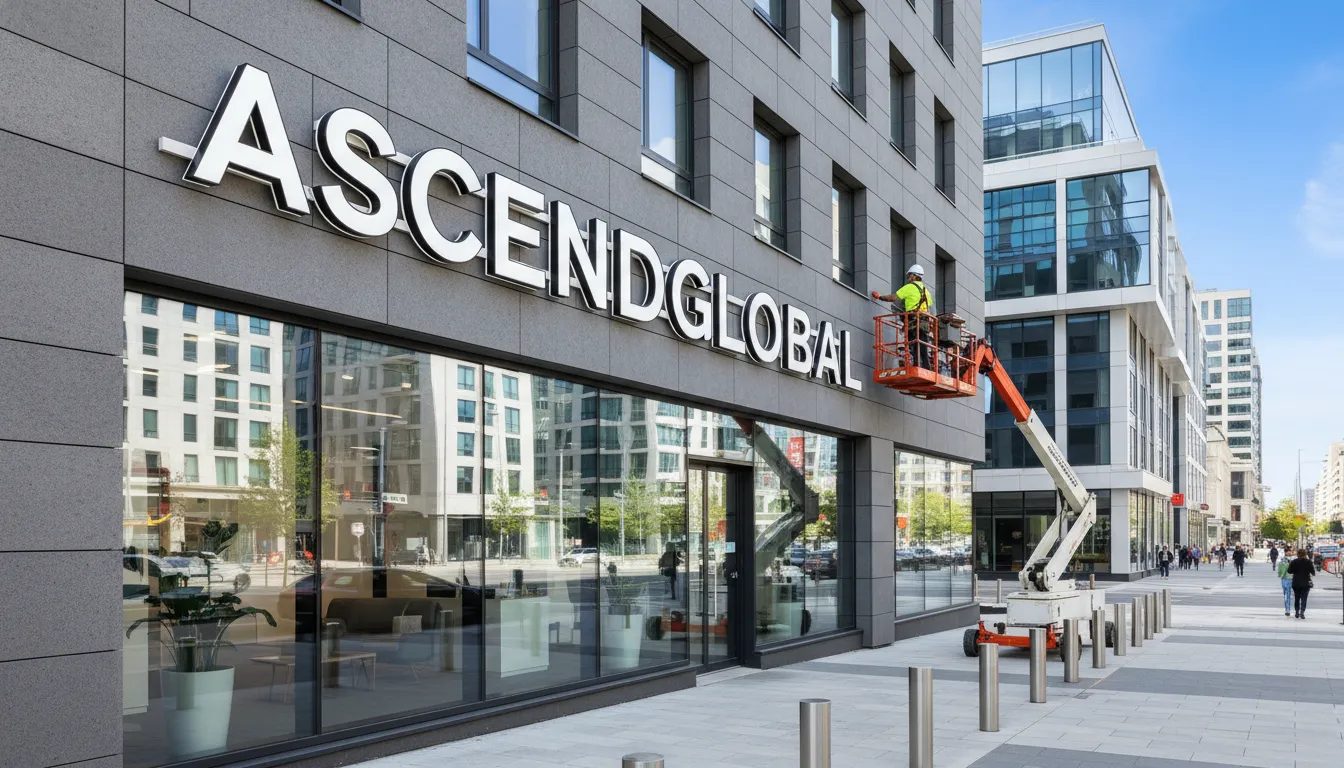
Channel letters are individually fabricated letters with depth, typically made from metal and acrylic. They can be front-lit, halo-lit, or both. For exterior retail signs, channel letters offer strong visibility and a professional look, but they require careful layout, attachment, and electrical planning.
Direct-mounted letters attach individually to the facade. Raceway-mounted letters attach to a metal channel that contains wiring and power components. Direct mounting can create a cleaner look, while raceway mounting can reduce wall penetrations and simplify service. The right choice depends on the building, landlord requirements, power access, and local code.
Dimensional Letters
Dimensional letters are non-illuminated letters cut from materials such as acrylic, aluminum, PVC, foam, or HDU. They work well for interior offices, lobby walls, wayfinding, and some exterior applications. Businesses planning broader facility graphics may also find useful ideas in AP Installations’ article on ADA compliant wayfinding signage.
Installation depends on exact spacing and alignment. A small measurement error becomes obvious when individual letters are viewed from across a lobby or parking lot. Professional crews use templates, levels, standoffs, and mounting hardware that match the surface and the letter material.
Illuminated Cabinet and Box Signs
Cabinet signs, sometimes called box signs, place a graphic face and lighting system inside one frame. They are common when a business needs detailed graphics, high visibility, or a sign that can be serviced as one unit. Their size and weight mean the mounting plan must be engineered carefully.
Cabinet signs may seem simpler because they install as one piece, but the installation can still require lifts, structural attachment, electrical coordination, and weather sealing. For brands with multiple locations, the main challenge is consistency: the sign needs to look aligned with the rest of the visual environment, not just attached to the wall.
Explore AP Installations’ commercial graphics and installation solutions
Should Businesses Install Commercial Signs Themselves?
Most businesses should not install permanent commercial signs themselves because the risk extends beyond appearance. Poor installation can create permit violations, structural failures, water intrusion, electrical hazards, voided warranties, and brand damage that costs more than hiring a professional crew.
DIY installation may be reasonable for temporary interior posters or small non-structural displays. It is not a good fit for exterior signs, illuminated signage, elevated work, large graphics, wall penetrations, or anything attached above public areas. These projects require the right tools, access equipment, insurance, code knowledge, and installation experience.
The most common risks include:
- Permit liability if the sign is installed without required approvals. The business may face fines, forced removal, or delays when trying to sell, lease, or remodel the property.
- Structural failure if the wrong anchors are used or the sign is attached only to cladding instead of structural support.
- Electrical hazards if illuminated signs are wired without proper disconnects, conduit, grounding, or licensed electrical support.
- Water intrusion if wall penetrations are not sealed correctly after drilling.
- Warranty problems if the manufacturer or material provider requires certified installation for coverage.
AP Installations is a 3M Preferred Installer with more than 17 years of commercial installation experience. That matters for signs and graphics that need to protect brand standards, meet site requirements, and qualify for warranty-backed installation. Learn more about the value of certified installation in AP Installations’ 3M Preferred Graphics Installer resource.
What Happens on Commercial Sign Installation Day?
Commercial sign installation day usually includes site setup, safety controls, layout confirmation, drilling or surface preparation, sign mounting, electrical connection when needed, cleanup, and final documentation. A standard single-facade installation may take several hours, while larger or higher-elevation projects can take multiple days.
Pre-installation setup: The crew confirms access, reviews the work area, stages materials, places safety cones or barriers, and checks that the sign, templates, fasteners, and equipment match the project plan.
Layout and marking: Installers transfer the template to the surface, confirm plumb and level, and mark each mounting point. This step controls the final appearance, so professional crews take time to verify measurements before drilling begins.
Drilling, anchoring, or surface preparation: The crew prepares the wall, glass, panel, or structure for attachment. On masonry, this may include drilling and epoxy anchors. On glass or vinyl applications, it may include cleaning, temperature checks, and controlled placement.
Mounting and electrical connection: The sign, letters, or cabinet are attached according to the mounting plan. Illuminated signs require safe electrical connection and testing. Large graphics or related brand environments may follow similar planning principles to projects shown in AP Installations’ commercial graphics project portfolio.
Final inspection and cleanup: The crew checks alignment, fasteners, lighting, seals, and visible finish quality. They clean the work area and document the installation with photos for warranty, permit, or project records.
Business owners can help the day go smoothly by reserving parking for the crew, clearing the work area, notifying tenants or staff, confirming after-hours access if needed, and making sure a decision-maker is reachable. If lifts or lane closures are required, those logistics should be settled before the crew arrives.
How Much Does Commercial Sign Installation Cost?
Commercial sign installation cost depends on sign type, sign size, mounting surface, elevation, access equipment, electrical needs, permits, travel, and the complexity of the site. A storefront channel letter installation may be very different from a multi-location rollout or a high-elevation exterior sign.
Common cost drivers include:
- Access requirements such as ladders, lifts, scaffolding, after-hours work, or traffic control.
- Substrate complexity such as stucco, EIFS, brick, ACM panels, uneven masonry, or fragile glass.
- Electrical requirements for illuminated signs, power supplies, disconnects, and code-compliant connections.
- Permit and inspection needs that add administrative time and may affect scheduling.
- Project scale including multi-site work, national rollout coordination, or multiple sign types at one property.
For context, installation labor for a mid-sized storefront channel letter sign can range from a few thousand dollars to significantly more when lifts, electrical coordination, difficult surfaces, or complex permits are involved. The most reliable estimate comes after a site survey because the installer can see the actual building conditions, not just the sign drawing.
Businesses that also need fleet, window, wall, or retail graphics can often improve efficiency by planning related installations together. AP Installations supports commercial graphics programs across storefronts, fleets, interiors, events, and national rollouts, including specialized services like fleet graphics installation and wall mural installation.
Ready to Install Your Commercial Signage?
AP Installations helps business owners, facilities managers, print partners, and agencies plan and execute commercial sign and graphics installations across the Pacific Northwest and nationwide. The team brings certified installation experience, site-survey discipline, surface preparation knowledge, and project documentation to each job.
Print providers can also review our print shop graphics installation partner guide.
Whether you need one storefront sign, a coordinated retail graphics package, or a multi-location rollout, a professional installer can help protect the schedule and the finished result. Contact AP Installations to discuss your project, confirm installation requirements, and request a quote.
Frequently Asked Questions About Commercial Sign Installation
How long does commercial sign installation take?
A standard single-facade channel letter installation often takes four to eight hours for a two-person crew. Complex installations involving lifts, large cabinets, electrical coordination, or multiple elevations may require one to three days. Your installer should provide a project-specific timeline after completing the site survey.
Do I need a permit to install a business sign?
In most jurisdictions, yes. Signs attached to a building structure usually require zoning review and a building permit. Illuminated signs often require an electrical permit. Requirements vary by municipality, property type, and sign type, so permitting should be checked before fabrication and installation.
What is the difference between channel letters and dimensional letters?
Channel letters are fabricated three-dimensional letters that can be illuminated with LED modules. Dimensional letters are cut from solid materials such as metal, acrylic, PVC, or foam and are typically non-illuminated. Channel letters are common for exterior storefront visibility, while dimensional letters are common for offices, lobbies, and refined brand displays.
Can any contractor install a commercial sign?
Many contractors can attempt basic sign installation, but permanent commercial signs often require specialized experience, insurance, access equipment, permit knowledge, and electrical coordination. Certified installers are especially important when the project involves warranty-backed materials, exterior mounting, illuminated signs, or high-visibility brand standards.
How much does commercial sign installation cost?
Cost depends on sign type, size, surface, height, access, electrical needs, permit requirements, and site complexity. A site survey is the best way to estimate accurately because it confirms the actual wall conditions, mounting requirements, equipment needs, and schedule constraints before installation begins.