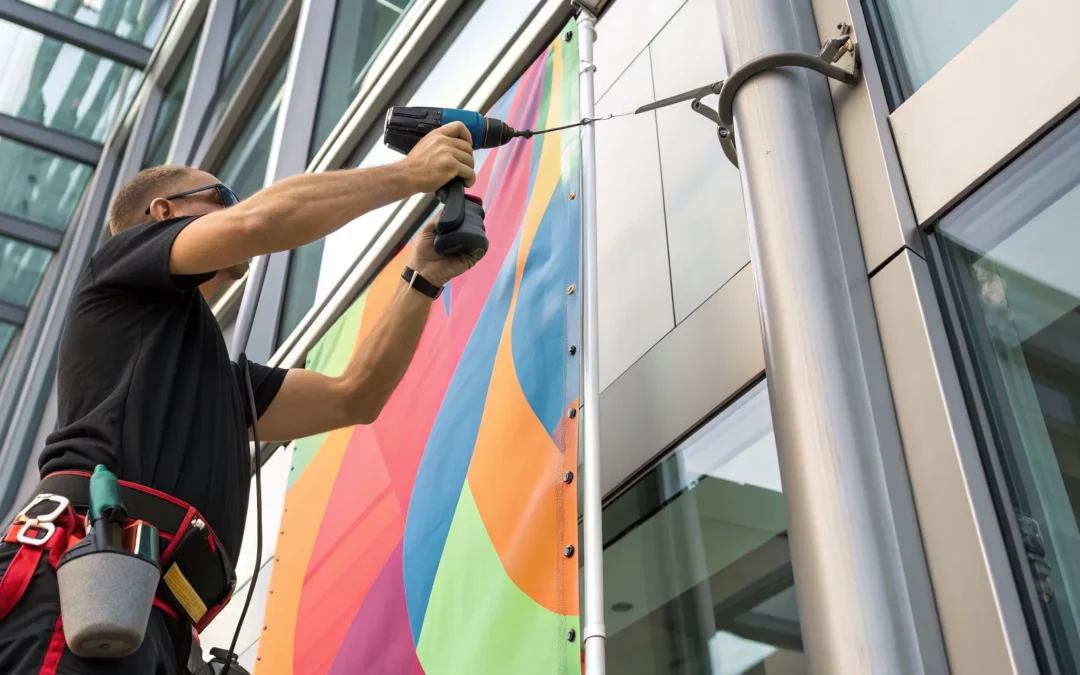
Putting up a banner might seem like a straightforward weekend project, but there’s a significant difference between a DIY job and a professional installation. The details are what matter most, especially when you’re dealing with different building surfaces, unpredictable weather, and the need for a perfectly tensioned, wrinkle-free finish. A proper banner installation on building facades requires specific tools, safety knowledge, and an understanding of how to work with materials like brick, metal, or wood without causing damage. This guide will give you the insights of a professional, covering everything from surface assessment to final tensioning, so you can decide if it’s a job you want to tackle or when it’s time to call in the experts.
Key Takeaways
- Plan Before You Mount: A successful installation starts with preparation. Choose the right banner material for the location (mesh for windy areas, solid for flat walls), secure any necessary permits, and get written consent from the property owner before you begin.
- Anchor to the Structure, Not the Surface: Your banner is only as secure as its mounting points. Always use hardware appropriate for the specific wall material—be it brick, metal, or wood—and fasten directly into the building’s structural supports for a long-lasting hold.
- Tension is Key to a Professional Finish: To prevent wrinkles and sagging, apply even tension as you attach the banner. Start by securing one corner, then pull the material taut as you work your way around to the other mounting points for a smooth, drum-tight display.
Gather Your Banner Installation Tools and Materials
Before you even think about climbing a ladder, a successful banner installation begins on the ground with proper preparation. Having the right materials, tools, and safety equipment on hand not only makes the job smoother but also ensures your banner looks professional and stays secure for the long haul. Think of it as setting the stage for a flawless performance. When you’re prepared, you can handle any surprises the building’s surface might throw at you and get the job done right the first time. Let’s walk through exactly what you’ll need to gather.
Your Banner Material Checklist
The first decision you’ll make is choosing the right banner material for the location. Where your banner will hang is the most important factor here. If you’re placing it flat against a solid surface like a brick wall, a durable solid vinyl banner is your best bet. It provides a great canvas for vibrant graphics. However, if your banner will be suspended between posts or over a street, wind becomes a major issue. In that case, a vinyl mesh banner is the way to go. The perforations in the mesh allow wind to pass through, which reduces strain on the banner and its mountings, preventing it from turning into a sail and getting damaged.
The Right Tools for the Job
Having the right tools makes all the difference between a frustrating experience and a clean, secure installation. Your toolkit should be ready for the specific surface you’re working with. You’ll definitely need a powerful drill—a rotary hammer drill is great for masonry—along with the correct bits for brick or metal. You’ll also want a tape measure, a level, and a chalk line for precise placement. Other essentials include anchors appropriate for the wall type, a screwdriver, and a soft mallet to gently secure hardware without causing damage. If this list of tools feels overwhelming, remember you can always contact a professional to handle the job.
Essential Safety Gear
Safety should always be your top priority, especially when working at heights. Don’t cut corners here. At a minimum, you should have personal protective equipment (PPE) like gloves and safety glasses. If the installation requires you to be off the ground, using an OSHA-compliant scissor lift or boom lift is crucial for providing a stable work platform. A safety harness is another non-negotiable piece of equipment for any work done at height. Taking these precautions protects you and your team from accidents and ensures the installation process is managed responsibly. As certified installers, we know that a safe installation is a successful one.
Match Your Method to Your Building’s Surface
Not all walls are created equal, and the success of your banner installation hinges on using the right technique for your building’s exterior. Think of the surface as your foundation—if it’s not properly prepared or if you use the wrong hardware, your banner could sag, damage the wall, or fail entirely. A professional installer always begins with a thorough surface assessment, because what works for a brick façade won’t work for metal siding. This is a step you absolutely can’t skip.
Before you start, you need a clear plan tailored to your specific wall type. This means selecting the right anchors, understanding the material’s strengths and weaknesses, and ensuring the structure can handle the banner’s weight, especially when faced with wind and rain. Matching your method to the material is the single most important step for a secure, long-lasting, and professional-looking display. Below, we’ll walk through the best practices for the most common building surfaces you’re likely to encounter in the Pacific Northwest.
Installing on Brick and Masonry
Brick and concrete offer a strong, durable surface for mounting banners, but they require the right approach. Before you begin, it’s essential to inspect the wall’s condition. Look for any cracks, crumbling sections, or loose mortar, as these are weak points that could compromise the installation. A banner under tension from the wind puts significant stress on its anchor points, and a compromised wall simply can’t provide the necessary support. For these surfaces, you’ll need to use specialized masonry anchors or shields that expand once inserted, creating a secure grip inside the brick or concrete. Always drill into the solid part of the brick, not the mortar joints, which are much weaker and can easily crumble.
Mounting on Metal and Siding
Installing on metal or vinyl siding presents a unique set of challenges. For smooth, solid metal surfaces, heavy-duty magnets can be a surprisingly effective and non-damaging option for temporary banners. However, for a more permanent solution, especially on buildings with siding, you need to anchor into the structural support underneath. Simply attaching screws to the siding itself is a recipe for disaster, as the material is too thin and brittle to hold any significant weight. Your goal is to locate the wall studs behind the siding and drive your mounting hardware directly into them. Using a good stud finder and the correct fasteners for your specific siding type will ensure your banner stays put without damaging the exterior.
Attaching to Wood Surfaces
Wood is often the most straightforward surface for a banner installation, but a little care goes a long way. For a clean, flat finish, you can attach the banner directly to the surface using screws and washers. The washers are key—they help distribute the pressure and prevent the hardware from tearing through the banner material over time. To avoid a saggy or wrinkled appearance, measure carefully and space your attachments evenly across the top and bottom. It’s also a great idea to pre-drill your holes, which helps prevent the wood from splitting when you drive the screws in. For the best results and to avoid rust stains down the road, always choose stainless steel hardware for any exterior project.
Prioritize Safety During Your Installation
A perfectly installed banner is a fantastic sight, but getting it there safely is what truly matters. Rushing the job or cutting corners on safety can lead to property damage, injuries, or a banner that fails prematurely. A professional installation is a safe installation, period. It means having the right equipment, respecting the risks of working at heights, and planning for unpredictable elements like the weather. Before you even think about lifting the banner, you need a solid safety plan. This involves using the correct personal protective equipment (PPE), securing your work area, and understanding how environmental factors can impact the job. Taking these steps protects you, your team, and the property, ensuring your banner looks great for all the right reasons.
Using Personal Protective Equipment (PPE)
The right gear is non-negotiable, especially when you’re working off the ground. This starts with the basics: hard hats, gloves, and appropriate footwear. But for banner installation, it often means more specialized equipment. If you’re using a lift, a safety harness is essential. Professional installers rely on secure, OSHA-compliant equipment like scissor lifts or boom lifts because they provide a stable platform to work from. This equipment isn’t just about convenience; it’s a critical safety component that prevents falls and allows you to work with precision and control. Never compromise on your gear—it’s the first line of defense against accidents.
Staying Safe When Working at Heights
Working at heights introduces risks that require careful planning. Your first step should always be to assess the building’s surface. A banner is only as secure as the wall it’s mounted on. Before you drill a single hole, inspect the wall to ensure it’s structurally sound. Check for cracked mortar on brick walls or weak, hollow siding that can’t support the weight and tension of the banner. If you find any issues, they need to be addressed first. This structural check, combined with the proper use of lifts and harnesses, creates a secure environment for you to complete the installation flawlessly and without incident.
Accounting for Wind and Weather
Weather is an unpredictable variable, but you can plan for it. A large banner can act like a sail, catching the wind and putting immense stress on both the material and the mounting hardware. In windy locations, choosing the right vinyl graphic solutions is key. Mesh banners are an excellent choice because their small perforations allow wind to pass through, reducing the load on the structure. Always check the forecast before you start. Attempting an installation in high winds or heavy rain is not only difficult but also dangerous. A little patience can prevent a lot of problems down the road.
Your Step-by-Step Banner Installation Guide
With your tools gathered and safety plan in place, you’re ready for the main event. Installing a banner correctly is all about following a methodical process. Rushing through these steps can lead to a crooked, sagging, or insecure display. Let’s walk through the process from start to finish to ensure your banner looks sharp and stays put, reflecting the quality of your brand. This guide breaks down the installation into three core stages: preparation, mounting, and finishing.
Step 1: Prepare and Measure the Area
Before you drill a single hole, take the time to plan your placement. As the experts at FASTSIGNS note, “Planning for where you’ll hang the banner and paying attention to small details will help your banner look good and prevent problems when you put it up.” Start by thoroughly cleaning the surface to remove any dirt or debris. Next, take precise measurements of both your banner and the installation area. Use a level and measuring tape to mark exactly where your mounting hardware will go. This prep work is the foundation for a professional-looking installation and ensures your banner hangs straight and is perfectly centered.
Step 2: Secure the Mounting Hardware
The integrity of your installation depends entirely on how well you secure your hardware. First, assess the wall itself. Is it strong enough to hold the banner, especially against wind? As one printing expert advises, “Always check that the building wall (brick, concrete, or metal) is strong enough. Don’t install on weak or hollow siding.” If you see any cracks or loose mortar, address those issues first. Once you’ve confirmed the surface is sound, drill your pilot holes and install the appropriate anchors for the material. Securely fastening your mounting hardware ensures your banner can withstand the elements and won’t damage the building’s facade. You can see examples of our secure fleet and building graphics on various surfaces across the Pacific Northwest.
Step 3: Attach and Tension the Banner
Now it’s time to hang the banner. A common method involves sliding conduit into the banner’s pole pockets for rigidity. Begin attaching the banner to the hardware at one top corner, then move to the opposite top corner, pulling it taut as you go. Continue this process for the bottom corners, working your way around the entire perimeter. The key is to apply even tension to eliminate any wrinkles or sagging. For some systems, you might “use a soft mallet to tap the tension clips into place” to achieve that perfectly smooth, drum-tight finish. If this process feels overwhelming, our team of 3M Preferred Installers is always here to help.
Get a Flawless, Professional Finish
A wrinkled, sagging banner can make your business look sloppy, undermining the very message you’re trying to send. The difference between an amateur job and a professional one often comes down to the final finish. Achieving that crisp, “painted-on” look requires attention to detail, the right techniques, and an understanding of how your banner will interact with the building and the environment. These final steps are what ensure your investment looks great and lasts as long as possible, making a powerful first impression on every person who sees it.
How to Prevent Wrinkles and Sagging
The most common culprit behind a sloppy-looking banner is a lack of proper tension. To avoid wrinkles, you need to hang the banner tightly against the surface. Start by securing one corner, then pull the material taut as you work your way around, securing the other anchor points. It’s also a great idea to use a level throughout the process to make sure the banner hangs perfectly straight. Even a slight angle can cause the material to bunch up or sag over time. This simple step is crucial for maintaining a polished, professional appearance for the entire time your banner is on display.
Tensioning Techniques for a Smooth Display
For larger banners or for a truly pristine look, you’ll want to use a proper tensioning system. Professionals often use specialized hardware like J-hooks, springs, and brackets to achieve a “drum-tight” finish. This means the banner is pulled so smooth and tight that it resembles a drum skin, with absolutely no wrinkles or sagging. While you can buy tensioning kits, achieving this result on a large scale often requires experience. The goal is to distribute the tension evenly across the entire surface, which is why our past projects always look so sharp and clean.
Tips for Wind Resistance and Mesh Banners
Here in the Pacific Northwest, we know a thing or two about wind and rain. If your banner is going up in a windy spot, a standard vinyl banner can act like a sail, putting immense stress on the mounting points and the building itself. The solution is to use a mesh banner. These specialized materials have tiny, perforated holes that allow wind to pass right through. This dramatically reduces the wind load, protecting the banner from tearing and preventing damage to your building’s facade, all while keeping your graphics clearly visible.
Check for Necessary Permits and Permissions
Before you even think about unrolling your banner, there’s some important groundwork to cover. It’s easy to get excited about the final look and jump straight to the installation, but handling the administrative side first will save you from major headaches down the road. This isn’t about getting tangled in red tape; it’s about ensuring your beautiful new banner can stay up without any issues. A quick check on local rules and a conversation with the property owner are non-negotiable steps for a smooth, professional project.
Think of this as part of the installation process itself. Just as you wouldn’t hang a heavy banner without the right anchors, you shouldn’t install one without the right permissions. Getting these details sorted out ensures your banner can do its job—attracting customers and representing your brand—without the risk of fines or being asked to take it down. We’ll walk through exactly what you need to look for and who you need to talk to, so you can proceed with confidence.
Understand Local Regulations and Zoning
Every city and county has its own set of rules for signs and banners. These local regulations can dictate everything from the maximum size of your banner to how long it can be displayed and where on the building it can be placed. You’ll want to look into your area’s specific zoning laws and sign ordinances to make sure your plans are compliant. A quick search on your local government’s website is the best place to start. For example, cities often have detailed guides on what requires a sign permit and what doesn’t. Ignoring these rules can lead to fines, so it’s worth doing a little research upfront.
Get Consent from the Property Owner
This might seem obvious, but it’s a step you absolutely can’t skip: you must have permission from the building’s owner before installing anything. This is true whether you lease your space, are installing a banner for a client, or are working on a multi-tenant property. The best practice is to get this permission in writing to avoid any misunderstandings later on. This consent confirms you have the right to make alterations to the building’s exterior. Keep in mind that even with the owner’s approval, you are still required to follow all local regulations. The property owner’s permission doesn’t override city rules, so you need both to be fully covered.
Common Installation Mistakes to Avoid
Even with the right tools and a solid plan, a few common missteps can turn a great-looking banner into a wrinkled, sagging, or even unsafe display. Getting the details right from the start is what separates an amateur job from a professional one. Let’s walk through a few key mistakes to watch out for so your banner looks fantastic and stays put for the long haul.
Incorrect Anchor Spacing and Surface Assessment
One of the most frequent errors is failing to properly assess the installation surface and plan your anchor points. Before you drill a single hole, confirm the wall is strong enough to support the banner’s weight and tension, especially in windy conditions. Installing on weak siding or cracked brick is asking for trouble. You also need to calculate your bracket spacing carefully. A good rule of thumb is to place one bracket every four feet around the banner’s edge, with an extra one at each corner. Spacing them unevenly can create pressure points, leading to rips and an unprofessional finish. Our team has experience with a wide range of building solutions and always starts with a thorough surface evaluation.
Using the Wrong Materials and Hardware
Your banner’s material should match its environment. If you’re installing it flat against a solid wall, standard vinyl is a great choice. But for banners hung between buildings or in open, windy areas, you’ll want to use a vinyl mesh. The perforations in mesh allow wind to pass through, reducing the strain on the banner and its anchors. Just as important is using the right hardware. The grommets, bolts, and brackets you choose must be rated for outdoor use and strong enough to handle the tension and weather your banner will face. Using interior-grade hardware outside is a surefire way to see your banner fail prematurely.
Poor Alignment and Bad Timing
A crooked banner can undermine your entire message. Always use a level to mark out your bracket placements before you start drilling. Taking a few extra minutes to ensure everything is perfectly straight makes a huge difference in the final look. Another mistake is thinking the job is done once the banner is up. Timing matters, especially when it comes to maintenance. You should always check the banner’s tension and hardware after the first major storm and then schedule regular inspections every three to six months. This proactive approach helps you catch and fix small issues before they become big problems. If you’d rather leave it to the experts, you can always contact our team for a professional installation.
Keep Your Banner Secure and Looking Great
Getting your banner up on the wall is a huge accomplishment, but the work doesn’t stop there. To make sure your investment continues to look sharp and stays safely in place, a little ongoing care is essential. Proper maintenance protects your banner from the elements, prevents damage to your building, and keeps your message looking its best. Think of it as the final step in a successful installation—one that ensures your banner has a long and effective life.
A well-maintained banner not only represents your brand professionally but also ensures safety. A loose or damaged banner can become a hazard, especially in the windy conditions we often see in the Pacific Northwest. By taking a proactive approach, you can avoid costly repairs or replacements down the line. It’s about extending the lifespan of your visual marketing and getting the most value out of it. The following steps will guide you through choosing the right materials from the start, performing simple checks, and knowing when to ask for help. This way, you can keep your banner looking as good as the day it was installed for months or even years to come.
Choose Weather-Resistant Materials
The first step to a long-lasting banner happens before you even think about installation: choosing the right material. Your banner’s environment is the biggest factor here. For a banner that will lie flat against a solid wall, a durable solid vinyl is an excellent choice. However, if you’re hanging it in an open area exposed to high winds, like between two posts or over a street, you’ll want to opt for a vinyl mesh. The perforations in a mesh banner allow wind to pass through, reducing the strain on the banner and its mountings. Making the right material choice for your specific vinyl graphic solution is your best defense against weather damage.
Schedule Regular Inspections
Once your banner is installed, it’s a good idea to check on it periodically. A quick inspection every few months, and especially after any severe weather, can catch small issues before they become big problems. Take a close look at the mounting hardware for any signs of rust or loosening. Check the banner itself for any small tears or fraying, particularly around the grommets. You can also give it a gentle cleaning with soap and water to remove any dirt and grime that has built up. This simple routine takes just a few minutes but can significantly extend the life of your banner and keep it looking professional and clean.
Know When to Call a Professional
While regular checks are manageable, some situations require an expert eye. If you notice any structural issues with the building itself, like cracked bricks or loose mortar near the installation points, it’s time to call a professional. Don’t attempt to install a banner on a surface that seems weak or compromised. A certified installer can assess the wall’s integrity and ensure the mounting is secure for the long haul. If your banner is very large, installed at a great height, or you simply want peace of mind, getting professional help is always the safest bet. When you’re ready for an expert opinion, feel free to contact us for a consultation.
Related Articles
- AP Installations Vinyl Work Gallery
- Professional Vinyl Installation PNW
- Become a Professional Installer – Premier Installation Services
- About Us – Premier Installation Services
- AP Installations Vinyl Experts PNW
Frequently Asked Questions
When should I choose a mesh banner over a solid vinyl one? A mesh banner is your best choice for any location that gets a lot of wind. Think of a solid vinyl banner as a sail—it catches the wind and puts a huge amount of stress on the mounting hardware and the wall itself. The small holes in a mesh banner let the wind pass right through, which dramatically reduces that strain. If you’re hanging a banner between posts, over a street, or on a building in an open, windy area, mesh is the way to go.
What’s the most common mistake people make when installing a banner on brick? The biggest error is drilling into the mortar joints instead of the solid brick. Mortar is much softer and weaker than the brick itself, and it can easily crumble under the tension from a banner, causing your anchors to fail. For a secure, long-lasting installation, you should always drill directly into the center of the bricks, where you can get a much stronger grip.
How can I prevent my banner from looking wrinkled or saggy over time? The secret to a smooth, professional finish is creating even tension across the entire banner. After securing the first top corner, pull the banner taut before attaching the opposite top corner. Do the same for the bottom corners, working your way around the perimeter. Using all the provided grommets and spacing your hardware correctly ensures the tension is distributed evenly, preventing those frustrating sags and wrinkles.
Do I really need to worry about permits for a temporary banner? Yes, it’s always smart to check with your local city or county government before putting up any banner. Many areas have specific regulations regarding the size, placement, and even the duration a banner can be displayed. Taking a few minutes to look up the local sign ordinances can save you from potential fines and the headache of having to take your banner down unexpectedly.
My building has vinyl siding. Can I just attach the banner directly to it? You should avoid attaching a banner directly to the siding itself. Vinyl siding is not a structural material and isn’t designed to hold the weight and tension of a banner, especially in wind or rain. Doing so can easily damage the siding. The correct method is to locate the wall studs behind the siding and drive your mounting hardware securely into them for a safe and stable installation.