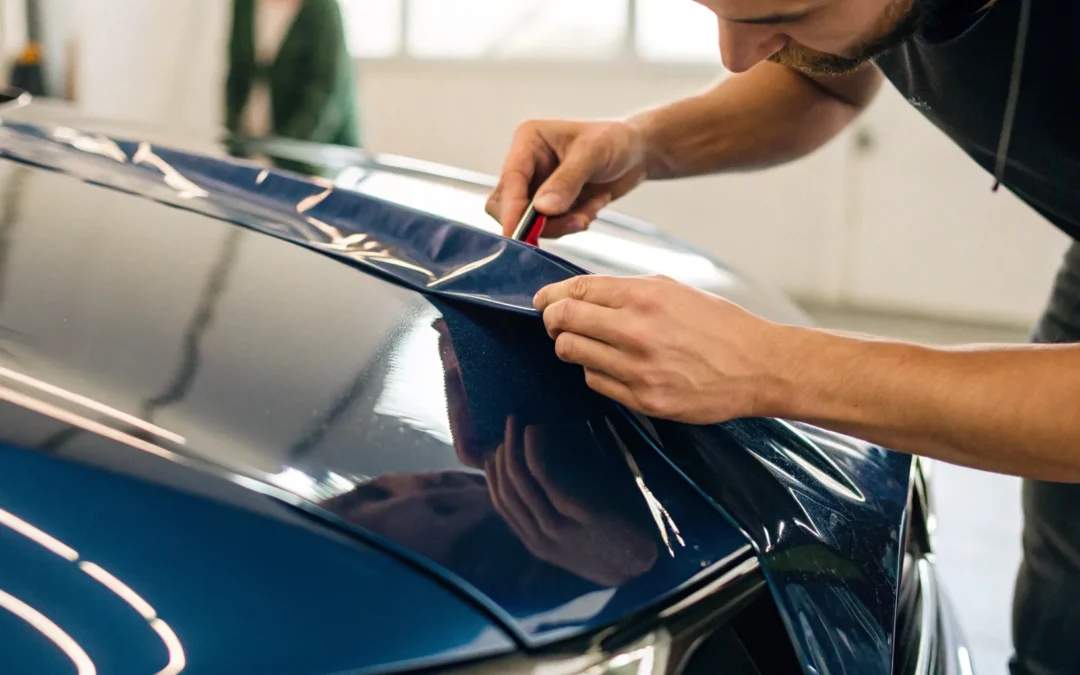
You can always spot the difference between an amateur wrap and a professional one. It’s all in the details: the seamless tucks around door handles, the invisible seams between panels, and the glass-smooth finish over complex bumpers. These are the elements that separate a quick cover-up from a true, paint-like transformation. Achieving that level of quality requires more than just vinyl and a squeegee; it requires technique and a deep understanding of the material. This guide is designed to teach you those techniques. We’ll show you how to wrap a car professionally by focusing on the small details that make the biggest impact.
Key Takeaways
- Preparation is everything: Your final result is only as good as your prep work. A perfectly clean, decontaminated surface and high-quality cast vinyl are the essential foundation for a wrap that looks professional and lasts.
- Technique creates the finish: Use a heat gun to gently stretch vinyl over curves and a center-out squeegee method to eliminate air. Finish by post-heating all edges to at least 212°F to lock the adhesive in place and prevent lifting.
- Proper aftercare protects your investment: Once the wrap is installed, give the adhesive time to cure before driving. Maintain the finish for years by hand-washing with wax-free soap and protecting the vehicle from prolonged, direct sun exposure.
Your Essential Car Wrapping Toolkit
Before you even think about laying vinyl on a car, you need to gather the right gear. A professional-looking wrap isn’t just about skill—it’s about starting with the proper tools and materials. Having everything you need on hand before you begin makes the entire process smoother and helps you avoid frustrating mistakes. Think of it like cooking a great meal; you wouldn’t start without all your ingredients prepped and ready to go. Let’s walk through exactly what you’ll need to set yourself up for success.
Choose the Right Vinyl for Your First Wrap
First up is the star of the show: the vinyl itself. You’ll find two main types on the market: calendered and cast. For wrapping a vehicle, especially one with lots of curves, you absolutely want to use cast vinyl. It’s manufactured to be incredibly flexible and conformable, meaning it will stretch and mold around bumpers, mirrors, and complex body lines without losing its color or adhesive properties. While it might cost a bit more, investing in high-quality 3M vinyl films will save you a massive headache. For an average-sized car, a 25-foot roll that’s 60 inches wide should give you enough material to work with.
Gather Your Application Tools
With your vinyl selected, it’s time to assemble your toolkit. You don’t need a professional-grade shop, but a few specific items are non-negotiable for a clean installation. Here’s your shopping list: a felt-tipped squeegee to apply pressure without scratching the vinyl, a sharp utility knife with extra blades for precise cuts, and knifeless cutting tape for creating clean lines without touching the paint. You’ll also need a heat gun and an infrared thermometer to monitor the vinyl’s temperature, ensuring it’s pliable enough to stretch. A good pair of application gloves will keep fingerprints off the adhesive, and having a friend to help you handle large panels can be a real game-changer.
Stock Up on Cleaning and Prep Supplies
You’ll hear this again and again because it’s that important: a clean car is essential for a lasting wrap. Any speck of dust, grease, or wax will prevent the vinyl from adhering properly and can create unsightly bubbles. Start with a thorough wash using a non-wax car soap. After the car is completely dry, you’ll need to do a final wipe-down with isopropyl alcohol (a 70% solution works great) and lint-free microfiber cloths. This step removes any remaining oils or residues, creating the perfect surface for the vinyl’s adhesive to bond to. Don’t skip this part—your wrap’s longevity depends on it.
Set Up a Safe and Effective Workspace
Where you work is just as important as the tools you use. You need a clean, well-lit, and dust-free space, like a garage. Working outside exposes the car to wind, dust, and pollen, all of which can get trapped under your vinyl. Temperature is also critical. The ideal environment is around 68°F (20°C). If it’s too cold, the vinyl will become brittle and hard to work with. If it’s too hot, the adhesive can become overly aggressive, making it difficult to reposition the film. A controlled space ensures you can work at a steady pace and achieve the professional vehicle graphic solutions you’re aiming for.
Prep Your Car for a Flawless Finish
Think of car wrapping like painting a room: the final result is only as good as your prep work. This is arguably the most important stage of the entire process, and it’s where professionals spend a significant amount of their time. Skipping or rushing these steps is a surefire way to end up with peeling edges, bubbles, and a finish that just doesn’t last. A perfectly prepped surface is the foundation for a wrap that looks like a high-end paint job, not a cheap sticker.
Taking the time to clean, decontaminate, and smooth every inch of your car’s surface ensures the vinyl has the best possible chance to adhere properly and look incredible for years to come. Every speck of dust, fingerprint, or bit of wax residue can create a weak spot in the adhesion, leading to lifting or imperfections down the road. It’s tedious work, and it requires a lot of attention to detail, but trust me, your patience will pay off in a big way. This is the difference between a wrap that turns heads for the right reasons and one that looks like a DIY project gone wrong. A flawless finish starts long before the vinyl is even unrolled.
Start With a Deep Clean and Decontamination
First things first, your car needs to be spotless. And I don’t just mean a quick run through the car wash. You need to perform a thorough hand wash to remove every trace of dirt, road grime, bird droppings, and bug splatter. Use a quality car wash soap and the two-bucket method to prevent scratching the paint. Pay special attention to panel gaps, wheel wells, and the areas under your bumpers where dirt loves to hide. After washing, you’ll need to decontaminate the paint to remove any bonded contaminants like tar or tree sap. A dedicated tar and bug remover will make this job much easier, ensuring the surface is completely free of anything that could get between the vinyl and the paint.
Smooth the Surface With a Clay Bar
Even after a deep clean, your car’s paint can still have tiny, embedded particles that make the surface feel rough. You can’t always see them, but you can definitely feel them, and they will absolutely show up under a thin layer of vinyl. This is where a clay bar comes in. Using a clay bar or a clay mitt with a lubricant spray glides across the paint, pulling out these microscopic contaminants. The process leaves the surface feeling as smooth as glass. This step is non-negotiable for a professional finish, as it creates the ideal texture for the vinyl’s adhesive to form a strong, even bond. It’s a simple but transformative step that makes a world of difference in the final look.
Repair Scratches, Dings, and Other Damage
Vinyl wrap is amazing, but it’s not magic—it won’t hide significant paint or body imperfections. In fact, the glossy or satin finish of a wrap can actually accentuate dents, deep scratches, and peeling clear coats. Before you even think about applying a single piece of vinyl, carefully inspect your vehicle’s bodywork. You’ll need to repair any major issues like dings, rust spots, or gouges. Minor surface swirls are generally fine, but if you can catch a scratch with your fingernail, it will likely be visible through the wrap. Taking care of these repairs beforehand ensures your finished project looks smooth and professional, not like you’re just covering up old damage.
Complete a Final Wipe-Down and Inspection
You’re almost there. The final step before the vinyl touches the car is a meticulous wipe-down to remove any lingering oils, waxes, or residues from your cleaning products. Mix a solution of 70% isopropyl alcohol (IPA) and 30% water in a spray bottle. Lightly mist one panel at a time and wipe it down with a clean, lint-free microfiber towel. This final cleaning step ensures the surface is perfectly sterile, giving the vinyl adhesive a pure surface to bond to. Go over all the edges, corners, and seams where you’ll be tucking the vinyl. Once you’ve wiped the car down, do one last visual inspection under good lighting to catch any spots you might have missed.
Apply Vinyl Wrap: A Step-by-Step Guide
With a clean car and the right tools, you’re ready for the most exciting part: applying the vinyl. This is where your vision starts to become a reality. The key here is patience. Rushing through the application process is the fastest way to get wrinkles, bubbles, and misaligned graphics. Work methodically, focusing on one panel at a time, and don’t be afraid to lift and reposition the vinyl as needed before you apply firm pressure. Remember that vinyl is forgiving, but only up to a point. Taking your time now will save you from major headaches later and ensure the final result is something you’re proud of. Whether you’re wrapping a personal vehicle or applying fleet graphics, a steady hand and a sharp eye for detail are your best assets.
Start With Flat Panels to Build Confidence
Every expert was once a beginner, and the best way to learn is by starting small. Begin your wrapping project on the largest, flattest parts of the car, like the hood, roof, or door panels. These areas have fewer curves and obstacles, making them perfect for getting a feel for how the vinyl handles. You can practice your squeegee technique and learn how much tension the material can take without overstretching. Building your confidence on these simpler surfaces will give you the skills and momentum you need before you move on to the more challenging parts of the vehicle.
Tackle Curves and Complex Contours
Once you’ve mastered the flat panels, it’s time to take on the curves. Areas like bumpers, side mirrors, and fenders require a different approach. For these sections, you’ll want to use a high-quality cast vinyl, which is engineered for its incredible flexibility and ability to conform to intricate shapes without losing its color or finish. Unlike more rigid calendered films, cast vinyl can be gently heated and stretched into recesses and around tight corners. This is where the real artistry of vehicle wrapping comes into play, turning a two-dimensional sheet into a seamless, three-dimensional finish.
Use Heat to Stretch and Shape the Vinyl
Your heat gun is one of the most important tools in your kit, especially when working with curves. Applying gentle, consistent heat makes the vinyl soft and pliable, allowing you to stretch it over contours without creating wrinkles or tension marks. The trick is to keep the heat gun moving and maintain a safe temperature—around 120°F is ideal. Too much heat can damage or even melt the vinyl, so it’s better to warm the material gradually. Once the vinyl is in place, a quick pass of heat helps it relax into its new shape before you squeegee it down.
Master Trimming and Finishing Edges
A professional-looking wrap is all in the details, and that means clean, precise edges. After applying the vinyl to a panel, use a sharp blade to trim the excess material. A good rule of thumb is to leave about a quarter-inch of vinyl to wrap around the edge of the panel. This creates a secure, finished look and prevents the edges from lifting over time. Once trimmed, use your heat gun to warm the wrapped edges to at least 200°F. This process, known as post-heating, activates the adhesive’s bond and ensures your vinyl wrap will last for years to come.
How to Get a Smooth, Bubble-Free Finish
Nothing says “amateur” like a vinyl wrap full of bubbles and wrinkles. Achieving that sleek, paint-like finish is the ultimate goal, and it’s entirely possible with the right techniques. Don’t let the fear of imperfections stop you. The secret isn’t about never making a mistake; it’s about knowing how to prevent most of them and how to fix the ones that pop up.
Getting a smooth finish comes down to four key things: starting with a flawless surface, using heat correctly, mastering your squeegee skills, and knowing how to troubleshoot on the fly. When you get these steps right, you’ll see the vinyl lay down beautifully, creating a seamless look that turns heads. It takes patience and a steady hand, but the results are well worth the effort. Our professional fleet graphics and murals demand perfection, and these are the core principles our certified installers use every day.
Prevent Problems Before They Start
The best way to deal with bubbles is to stop them from ever forming. This starts with meticulous surface preparation. Before the vinyl even comes near the car, the surface must be perfectly clean and free of any contaminants like wax, grease, or dust. Any speck left behind can create a bubble or prevent the vinyl from sticking properly. Beyond cleaning, inspect the paint for any damage. You’ll need to fix any significant dents, chips, or rust spots before you begin. While the vinyl can cover minor scratches, larger imperfections will show through and compromise the finish. Think of it as priming a canvas before painting—a perfect foundation is essential for a masterpiece.
Use Your Heat Gun to Smooth Things Out
Your heat gun is one of the most important tools for getting a smooth finish, especially on curved surfaces. A little bit of heat makes the vinyl more pliable, allowing you to stretch and mold it into place without wrinkles. As you work, gently warm the vinyl—keeping the gun moving to avoid overheating one spot. A good rule of thumb is to keep the temperature under 120°F. Once the vinyl is warm and flexible, you can stretch it slightly to fit the contour of the panel. After stretching it into place, use your squeegee to press it down. Heat can also help make tiny imperfections in a fresh vinyl application disappear, almost like magic.
Perfect Your Squeegee Technique
How you use your squeegee is critical for pushing air out and ensuring the vinyl makes full contact with the surface. The golden rule is to always start from the center of the panel and work your way out toward the edges. Use firm, overlapping strokes at a 45-degree angle. This technique systematically pushes any trapped air toward the nearest exit, leaving a smooth, bubble-free surface behind. Rushing this step or squeegeeing from the edges inward will almost certainly trap air. Take your time and be methodical. This single skill is what separates a DIY job from the flawless results you see in our project gallery.
Learn How to Fix Common Issues
Even with careful technique, you’ll probably encounter a bubble or a wrinkle at some point. Don’t panic, and definitely don’t try to force it out with your squeegee—that can stretch or crease the vinyl permanently. Instead, gently lift the vinyl from the nearest flat area until you’ve released the wrinkle or bubble. Let the vinyl “breathe” for a second before laying it back down. If needed, apply a tiny bit of heat to help it relax. Then, use your squeegee (from the center out, of course) to reapply it correctly. Knowing how to make these small corrections is a huge confidence builder and a key part of the process.
Wrap Tricky Areas Like a Pro
Once you’ve mastered the large, flat panels, it’s time to tackle the areas that truly test your skills. Tricky spots like door handles, bumpers, and deep recesses are where a good wrap becomes a great one. These sections require more patience and a specific set of techniques to get right. A clean application in these areas is the hallmark of a professional job, ensuring your wrap looks fantastic and lasts for years without peeling or lifting. Taking the time to handle these details correctly makes all the difference.
Door Handles and Side Mirrors
The single best piece of advice for handling door handles, mirrors, and emblems is to remove them. While it seems like extra work, trying to wrap around these obstacles is a recipe for frustration and a less-than-perfect finish. By taking them off, you can treat the door or body panel as a simple surface. This allows you to lay the vinyl smoothly without complex cuts or stretched corners prone to failure. Once the main panel is wrapped, you can wrap the handle or mirror cap separately for a clean, seamless look that appears painted on.
Bumpers and Other Curved Sections
Bumpers are often the most challenging part of a vehicle wrap due to their complex curves. If you’re working with an unpainted plastic bumper, you might find the vinyl doesn’t want to stick. To solve this, carefully heat the plastic with a torch until it gets a slight sheen, let it cool, and then clean it with isopropyl alcohol. This process helps the adhesive form a much stronger bond. For any vehicle, especially those in a commercial fleet, a properly wrapped bumper is crucial for a professional look. You can see examples of this detailed work in our fleet graphics projects.
Recessed Areas and Trim
When you hit a deep channel or recessed area, the vinyl will want to wrinkle. If this happens, gently lift the film and apply a small amount of heat with your heat gun—just enough to make it pliable. This allows you to stretch the vinyl into the recess and squeegee it down firmly. For creating seams along trim, you have a few options. You can slightly overlap two pieces of vinyl, use knifeless tape for a perfect cut without a blade touching the paint, or carefully use a sharp knife for a clean edge.
Create Clean Seams and Professional Edges
The difference between a good wrap and a great one often comes down to the details. Finishing touches like seams and edges are where a true professional’s skill shines. Getting these right not only makes the wrap look flawless but also ensures it lasts for years. It takes patience and precision, but mastering these techniques will make your work stand out. Let’s walk through how to handle edges and seams to get that perfect, painted-on look.
Learn to Overlap and Tuck Vinyl Correctly
When you’re working with multiple pieces of vinyl, you’ll need to create seams. The key is to overlap the panels correctly so the seam is strong and nearly invisible. A common method involves laying one piece of vinyl, then overlapping the next piece on top of it. For a perfectly straight cut, many pros use knifeless tape, which you place under the vinyl before application. When you pull the tape’s filament, it cuts the vinyl from below, leaving a perfect edge without risking a knife scratch on the paint. Properly tucked edges and clean seams are essential for a finish that looks and feels like a custom paint job.
Use Heat to Secure the Edges
The edges are the most vulnerable part of a vinyl wrap, so you need to make sure they are securely bonded to the surface. This is where your heat gun becomes critical. After tucking the vinyl around an edge, you need to apply heat evenly until it reaches at least 212°F (100°C). This process, called post-heating, fully activates the adhesive and erases the vinyl’s “memory,” preventing it from shrinking back to its original shape. This step is non-negotiable for ensuring the edges don’t lift, peel, or fail over time. It’s a crucial part of delivering the high-quality, durable vinyl graphic solutions that clients expect.
Make Your Seam Lines Invisible
While some seams are unavoidable, you can make them virtually disappear with the right technique. One effective method is to cut the vinyl along the edge of one panel, leaving just enough material to fold over. Then, you take the vinyl from the adjacent panel and wrap it over this folded edge. This approach completely hides the car’s original color and creates a smooth transition that’s difficult to spot unless you’re looking for it. This level of detail is what distinguishes amateur work from the seamless results seen in professional installations. It requires a steady hand and careful planning, but the final look is well worth the effort.
Seal Edges for Long-Lasting Results
Once the entire vehicle is wrapped and all the edges are trimmed and tucked, it’s time for one final, crucial step: post-heating the entire surface. You’ll go over every square inch of the wrap with your heat gun, ensuring it reaches that magic number of 212°F. This final bake locks everything in place, sealing all the edges and ensuring the strongest possible bond between the vinyl and the vehicle. It’s the ultimate quality assurance step that guarantees the wrap will withstand the elements and daily wear. This commitment to durability and proper technique is why working with certified installers who understand the science behind the material makes all the difference in a wrap’s longevity.
Finish the Job With These Post-Installation Steps
You’ve laid the vinyl, smoothed out the bubbles, and handled the tricky curves. Now it’s time for the final steps that truly define a professional-grade wrap. Rushing through this stage can undo all your hard work, leading to peeling edges and a wrap that doesn’t last. These finishing touches are what separate an amateur job from a durable, flawless finish that looks like it came straight from a custom shop. Taking the time to trim, heat, and inspect your work ensures the vinyl adheres properly and stands up to the elements for years to come. Think of it as the final quality check that guarantees a stunning result. These last few actions lock in the vinyl, clean up the appearance, and give you a chance to perfect every detail before calling the project complete.
Do a Final Trim and Cleanup
Precision is everything when it comes to the final trim. This is where you create those clean, seamless lines that make the wrap look like a paint job. Using a sharp blade, carefully trim the excess vinyl around window seals, lights, and between body panels, like the gap between a door and a fender. A good rule of thumb is to leave a tiny edge of about 1/4 inch to tuck away, ensuring the original paint is completely covered. Once all the trimming is done, go over the vehicle and clean up any adhesive residue or fingerprints with a suitable cleaner. This final cleanup makes the surface pristine and ready for the next critical step.
Post-Heat the Vinyl for a Lasting Bond
Post-heating is a non-negotiable step for a long-lasting wrap. This process uses a heat gun to heat the vinyl, especially on curves and edges, to at least 212°F. This high temperature erases the vinyl’s “memory,” which prevents it from shrinking back to its original flat shape over time. Use an infrared thermometer to check the surface temperature and ensure you’re hitting the right mark without overheating and damaging the film. Evenly heat all stretched areas, recessed channels, and edges to activate the adhesive’s bond and lock the wrap securely in place. This is one of the key techniques that professional vinyl graphic solutions rely on for durability.
Inspect Your Work and Make Touch-Ups
Now, step back and give your work a thorough inspection from every angle. Look for any small bubbles, wrinkles, or lifted edges you might have missed during the application process. Most minor imperfections can be fixed easily. If you spot a small bubble, you can often prick it with a fine needle and press the air out. For a larger wrinkle or lifted edge, gently apply a little heat with your heat gun to make the vinyl pliable again, then use your squeegee to smooth it down. This final quality control check ensures every inch of your wrap is perfectly applied and looks immaculate.
Give the Wrap Time to Cure
Patience is key after the installation is complete. The vinyl’s adhesive needs time to fully cure and form a strong bond with the vehicle’s surface. You should wait at least 12 hours before driving the car, and it’s best to keep it in a garage or covered space, protected from extreme temperatures and moisture. Avoid washing the car for at least a week to give the adhesive plenty of time to set. Rushing this final step can compromise the wrap’s longevity and lead to premature peeling or failure. Once cured, your wrap will be ready to show off, just like the stunning vehicles in our project gallery.
Keep Your Wrap Looking New
You’ve put in the work, and your car looks incredible. But the job isn’t over just because the vinyl is on. Proper aftercare is what separates a wrap that looks good for a few months from one that turns heads for years. Protecting your investment comes down to a few simple, consistent habits. By cleaning your wrap correctly and shielding it from the harshest elements, you’ll keep the colors vibrant and the finish looking as smooth as the day you finished. Think of it as the final, ongoing step of the installation process.
How to Properly Wash a Wrapped Car
To keep your wrap in top condition, regular washing is a must. The best and safest method is to hand wash your vehicle. Use a gentle, non-abrasive automotive soap—specifically one without any wax—and a soft microfiber wash mitt. After rinsing, dry it completely with a clean microfiber towel to prevent water spots. If you need to use a pressure washer, be extremely careful. Keep the pressure under 2,000 psi, the water temperature below 180°F, and use a wide-angle spray tip (40 degrees or more). Hold the nozzle at least a foot away from the surface and spray at a 90-degree angle to avoid lifting the vinyl’s edges.
Protect Your Wrap From the Elements
Your wrap’s biggest enemies are the sun and extreme weather. Over time, direct UV exposure can cause the colors to fade and the vinyl to degrade. The easiest way to prevent this is to park in a garage or a shaded spot whenever possible. This simple habit significantly extends the life of your wrap. When you’re cleaning or applying any kind of protectant, double-check that the product is specifically formulated for vinyl wraps. Using the wrong chemicals can damage the finish or even weaken the adhesive. Investing in high-quality materials from the start provides a great foundation for durability against the elements, which is why we prioritize certified vinyl solutions for every project.
Follow a Long-Term Care Schedule
Creating a simple maintenance routine will make all the difference. Make it a habit to inspect your wrap regularly, perhaps every time you wash it. Look closely for any signs of wear, like peeling edges, small lifts, or scratches. Catching these issues early allows you to address them before they become bigger problems that require a professional repair. If you do spot damage that’s more than a minor scuff, it’s best to get in touch with an expert. A consistent cleaning schedule combined with these quick inspections will ensure your wrap stays fresh, vibrant, and perfectly adhered for the long haul.
Common Beginner Mistakes to Avoid
Wrapping a car is a skill that takes practice, and everyone makes a few mistakes along the way. The key is to learn from them without letting them ruin your project. Knowing the most common pitfalls from the start can save you a lot of time, money, and frustration. Think of this as your guide to sidestepping the errors that trip up most beginners, helping you get a fantastic result on your first try.
Avoid Prep and Material Errors
The final look of your wrap depends entirely on the foundation you create. It can be tempting to cut corners by grabbing the cheapest vinyl you can find, but this is one of the biggest mistakes you can make. Low-quality films are harder to work with, don’t last as long, and can even damage your car’s paint. Always invest in high-quality materials from reputable brands to ensure a durable, professional finish. Equally important is surface preparation. Even the best vinyl won’t stick properly to a dirty or waxy surface. Skipping a thorough cleaning will lead to bubbles, peeling, and a wrap that fails long before it should.
Steer Clear of Installation Mishaps
Once you start applying the vinyl, the most common issues come from improper technique, especially with heat. Your heat gun is essential for making the vinyl pliable enough to conform to curves, but too much heat can overstretch or even melt the film. Too little heat will leave you with bunched-up material and creases. Finding that perfect temperature takes practice. Another frequent error is overstretching the vinyl. While some stretching is necessary, pulling it too taut thins the material, distorts the color, and weakens the adhesive, leading to a wrap that will likely fail at the edges and in recessed areas.
Mind Your Environment and Temperature
Where you wrap your car is just as important as how you wrap it. Attempting to apply vinyl outdoors or in a dusty garage is a recipe for disaster. Every speck of dust, dirt, or hair will create a noticeable bump under the film. You need a clean, well-lit, and controlled space to get a professional finish. Temperature also plays a huge role. Vinyl is much harder to work with in the cold, as it becomes stiff and brittle. In a space that’s too hot, the adhesive can become overly aggressive, making it difficult to position the film correctly. Aim for a consistent, moderate room temperature for the best results.
Don’t Let Poor Maintenance Ruin Your Wrap
Your job isn’t finished once the last piece of vinyl is applied. A beautiful new wrap can be quickly ruined without proper care. One of the most common mistakes is treating it like regular car paint. Harsh chemicals, abrasive polishes, and automatic car washes with stiff brushes can scratch, fade, or cause the edges of the vinyl to lift. You need to follow a specific long-term care schedule to keep your wrap looking its best. This means gentle hand-washing with pH-neutral soaps and avoiding pressure washers, especially near the edges. Proper maintenance ensures your hard work lasts for years to come.
Related Articles
- Become a Professional Installer – Premier Installation Services
- Professional Vinyl Installation PNW
- AP Installations Vinyl Work Gallery
- AP Installations Vinyl Experts PNW
- About Us – Premier Installation Services
Frequently Asked Questions
How long does a vinyl wrap really last? The lifespan of a wrap comes down to three things: the quality of the vinyl, the skill of the installation, and how you care for it afterward. A professionally installed wrap using high-quality cast vinyl can easily last five to seven years. The key is ensuring the surface was perfectly prepped and all the edges were post-heated to create a permanent bond. Consistent care, like hand-washing and keeping the car out of the sun, will also play a huge part in keeping it looking great.
Can I wrap my car if the paint is already damaged? You really want to start with a smooth, healthy surface. Vinyl is a thin film that conforms to whatever is underneath it, so it won’t hide issues like peeling clear coats, rust spots, or deep scratches. In fact, it can often make them more noticeable. For the wrap’s adhesive to bond properly and for the finish to look flawless, you need to repair any significant paint or body damage first.
What’s the hardest part of wrapping a car for a beginner? Without a doubt, the most challenging areas are the complex curves, like bumpers and side mirrors. These spots require a delicate balance of heating, stretching, and smoothing the vinyl to fit perfectly without creating wrinkles or tension marks. It takes a lot of practice to get a feel for how the material behaves under heat and how far you can stretch it before it distorts. This is where patience and a steady hand are truly tested.
Is it really necessary to remove parts like door handles and mirrors? While it adds an extra step, removing these components is one of the biggest differences between a DIY look and a professional finish. Trying to cut the vinyl perfectly around an object on the car is incredibly difficult and often results in exposed edges that can lift over time. By taking them off, you can wrap the main panel as one clean surface and wrap the smaller parts separately, creating a seamless, paint-like result that is far more durable.
Can I take a wrapped car through an automatic car wash? It’s best to avoid automatic car washes if you can. The high-pressure water jets and abrasive spinning brushes can be too harsh for vinyl, potentially causing edges to lift or scratching the finish. The safest way to keep your wrap clean is to wash it by hand with a soft microfiber mitt and a gentle, wax-free automotive soap. This ensures you get a great clean without risking damage to your hard work.